
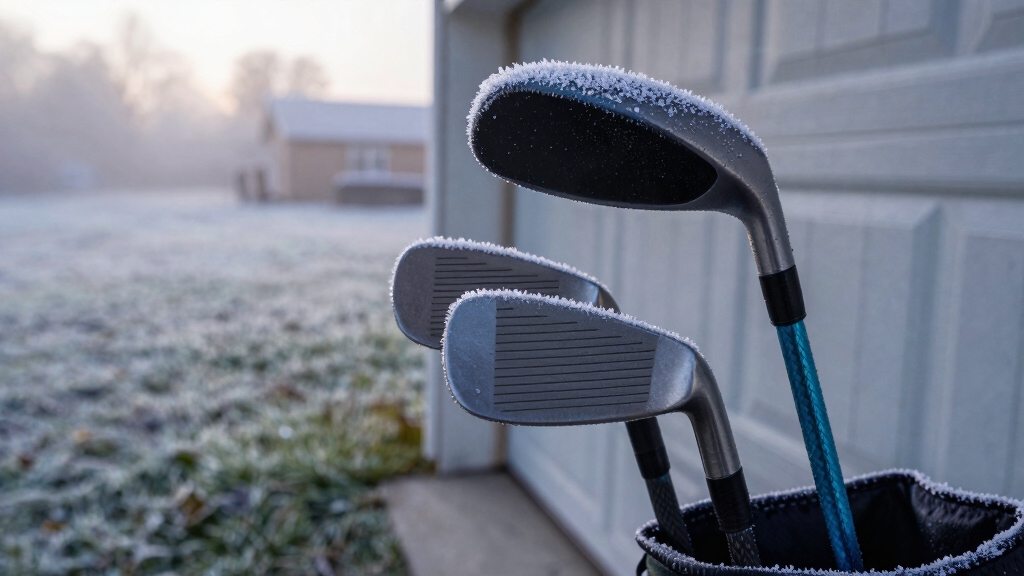
Yes, leaving your golf clubs in the cold can damage them over time. The cold contracts metal and graphite shafts, reducing flexibility and causing microfractures that weaken structural integrity.
Rubber grips stiffen, become brittle, and lose tackiness, while adhesives lose flexibility, risking component loosening. Moisture worsens corrosion and degrades materials faster.
Prolonged exposure in unheated areas accelerates these effects. Understanding proper storage and maintenance can markedly extend your clubs’ lifespan and performance.
Key Takeaways
- Cold temperatures cause metal and graphite shafts to contract and become more brittle, increasing the risk of fractures and reduced flexibility.
- Rubber grips stiffen, lose flexibility, and become brittle or slick in cold, reducing comfort, control, and increasing cracking risk.
- Cold weakens epoxy adhesives, causing bonds between shafts, clubheads, and grips to loosen or fail over time.
- Moisture combined with cold accelerates rust on steel parts and promotes freeze-thaw microfractures in composite materials.
- Storing clubs in temperature-stable, indoor environments prevents cold-related damage and preserves shaft, grip, and adhesive integrity.
What Cold Does to Your Golf Clubs?
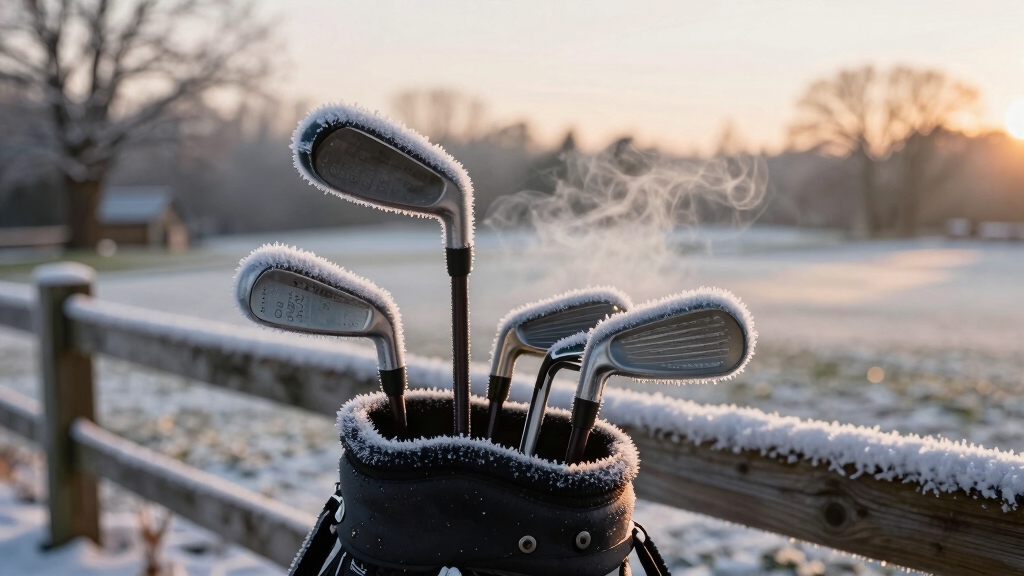
Although it may seem harmless, cold temperatures can markedly compromise your golf clubs’ performance and durability.
When exposed to prolonged cold, metal and graphite materials contract, reducing shaft flexibility and altering club balance.
Prolonged cold causes metal and graphite to contract, diminishing shaft flexibility and disrupting club balance.
This contraction creates micro-stresses that accumulate, weakening epoxy bonds and causing gradual loosening between clubheads and shafts. Additionally, cold combined with moisture accelerates rust formation on steel components and deteriorates adhesives.
Repeated expansion-contraction cycles from temperature swings exacerbate internal stresses, leading to material fatigue over time.
Storing clubs in unheated environments like garages or car trunks for weeks or months especially amplifies these risks.
While short-term exposure poses minimal threat if clubs remain dry, extended cold exposure silently degrades structural integrity.
This shortens overall club lifespan, impacting your equipment’s reliability and performance on the course.
To mitigate these effects, it is crucial to store clubs in climate-controlled areas to prevent rust and grip degradation.
How Cold Affects Grips and Shafts?
When temperatures drop, your grips can really take a hit. They lose flexibility, turning stiff and brittle. This change can seriously affect your control and comfort during your swing.
And it doesn’t stop there! The metal and graphite shafts also react to the cold. They contract, which alters their balance and can mess with your swing efficiency.
You mightn’t think about it, but the cold can even weaken the adhesive bonds between the shaft and clubhead. This increases the risk of loosening or detachment over time. So, it’s definitely something to keep in mind as the weather gets chilly!
Cold temperatures also slow down the evaporation and curing of grip solvents, potentially affecting grip adhesion and performance in cold weather.
Grip Flexibility Loss
Experiencing cold temperatures causes rubber grips to stiffen and lose their natural flexibility, directly impacting your control and comfort during a swing.
As the rubber hardens, it becomes less compliant, reducing your ability to maintain a firm yet comfortable hold.
This stiffness increases shock transmission to your hands and arms, which can lead to discomfort or even injury over time.
Prolonged exposure to freezing conditions makes grips brittle, heightening the risk of cracks that degrade performance and lifespan.
Additionally, moisture combined with cold accelerates grip deterioration, causing slickness and reduced tackiness.
To preserve grip integrity and maintain peak feel, avoid leaving clubs in cold, damp environments for extended periods.
Opt for temperature-controlled storage solutions whenever possible.
If grips do become wet, using methods such as air drying can help restore their condition before use.
Shaft Material Contraction
If you leave your golf clubs in cold conditions, the metal and graphite shafts contract, which reduces their flexibility and can negatively affect your swing speed and accuracy.
Metal shafts slightly shrink, altering the club’s balance and feel. Graphite shafts become more rigid and susceptible to stress fractures.
This contraction decreases the shafts’ natural bend during your swing, limiting energy transfer and precision.
Repeated exposure to temperature fluctuations leads to expansion-contraction cycles, causing microstructural fatigue in these materials over time.
As a result, your clubs may lose responsiveness and durability.
To maintain performance, avoid prolonged cold exposure and store your clubs in stable, temperature-controlled environments that minimize material contraction and preserve shaft integrity.
Additionally, steel shafts maintain consistent flexibility and produce lower, penetrating ball flights in cold conditions, which can help maintain control during play but do not prevent material contraction and fatigue caused by temperature changes, making shaft care essential to preserve shaft durability.
Adhesive Bond Weakening
Beyond shaft contraction, cold temperatures directly impact the adhesives that bond grips and clubheads to shafts.
When exposed to cold, these adhesives lose flexibility and become brittle, reducing their ability to maintain a strong bond.
The contraction of metal and graphite shafts stresses the adhesive layer, causing microscopic cracks and weakening its integrity.
Over time, repeated cold exposure and temperature swings cause expansion-contraction cycles that degrade the epoxy bonds.
This can lead to grips loosening or clubheads detaching, compromising both performance and safety.
Additionally, moisture in cold environments accelerates adhesive deterioration, increasing rust risk on steel components.
To preserve adhesive strength, avoid prolonged cold storage and maintain consistent, moderate temperatures during off-season periods.
Proper storage is essential to guarantee your clubs retain their structural reliability and longevity.
If grips do loosen due to cold, careful methods of grip removal can help preserve the club’s condition when reapplying or replacing grips.
Why Moisture Makes Cold Damage Worse?
When moisture combines with cold temperatures, it accelerates the deterioration of your golf clubs. It promotes rust on steel components and weakens the adhesives that hold shafts and heads together.
You need to understand that moisture in cold environments intensifies damage mechanisms that reduce club lifespan. Specifically:
- Steel parts oxidize faster in the presence of moisture. This leads to rust that compromises structural integrity.
- Epoxy adhesives absorb moisture, which freezes and expands. This causes bond failure between shafts and heads.
- Rubber grips absorb moisture, becoming brittle and prone to cracking when cold.
- Repeated freeze-thaw cycles generate microfractures in composite materials, weakening them over time.
Proper cleaning and maintenance of grips and clubs can help mitigate some of this damage by removing moisture and preventing buildup.
Where Not to Store Your Clubs in Winter?
Although it might seem convenient, storing your golf clubs in car trunks or unheated garages during winter exposes them to damaging temperature fluctuations and moisture.
These environments undergo rapid temperature changes, causing metal and graphite components to contract and expand repeatedly. This stresses materials and weakens epoxy bonds.
Rapid temperature shifts cause metal and graphite to expand and contract, weakening materials and epoxy bonds.
Moisture combined with cold promotes rust formation on steel shafts and clubheads, while rubber grips become brittle and lose flexibility.
Avoid leaving clubs in vehicles throughout the season, as prolonged exposure accelerates degradation.
Outdoor storage is also unsuitable due to extreme temperature swings and humidity.
Even garages far from heat sources pose risks, as cold air and moisture linger.
Instead, opt for climate-controlled indoor spaces to maintain consistent temperatures and dryness, preserving your clubs’ structural integrity and performance.
Golf equipment, like batteries, also suffers from reduced capacity and performance in cold conditions, so maintaining a temperature-controlled environment helps prevent damage.
How Long-Term Cold Hurts Your Clubs?
When you leave your clubs out in the cold for a long time, it’s not just a minor inconvenience.
You see, the cold causes materials to contract and expand repeatedly. This cycle builds up stress over time, and that can really take a toll on your equipment.
For instance, the grips can become brittle and lose their flexibility. You might notice that they don’t feel as comfortable in your hands anymore.
And then there are the shafts—especially if they’re made of graphite. They can start to lose their structural integrity and balance, which isn’t something you want when you’re out on the course.
All of these effects can really add up. Over time, your clubs won’t perform as well, and you could find that their lifespan is significantly shorter than it should be.
If damage occurs, shaft replacement is often necessary to restore performance and safety.
Material Stress Accumulation
Because cold temperatures cause repeated expansion and contraction in your golf clubs’ materials, they gradually accumulate stress that compromises structural integrity.
Over time, this cyclical thermal stress affects metal and composite components, weakening their durability and performance. You need to be aware that:
- Metal shafts shrink slightly in cold, increasing internal stress and reducing flexibility.
- Graphite shafts experience microscopic fractures from repeated contraction, raising failure risk.
- Epoxy bonds between clubheads and shafts weaken as adhesives contract and lose cohesion.
- Steel parts exposed to cold and moisture face rust development, further degrading material strength.
These ongoing stresses shorten your clubs’ lifespan and can manifest as subtle performance degradation before visible damage appears.
Avoid prolonged cold exposure to maintain club reliability and structural soundness. Additionally, improper maintenance such as neglecting to remove paint fill with methods like soaking in hot water can exacerbate surface damage in cold weather conditions.
Grip And Shaft Damage
The ongoing material stress from cold exposure doesn’t just weaken the core structure of your golf clubs. It also directly affects the grips and shafts, which are critical to your control and performance.
Rubber grips stiffen and lose flexibility, becoming brittle or slick. This reduces your hold and increases shock transmission to your arms. Over time, freezing temperatures cause micro-cracks that compromise grip integrity.
Metal and graphite shafts contract in cold, altering balance and reducing flexibility essential for swing accuracy. Adhesive bonds between shafts and clubheads weaken under repeated contraction-expansion cycles, risking loosening or detachment.
If you leave your clubs in cold, damp environments long-term, you accelerate degradation of grips and shafts. This ultimately shortens club lifespan and impairs your game’s consistency. Regular grip maintenance such as cleaning and light sanding can help preserve grip tackiness and extend their usability despite environmental challenges.
Easy Ways to Protect Your Golf Clubs
Several simple measures can markedly extend the lifespan of your golf clubs by minimizing cold-related damage. To protect your clubs effectively, focus on controlling temperature exposure and moisture levels to preserve material integrity.
Simple steps can significantly prolong your golf clubs by reducing cold-related wear and maintaining material quality.
- Use insulated golf bags with headcovers to shield grips and clubheads from direct cold.
- Store clubs in a dry area with stable, moderate temperatures to prevent contraction-expansion cycles.
- Avoid leaving clubs in vehicles or unheated garages where temperature fluctuations and humidity accelerate deterioration.
- Regularly inspect grips and shafts for signs of brittleness or adhesive weakening. Replace components as needed to maintain performance.
Best Indoor Storage Tips for Your Clubs
Consistently storing your golf clubs indoors in a controlled environment markedly reduces the risks associated with cold exposure.
Keep your clubs in a temperature-stable room, ideally between 60°F and 75°F, to prevent material contraction and adhesive weakening.
Use headcovers and insulated golf bags to minimize moisture contact and temperature fluctuations.
Avoid placing clubs directly on cold floors or near drafty windows.
If you must store them in a garage, position them close to a heat source and elevate them off the ground to reduce humidity and cold exposure.
Regularly inspect grips and shafts for signs of brittleness or adhesive failure.
By maintaining consistent temperature and humidity levels indoors, you preserve grip flexibility, prevent rust, and ensure the epoxy bonds remain intact.
This practice extends your clubs’ functional lifespan.
Key Takeaways to Keep Your Clubs Safe
When you store your golf clubs properly, you markedly reduce the risks of cold-induced damage to grips, shafts, and clubheads. Ensuring a consistent indoor temperature and minimizing moisture exposure preserves material integrity and adhesive bonds.
Proper golf club storage prevents cold damage and preserves materials and adhesives.
To keep your clubs safe, follow these key steps:
- Store clubs in a temperature-controlled environment, avoiding garages or car trunks prone to extreme fluctuations.
- Use insulated golf bags and headcovers to protect grips and clubheads from cold stress.
- Position clubs off the floor and near heat sources if stored in less ideal spaces to reduce contraction-expansion cycles.
- Regularly inspect grips and shafts for signs of brittleness, cracking, or loosened bonds to address damage early.
Adhering to these practices extends your clubs’ lifespan and maintains performance throughout winter.
Frequently Asked Questions
Can Cold Weather Affect My Golf Club’s Warranty?
Yes, cold weather can affect your golf club’s warranty.
Manufacturers often exclude damage caused by environmental factors like prolonged cold exposure. This can degrade grips, weaken adhesives, and stress shafts.
If your clubs suffer from cold-induced issues, the warranty mightn’t cover repairs or replacements.
To safeguard warranty validity, store your clubs in temperature-controlled environments. Avoid leaving them in unheated garages or car trunks during winter months.
Do Electric Heaters Damage Golf Club Materials?
You mightn’t expect it, but electric heaters can harm your golf clubs if you’re not careful. Excessive heat from close proximity can soften epoxy bonds and adhesives, weakening the connection between shafts and heads.
High temperatures also risk drying out rubber grips, causing brittleness and cracking. To protect your clubs, keep them at a safe distance from heaters.
Maintain a stable, moderate temperature to preserve material integrity and performance.
Is It Safe to Use Heated Grip Covers?
Yes, you can safely use heated grip covers if they maintain moderate temperatures without overheating.
Excessive heat risks softening or degrading rubber grips and adhesives.
Choose covers with regulated heat settings to prevent damage to grip material and underlying bonds.
Avoid prolonged exposure to high heat, which may accelerate grip wear or cause brittleness.
Properly controlled heated covers enhance comfort without compromising your club’s structural integrity or performance.
How Does Cold Affect Golf Ball Performance?
Cold turns golf balls into icy bricks, shrinking them slightly and making their cores harder. This reduces compression, so your shots lose distance and feel stiffer at impact.
The ball’s dimple pattern contracts too, affecting aerodynamics and reducing lift and spin. You’ll notice lower ball speed, less carry, and altered flight paths.
To keep your game sharp, adjust your club choice and swing to counteract these cold-weather performance drops.
Can Cold Exposure Impact Golf Club Resale Value?
Yes, cold exposure can lower your golf club’s resale value. Prolonged cold damages grips, shafts, and clubheads by causing material contraction, adhesive weakening, and rust.
These invisible stresses reduce performance and longevity, making clubs less desirable to buyers. To maintain value, avoid storing clubs in cold, damp places like garages or car trunks.
Instead, keep them indoors at stable temperatures with proper protection to preserve their condition and resale potential.
Guard Your Gear: The Key to Long-Lasting Golf Clubs
Leaving your golf clubs in the cold is like exposing a delicate machine to a frostbite storm. It weakens grips, stiffens shafts, and invites moisture to cause hidden damage.
Over time, this silent assault can erode performance and longevity. To keep your clubs in peak condition, store them indoors, away from damp chill.
Think of proper storage as a warm shield, preserving your equipment’s integrity and ensuring every swing stays sharp and reliable.