
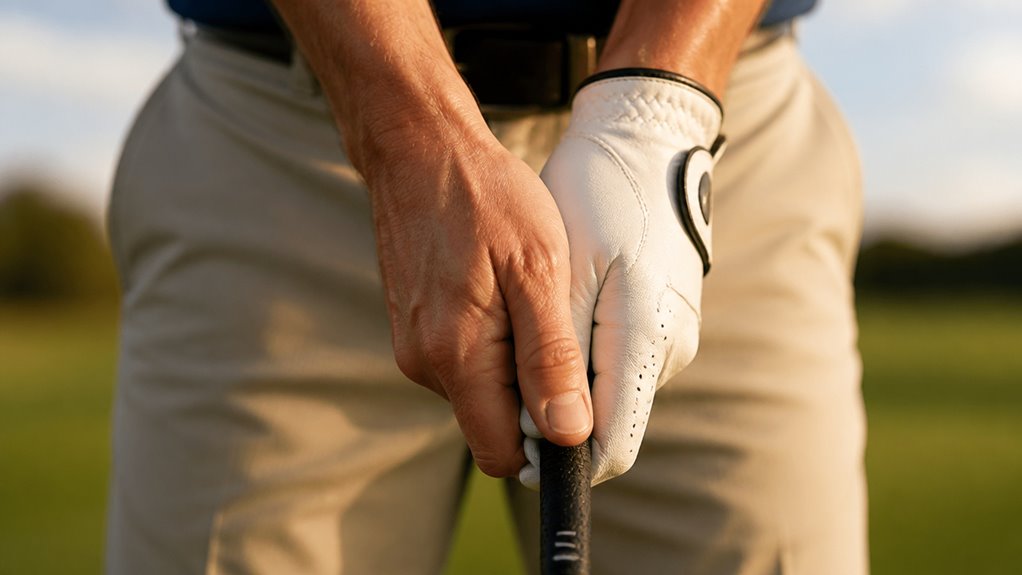
Your golf glove should fit snugly like a second skin without restricting movement or cutting off circulation. Aim for a taut palm feel, where your fingertips reach the ends without pressure or bunching.
Slightly tight is better than loose to guarantee superior grip and control. Avoid excess material that causes slipping or finger movement inside the glove.
Proper fit boosts performance and comfort. You’ll also want to know how to measure and adjust for the perfect fit, plus what leather gloves do after break-in.
- Key Takeaways
- How Tight Should Golf Gloves Fit for Best Performance?
- How to Measure Your Hand for the Perfect Golf Glove Size?
- How to Adjust Palm Closure and Velcro on Your Golf Glove?
- What Happens If Your Golf Glove Is Too Tight or Too Loose?
- How Premium Leather Gloves Stretch to Fit Better After Use?
- Frequently Asked Questions
- Get Better Control With the Right Glove Fit
Key Takeaways
- Golf gloves should fit snugly like a second skin, ensuring a tight grip without restricting movement or circulation.
- The palm must feel taut, similar to a drumhead, with fingertips close to the glove ends but without pressure or bunching.
- Slightly tight gloves are preferred over loose ones for better grip, control, and consistent contact with the club.
- Avoid excess material inside the glove to prevent slipping and finger movement that reduce performance.
- Leather gloves may feel tight initially but will stretch and mold to the hand after several uses, improving fit.
How Tight Should Golf Gloves Fit for Best Performance?
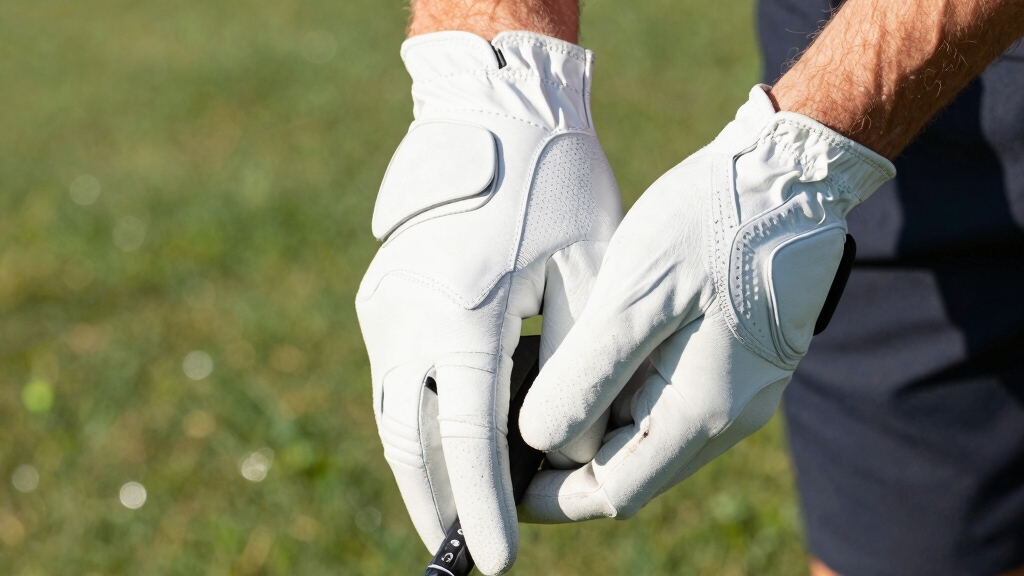
When you want the best performance from your golf gloves, they should fit like a second skin. They need to be snug across your palm and fingers without restricting movement or circulation.
You’ll prefer a slightly tight fit over loose fabric since it guarantees a superior grip and control. New premium leather gloves often feel tight at first but will stretch slightly after a few uses, molding perfectly to your hand.
Your palm should feel taut, almost like a drumhead, with fingertips close to the ends without hard pressure or bunching. Avoid any excess material that causes slipping or finger movement inside the glove.
If the glove strains at the closure or feels uncomfortable, it’s likely too small. A precise, snug fit maximizes stability and swing accuracy during every shot. Proper fit also helps reduce friction and wear, extending the glove’s durability and maintaining optimal performance.
How to Measure Your Hand for the Perfect Golf Glove Size?
How exactly do you measure your hand to guarantee the perfect golf glove size?
Start by focusing on your lead hand—left if you’re right-handed, right if you’re left-handed.
Begin with your lead hand—left for righties, right for lefties—to ensure proper glove sizing.
Use a flexible tape to measure the circumference around your knuckles, just above the palm, avoiding the thumb.
This measurement directly correlates to your glove size.
To secure accuracy:
Measure snugly but without compressing the skin.
Take note of the measurement in inches and compare it to the manufacturer’s size chart.
If you’re between sizes, opt for the smaller one for a tighter, more controlled fit.
Accurate measuring prevents common sizing errors and secures your glove fits like a second skin.
This enhances grip and shot consistency.
Keep in mind that cadet gloves are designed to fit smaller hands more snugly, which can influence your choice if you have a smaller hand size.
How to Adjust Palm Closure and Velcro on Your Golf Glove?
To guarantee your golf glove performs at its best, adjust the palm closure and Velcro so the glove fits securely without restricting movement.
Begin by placing the glove on your hand, ensuring full contact across the palm with no gaps. Pull the Velcro tab until the closure covers about 75% of the hand’s back, leaving roughly a quarter-inch of the tab visible for easy adjustment.
Avoid fully overlapping the tab, which signals an oversized glove, or straining the closure, indicating a size too small. The Velcro should hold firmly, creating a taut “drum-like” feel in the palm.
This balanced tension stabilizes your grip, prevents slipping, and maintains flexibility, allowing precise control and comfort throughout your swing.
For optimal comfort and protection, consider gloves with adjustable hook-and-loop closures that ensure a secure fit without compromising dexterity.
What Happens If Your Golf Glove Is Too Tight or Too Loose?
Although a golf glove’s fit might seem like a minor detail, wearing one that’s too tight or too loose can markedly impact your game.
If it’s too tight, you’ll experience restricted movement and discomfort, which impairs your swing mechanics and can cause hand fatigue.
On the other hand, a loose glove compromises grip stability, allowing slipping and reducing your control over the club.
Key consequences include:
- Tight gloves restrict circulation and limit finger flexibility, hindering precision.
- Loose gloves cause bunching and inconsistent contact, increasing the risk of mishits.
- Both conditions elevate hand fatigue and reduce overall performance.
To maintain ideal control and comfort, aim for a glove that fits snugly like a second skin.
It should be tight enough for stability but not so tight that it constricts your hand.
Using the right fit also helps reduce grip pressure by approximately 35% in humid conditions, minimizing muscle fatigue and promoting smoother swings, as noted in studies on glove benefits.
How Premium Leather Gloves Stretch to Fit Better After Use?
Finding the right balance between snugness and comfort often means starting with a glove that feels a bit tight out of the box, especially if it’s made from premium leather.
You’ll notice that these gloves stretch slightly after just a few rounds, molding to your hand’s unique shape. This natural stretch enhances fit without sacrificing grip or control.
The leather relaxes around your fingers and palm, eliminating initial tightness while maintaining a taut feel across the palm, like a well-tuned drum.
It’s vital not to size up prematurely; premium leather gloves are designed to adapt, offering a custom fit that improves with use.
To maintain this fit and extend the glove’s lifespan, regular application of natural leather conditioners can keep the leather supple and water-resistant.
Frequently Asked Questions
How Do Cadet Sizes Differ From Regular Golf Glove Sizes?
Cadet sizes differ by having shorter fingers relative to the palm compared to regular sizes.
If you find your fingers bunching or the glove feels loose around your fingertips despite a proper palm fit, cadet sizing suits you better.
It guarantees a snug, second-skin feel without excess fabric.
When selecting, choose cadet if your fingers are proportionally shorter, giving you better control and comfort during your swing.
Can Wearing the Wrong Glove Size Affect My Swing Speed?
Think of your swing like a finely tuned engine. Wearing the wrong glove size can throw off its timing.
If your glove’s too loose, it slips, reducing your grip and slowing your swing speed.
Too tight, and it restricts your hand’s natural movement, limiting power and fluidity.
Wearing the correct size guarantees peak control, letting you swing faster and more accurately without discomfort or distraction.
Don’t compromise your performance with an ill-fitting glove.
Are Synthetic Gloves Easier to Size Than Leather Gloves?
Yes, synthetic gloves are generally easier to size than leather ones because they offer more consistent stretch and less break-in time.
You won’t have to worry about the snug, initial tightness that premium leather gloves require, as synthetics conform quickly to your hand.
However, leather gloves provide a more tailored fit after a few uses.
How Often Should I Replace My Golf Gloves for Optimal Fit?
You should replace your golf gloves every 15 to 20 rounds for ideal fit and performance.
Over time, gloves stretch, lose their snug second-skin feel, and grip weakens. This can cause slipping and reduced control.
Even premium leather gloves wear out, compromising comfort and accuracy.
Pay attention to signs like stretched material, loss of tautness, or discomfort.
Replacing gloves regularly keeps your grip secure and your swing consistent.
Do Weather Conditions Impact How Tight My Golf Glove Feels?
Yes, weather conditions definitely impact how tight your golf glove feels.
In cold weather, your hand may shrink slightly, making the glove feel looser.
Heat and humidity can cause your hand to swell, tightening the glove.
Leather gloves also absorb moisture, stretching more in humid conditions. You’ll want a snug fit that adapts as your glove naturally stretches or contracts.
This ensures peak grip and comfort regardless of the weather.
Get Better Control With the Right Glove Fit
You want your golf glove snug—tight enough to feel secure, loose enough to breathe.
Measure your hand right, adjust that Velcro just so, and you’ll find the perfect fit.
Too tight? You’ll lose comfort; too loose? Grip slips away.
Remember, premium leather gloves stretch, molding perfectly over time.
Getting this balance isn’t luck; it’s skill, practice, and knowing your gear.
Play smart, fit smart, and your glove will work as hard as you do.