
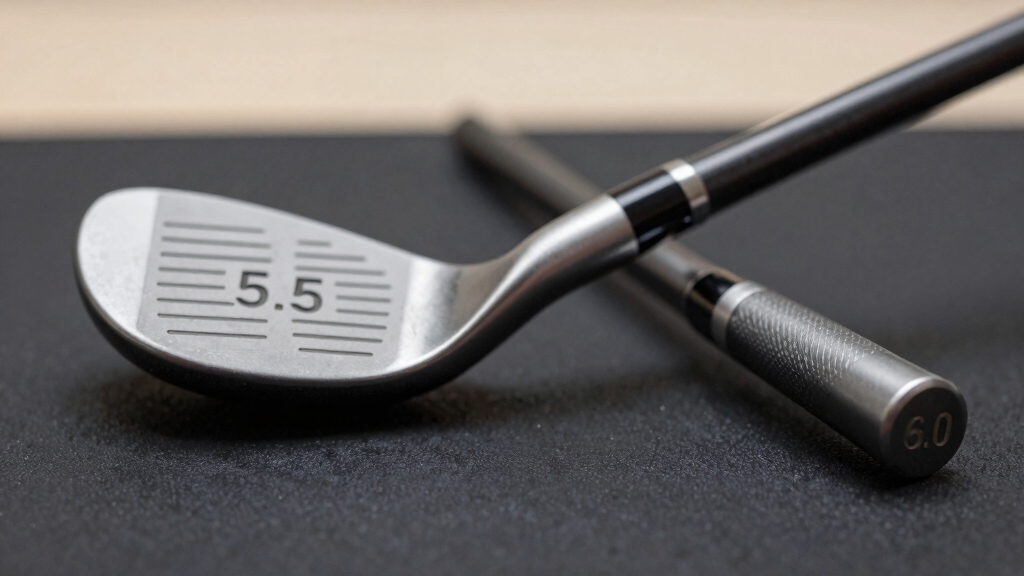
If your swing speed is between 85-95 mph, the Project X 5.5 flex offers a softer, easier load with smoother energy transfer and slightly lower launch.
For swing speeds of 95-105 mph, the 6.0 flex provides firmer stability, firmer feel, and stronger flight control.
Weight and shaft model also influence performance, affecting launch angles and dispersion.
Choosing the right flex and model is key to precise control and consistent results. Exploring these factors reveals deeper fitting insights.
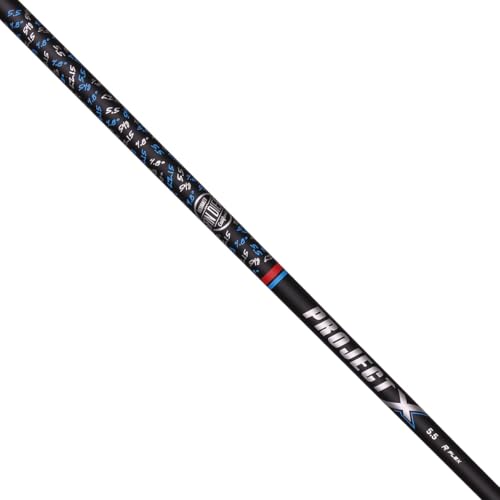
- The stiffness at butt and tip still gives you the control the Project X is known for. This helps to…
- The Project X LZ produces optimized shaft loading with unrivaled stability. The result is maximum…
- Mid/High ball flight with mid spin design
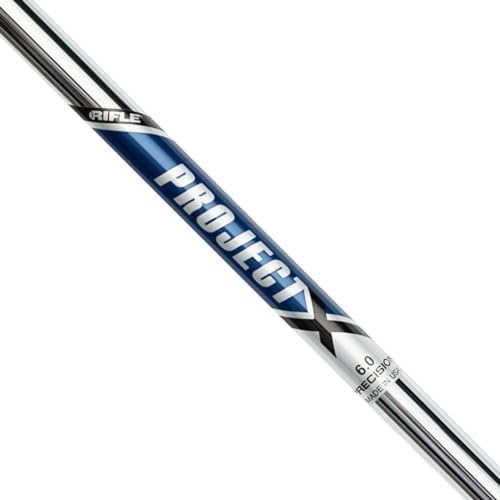
- Project X Steel Iron Golf Shaft
- Flex: 6.0 Stiff
- Weight: 120 Grams
- Key Takeaways
- Project X 5.5 vs 6.0 Comparison: Flex, Swing Speed, and Ball Flight
- Understanding Project X 5.5 and 6.0 Flex Codes
- Which Golfers Should Pick Project X 5.5 or 6.0 Flex?
- Launch and Flight Differences Between 5.5 and 6.0
- How 5.5 and 6.0 Feel and Load Differ?
- How Shaft Models Change 5.5 and 6.0 Performance?
- Choose the Shaft Flex That Matches Your Swing
Key Takeaways
- Project X 5.5 flex offers a softer, more responsive feel than the firmer 6.0 flex, which provides greater stability and control.
- The 5.5 flex suits swing speeds of 85–95 mph, while 6.0 is designed for faster swings between 95–105 mph.
- Weight difference is about 5 grams, with 5.5 shafts typically around 105 g and 6.0 shafts around 110 g, affecting feel and control.
- Different shaft models influence launch and flight; 5.5 generally produces smoother, lower launch, while 6.0 delivers a stronger, more controlled ball flight.
- Proper fitting and installation are essential, as flex number alone doesn’t dictate performance or durability in Project X shafts.
Project X 5.5 vs 6.0 Comparison: Flex, Swing Speed, and Ball Flight
| Comparison Point | Project X 5.5 | Project X 6.0 | Best Choice |
|---|---|---|---|
| Flex Category | Plays like a firm regular or Regular Plus | Plays closer to a stiff flex | Depends on swing strength |
| Swing Speed Range | Best for around 85–95 mph swings | Best for around 95–105 mph swings | Match to club speed |
| Shaft Weight | Often around 105 grams, depending on model | Often around 110 grams or more | 5.5 for lighter feel |
| Loading Feel | Easier to load with smoother energy transfer | Firmer and harder to load | 5.5 for smooth tempo |
| Stability | Stable, but slightly softer through the swing | Offers firmer stability and stronger feedback | 6.0 for aggressive swings |
| Launch and Flight | Can create a smoother, slightly lower launch | Produces a stronger, more controlled flight | Depends on trajectory goal |
| Dispersion Control | Good for controlled forgiveness and timing | Better for players needing tighter dispersion | 6.0 for shot control |
| Ideal Golfer | Moderate-speed players wanting feel and response | Faster-speed players wanting control and firmness | Match to swing profile |
| Fitting Importance | Needs proper testing to avoid loose timing | Needs proper testing to avoid feeling too stiff | Both need custom fitting |
| Overall Value | Best for smooth loading and comfortable performance | Best for stronger flight and firmer control | Choose by feel and speed |
Understanding Project X 5.5 and 6.0 Flex Codes
Although the numerical flex codes in Project X don’t map directly to traditional FCM scales, you can interpret 5.5 as a firm regular and 6.0 as a stiff flex.
Project X flex codes differ from traditional scales, with 5.5 as firm regular and 6.0 representing stiff flex.
The 5.5 flex sits between regular and stiff, providing a slightly softer, easier-loading feel than the 6.0.
The 6.0 delivers a firmer, more stable swing experience.
Weight differences between these flexes are modest, typically around 105 g for 5.5 and 110 g for 6.0 in the IO line, though this varies by model.
Community feedback and fitting charts consistently show 6.0 as the stiffer option, favored for tighter dispersion and stronger flight control.
Understanding these distinctions helps you choose the appropriate shaft flex for your swing characteristics and performance goals.
It is important to consider your tempo and transition force when selecting between these flexes to ensure optimal control and energy transfer.
How Weight and Swing Speed Influence 5.5 vs 6.0?
The weight difference between the 5.5 and 6.0 shafts is pretty modest—usually around 5 grams. You mightn’t notice it much, but it can subtly influence how the club feels during your swing.
Now, if you’re swinging at speeds between 85 and 95 mph, the 5.5 flex is likely your best bet. It’s designed for easier loading, making it comfortable to work with. On the other hand, if you’re swinging a bit faster, say between 95 and 105 mph, the 6.0 flex offers a firmer profile that can give you better control.
Even slight changes in shaft weight can affect swing speed and control, so choosing the right flex and weight combination is key to optimizing your performance.
Weight Differences Explained
When comparing Project X 5.5 and 6.0 shafts, understanding the subtle weight differences is essential. They influence swing speed and overall performance. The 5.5 typically weighs around 105 grams, offering a softer flex and easier load.
In contrast, the 6.0 ranges near 110 grams or higher, delivering firmer stability. Although the weight gap is modest, it affects feel and control distinctly.
| Shaft Flex | Approximate Weight (g) | Flex Characteristic | Performance Impact |
|---|---|---|---|
| 5.5 | 105 | Softer/Easier Load | Smoother swing, less effort |
| 6.0 | 110+ | Firmer/Stable | More control, firmer feel |
This weight difference helps balance swing speed and stability without drastic changes to swing dynamics. Matching shaft flex and weight to your swing speed is key to optimizing performance and preventing timing or directional misses.
Swing Speed Recommendations
Since swing speed directly affects shaft performance, matching your speed to the appropriate Project X flex is critical.
If your swing clocks between 85 and 95 mph, the 5.5 flex, often called Regular Plus or firm regular, offers a softer, easier-to-load profile that promotes smoother energy transfer.
For speeds ranging from 95 to 105 mph, the 6.0 flex, labeled Stiff, provides a firmer, more stable feel, enhancing control and reducing dispersion.
The weight difference between these flexes is modest, typically around 5 grams, so your decision should focus on load response rather than mass.
Choosing the right flex can also help optimize your ball’s energy transfer for maximizing driving distance.
Which Golfers Should Pick Project X 5.5 or 6.0 Flex?
Although both the Project X 5.5 and 6.0 flexes offer stability and performance, your choice should align with your swing speed and desired feel.
If your swing speed ranges between 85–95 mph, the 5.5 flex typically suits you better. It delivers a softer, easier-to-load profile without sacrificing Project X’s hallmark stability.
This flex aids smoother energy transfer and tighter dispersion for players seeking controlled forgiveness.
Conversely, if your swing speed is between 95–105 mph, the 6.0 flex provides a firmer, more stable feel. It enhances clubhead control and feedback for stronger swings.
The 6.0’s slightly higher weight and stiffness support aggressive load response and precision.
Ultimately, selecting 5.5 or 6.0 depends on your preference for a gentler load versus a firmer, more controlled shaft profile matching your swing characteristics.
Accurate shaft flex matching is crucial because it improves shot accuracy and distance by optimizing energy transfer and ball flight stability.
Launch and Flight Differences Between 5.5 and 6.0
Understanding the launch and flight differences between Project X 5.5 and 6.0 is essential for optimizing your ball trajectory.
The 5.5 flex, being softer and easier to load, typically produces a slightly lower launch with a smoother ascent.
In contrast, the 6.0 flex offers a firmer profile, resulting in a stronger, more controlled flight path.
For example, in comparative tests, the Project X Red 6.0 model achieved a higher peak flight, about 8 feet more, than the original 6.0.
It also had a steeper landing angle by roughly 2.2 degrees.
This shows that even within the same flex, model design impacts launch characteristics.
Choosing between 5.5 and 6.0 affects not just launch height but also flight stability and trajectory control.
These are essential factors in shot precision and consistency.
Understanding these differences can be likened to selecting the right variable speed control for optimal performance in electric golf caddies, where precise adjustments impact overall results.
How 5.5 and 6.0 Feel and Load Differ?
Beyond launch and flight characteristics, how the 5.5 and 6.0 flexes feel during your swing and their loading behavior play a significant role in performance.
You’ll notice the 5.5 flex feels easier to load, offering a smoother, more responsive flex profile. The 6.0 flex, by contrast, delivers a firmer, more stable sensation through impact, enhancing control and feedback.
Project X IO shafts emphasize easy loading while maintaining stability, improving your clubhead awareness and dispersion.
| Flex Code | Loading Sensation | Feel Characteristics |
|---|---|---|
| 5.5 | Easier to load | Softer, more responsive |
| 6.0 | Firmer, harder to load | Stable, increased feedback |
| IO model | Easier than original | Balanced stability and kick |
Choosing depends on your preference for load response and feel. Selecting the correct flex is crucial to avoid erratic ball flight and optimize shaft responsiveness for your swing style.
How Shaft Models Change 5.5 and 6.0 Performance?
Shaft models markedly influence how the 5.5 and 6.0 flexes perform, even when their numerical flex codes remain constant.
For example, the Project X IO line’s 5.5 flex loads easier and offers improved stability compared to the original 5.5. This affects your feel and control.
Similarly, the 6.0 flex in the Red model delivers higher launch and more kick versus the original 6.0. This is true despite minimal weight and swing-weight differences.
These design variations alter launch angles, flight profiles, and feedback.
When selecting between 5.5 and 6.0, you need to take into account how each model’s engineering impacts load response and dispersion, not just the flex number.
This nuanced shift means the same flex code can yield distinct performance characteristics, demanding precise fitting tailored to your swing dynamics.
Proper shaft selection and installation, including epoxy curing times, are essential to achieving consistent performance and durability.
Frequently Asked Questions
Can I Interchangeably Use 5.5 and 6.0 Shafts in the Same Club Type?
You shouldn’t use 5.5 and 6.0 shafts interchangeably in the same club type without testing.
The 5.5 flex is softer and easier to load, while 6.0 offers firmer stability and control.
These differences impact feel, launch, and dispersion. Even small weight and stiffness variations can affect performance.
How Does Temperature Affect the Performance of 5.5 Versus 6.0 Shafts?
You’ll notice temperature affects both 5.5 and 6.0 shafts by changing their stiffness slightly. Colder temps make shafts feel firmer, while warmer temps soften them.
Since 6.0 is already stiffer, cold conditions accentuate its rigidity more. This can potentially reduce feel and loading ease.
Conversely, 5.5, being softer, tolerates temperature shifts better. It maintains easier loading and smoother flex.
Always consider temperature when selecting shafts for consistent performance.
Are There Notable Durability Differences Between the 5.5 and 6.0 Project X Shafts?
You won’t find notable durability differences between the 5.5 and 6.0 Project X shafts. Both share similar materials and construction quality, designed to withstand typical golf stresses.
The slight flex variation doesn’t impact their longevity. Instead, durability depends more on usage conditions, swing style, and maintenance.
What Is the Impact of Shaft Length Variations on 5.5 Vs 6.0 Flex Feel?
Think of shaft length as a lever’s extension. Longer shafts amplify flex feel.
When you increase length on a 5.5 flex, you’ll notice it feels even softer and easier to load, like bending a slender branch.
For a 6.0, a longer shaft enhances firmness and stability, sharpening control.
Length variations subtly magnify each flex’s inherent characteristics, affecting your swing dynamics and shot consistency in measurable but nuanced ways.
Do 5.5 and 6.0 Shafts Require Different Clubhead Adjustments or Fittings?
Yes, 5.5 and 6.0 shafts often require different clubhead adjustments or fittings to optimize performance.
Since 5.5 shafts are softer and easier to load, you might favor a lighter or more flexible setup to maximize feel and launch.
For 6.0 shafts, which are firmer and more stable, you’ll typically need tighter head settings to control dispersion and maintain stability.
Always customize based on swing speed and desired ball flight.
Choose the Shaft Flex That Matches Your Swing
Choosing between Project X 5.5 and 6.0 isn’t just about numbers. It’s about matching your swing speed and feel.
You might worry the 6.0 is too stiff, but if your swing is faster, it offers better control and launch. Conversely, the 5.5 flex suits moderate speeds, providing smoother loading and consistent ball flight.
Understanding these subtle differences guarantees you pick the right shaft model to optimize your performance without guesswork.

- Project X Steel Iron Golf Shaft
- Flex: 6.0 Stiff
- Weight: 120 Grams
Last update on 2026-10-13 / Affiliate links / Images from Amazon Product Advertising API