
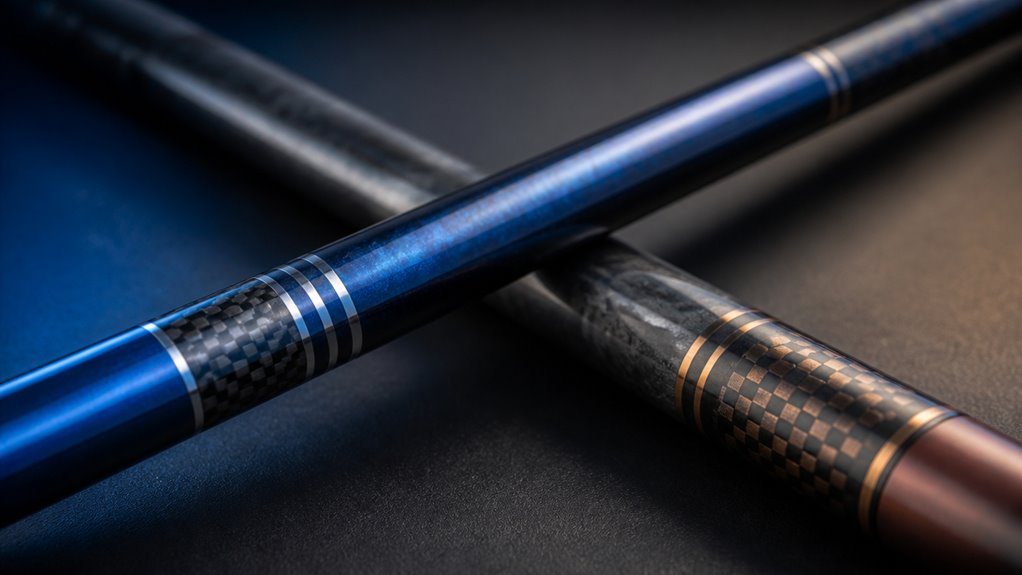
If you want smooth control with a mid-high kick point, the Diamana BB offers a fluid, mid-launch, low-spin feel that suits smoother tempos.
The Ventus Blue, with its firmer VeloCore+ design, provides enhanced stability, lower torque, and a penetrating low-to-mid launch ideal for aggressive swings needing tighter dispersion.
Both cover broad weight and flex options, so matching shaft profile to your swing tempo and launch goals is key.
Exploring their core differences will help refine your best fit.


- Regular (R) – Stiff (S) – X-Stiff (X)
- Uncut will be 46″ and Adaptor Models will be Standard Length with Generic Grip
- Compatible with TaylorMade (M1, M2, M3, M4, M5, M6, Sim, Sim2, Stealth these are driver adapters)
- Key Takeaways
- Diamana BB vs Ventus Blue: Key Differences in Launch, Spin, and Stability
- Key Differences Between Diamana BB and Ventus Blue Shafts
- Core Profiles and Their Impact on Feel and Performance
- Diamana BB vs Ventus Blue Weight Options
- Torque Ratings and Stability Comparison
- Launch and Spin Characteristics of Both Shafts
- Comparing Smooth and Firm Loading Feel
- Flex Options and Fitting Ranges
- Matching Shaft Profiles to Your Swing
- How Shaft Kick Points Affect Ball Flight?
- Tips for Choosing Diamana BB or Ventus Blue at Fitting
- Frequently Asked Questions
- How Durable Are Diamana BB and Ventus Blue Shafts Under Regular Play?
- What Is the Price Difference Between Diamana BB and Ventus Blue Shafts?
- Are There Noticeable Differences in Sound at Impact Between These Shafts?
- Can Diamana BB and Ventus Blue Shafts Be Used in Fairway Woods or Hybrids?
- Do Either Shaft Models Come With Warranty or Performance Guarantees?
- Diamana BB vs Ventus Blue: Making the Right Choice
Key Takeaways
- Diamana BB offers a smoother mid-high kick feel with mid-launch and low-spin, while Ventus Blue provides firmer stability and low-to-mid launch/spin.
- Ventus Blue features VeloCore+ core for enhanced torsional rigidity and tighter shot dispersion compared to Diamana BB’s smoother, fluid mid-section flex.
- Diamana BB covers a wider weight range (43g–83g) suited for diverse swings; Ventus Blue targets stronger flexes and heavier weights (58g–86g) for firmer feel.
- Both shafts decrease torque as weight increases, but Ventus Blue maintains lower torque overall, delivering a more stable, locked-in feel at impact.
- Choosing between them depends on preference for smoother rhythm and feel (Diamana BB) versus firmer feedback and shot consistency (Ventus Blue).
Diamana BB vs Ventus Blue: Key Differences in Launch, Spin, and Stability
| Comparison Factors | Diamana BB | Ventus Blue (VeloCore+) |
|---|---|---|
| Manufacturer | Mitsubishi Chemical | Fujikura |
| Shaft Profile | Smooth, responsive Blue Board design | Firmer, stability-focused design |
| Kick Point | Mid-high kick point | Mid-section loading with stable tip |
| Launch Characteristics | Mid-launch trajectory | Low-to-mid launch tendency |
| Spin Characteristics | Low-spin profile | Low-to-mid spin profile |
| Weight Range | Approximately 43–83 grams | Approximately 58–86 grams |
| Torque | Around 2.8°–5.1°, depending on model | Around 2.8°–4.0° in the compared models |
| Shaft Flexibility | R2, R, SR, S, X, TX, depending on weight | R2, R, S, X, TX, depending on weight |
| Loading Feel | Smooth, fluid, progressive loading | Firmer, more controlled loading |
| Stability | Controlled feel with responsive flex | High torsional stability with VeloCore+ |
| Shot Dispersion | Supports controlled, consistent ball flight | Designed to promote tighter dispersion |
| Ideal Swing Tempo | Smooth to moderate tempo | Faster or aggressive transitions |
| Best For | Golfers prioritizing feel and smooth timing | Golfers prioritizing stability and control |
| Overall Recommendation | Best for smooth loading and balanced feel | Best for firm feedback and stable impact |
Key Differences Between Diamana BB and Ventus Blue Shafts
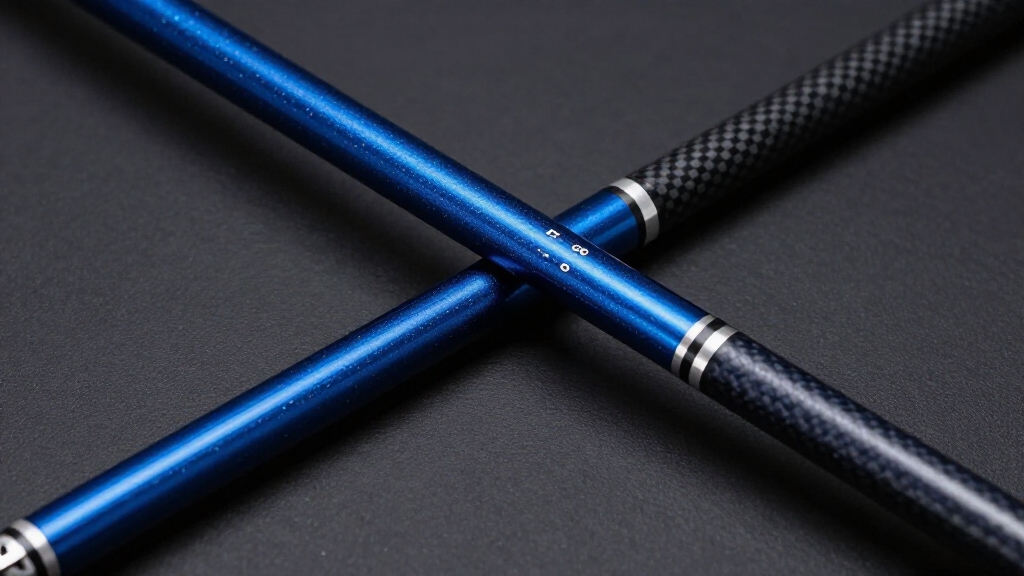
While both the Diamana BB and Ventus Blue shafts target golfers seeking control and stability, they differ markedly in feel, launch characteristics, and weight options.
Diamana BB and Ventus Blue shafts both offer control and stability but differ in feel, launch, and weight options.
You’ll notice the Diamana BB offers a smoother mid-high kick point feel, promoting a mid-launch and low-spin ball flight.
In contrast, the Ventus Blue emphasizes a firmer, more stable profile with low-to-mid launch and spin tendencies.
Weight-wise, Diamana BB spans a broad range from 43g to 83g, covering diverse flexes.
Meanwhile, Ventus Blue is grouped into 5, 6, 7, and 8 series weights, typically starting around 58g.
Torque values reflect these differences, with Diamana BB’s torque decreasing as weight increases.
Ventus Blue generally maintains lower torque in heavier models, enhancing stability.
Additionally, the Ventus Blue 6 features VeloCore+ multi-material core technology that provides enhanced stability and smoother feedback compared to earlier models.
Core Profiles and Their Impact on Feel and Performance
Because the core profile shapes how energy transfers through the shaft, it directly influences both the feel and performance you experience during your swing.
The Diamana BB features Mitsubishi’s Blue Board concept with a mid-high kick point, offering a smoother, medium-plus load through the hands and mid-section, with a medium tip flex.
This design promotes a stable, controlled ball flight with moderate launch and spin.
In contrast, the Ventus Blue employs Fujikura’s VeloCore+ construction, focusing on a firmer, more stable profile through the handle and tip.
This results in a lower-to-mid launch and spin trajectory.
When you swing, the Diamana BB feels more fluid and responsive, while the Ventus Blue gives you a tighter, board-like feedback.
This feedback favors players who prioritize stability and a firmer impact sensation.
The VeloCore+ technology enhances torsional rigidity and reduces shaft torque, contributing to tighter dispersion and improved shot consistency.
Diamana BB vs Ventus Blue Weight Options
So, when you look at the Diamana BB, you’ll notice it offers a pretty wide weight range—anywhere from 43 to 83 grams. That’s quite a bit of flexibility! On the other hand, the Ventus Blue has its own thing going on with distinct classes: the 5, 6, 7, and 8 series.
Now, here’s something interesting about torque. In both shafts, as the weight goes up, the torque generally decreases. This change can really affect how stable the shaft feels during your swing.
It’s all about finding that sweet spot between weight and torque to match your swing style and control needs. Shafts with a stiff mid-section and carefully balanced torque provide exceptional stability for aggressive swings.
Weight Class Comparisons
Both Diamana BB and Ventus Blue offer a broad spectrum of weight options designed to fit a wide range of player preferences and swing characteristics.
You’ll find Diamana BB ranges from 43g to 83g, while Ventus Blue covers roughly 58g to 86g across its 5 to 8 series. This spread lets you dial in the feel and stability you want.
Diamana BB 43g suits lighter swing speeds, with a smoother mid-high kick feel.
Ventus Blue 5 series (~59g) balances control and firmness.
Midweight Diamana BB 63g matches Ventus Blue 6 series (~65g) for stability.
Heavier Diamana BB 83g aligns with Ventus Blue 8 (~85g) for a firm, stable profile.
Weight choice impacts overall feel, timing, and launch characteristics, so fit carefully.
Professional fitting with launch monitors and certified fitters is recommended to optimize shaft selection and performance based on swing speed and flex.
Torque Variation by Weight
When selecting between Diamana BB and Ventus Blue shafts, understanding how torque varies across their weight options is essential for optimizing feel and control. Torque generally decreases as shaft weight increases, offering more stability in heavier models.
Diamana BB starts with higher torque in lighter weights, giving a softer feel. Ventus Blue maintains a firmer profile with lower torque in comparable weights.
| Weight Class | Diamana BB Torque (°) | Ventus Blue Torque (°) |
|---|---|---|
| Light (43-53g) | 5.1 – 4.9 | ~4.0 |
| Mid (63g) | 3.2 | 3.0 |
| Mid-Heavy (73g) | 2.9 | 2.9 |
| Heavy (83g) | 2.8 | 2.8 |
| Overall Trend | Higher torque in light | Slightly lower torque |
This helps you choose between smoother feel or firmer stability. Matching shaft torque and flex to your swing speed and tempo can significantly improve your launch and accuracy, so consider shaft flex and performance when making your selection.
Torque Ratings and Stability Comparison
Although torque ratings alone don’t tell the full story, they provide a key indicator of how stable a shaft feels during your swing.
Torque ratings offer valuable insight into the shaft’s stability during your swing.
When comparing Diamana BB and Ventus Blue, you’ll notice subtle but important differences in torque and stability that affect feel and control.
Diamana BB’s torque ranges from 5.1° in lighter models to 2.8° in heavier ones, offering smoother mid-high kick loading.
Ventus Blue generally holds torque around 4.0° in lighter weights and drops to about 2.8° in heavier versions, emphasizing firmer stability.
Diamana BB’s higher torque in lightweight options promotes a smoother feel.
Ventus Blue’s lower torque supports a stiffer, more board-like response.
Both shafts reduce torque as weight increases for greater control.
Ventus Blue’s tip section typically enhances stability through impact.
Your choice depends on whether you prioritize smoothness or firmness in your swing.
Additionally, the Ventus Blue is designed to improve launch angle and spin rate for better accuracy, complementing its stability features.
Launch and Spin Characteristics of Both Shafts
When you’re looking at launch profiles, it’s interesting to see how the Diamana BB really leans toward a mid-launch with low spin. This combination gives you a stable ball flight, which many golfers appreciate.
On the other hand, the Ventus Blue tends to produce a lower to mid-launch and spin. This can lead to a slightly more penetrating trajectory, which might suit different playing styles.
Additionally, the Ventus Blue’s non-velocore design helps reduce torque for sharper dispersion and improved shot precision.
Launch Profiles Comparison
Because launch and spin characteristics markedly influence ball flight and control, understanding how the Diamana BB and Ventus Blue shafts perform in these areas is essential for making an informed choice.
Both shafts aim for controlled trajectories, but their launch profiles differ subtly due to design nuances.
Diamana BB offers a mid-high kick point, producing a mid-launch, low-spin ball flight.
Ventus Blue emphasizes a low-to-mid launch with correspondingly low-to-mid spin.
The BB’s smoother mid-section contrasts with the Ventus Blue’s firmer, more stable tip.
Ventus Blue’s heavier models trend toward lower launch compared to its lighter versions.
Both shafts suit players prioritizing stability over maximum launch, but their launch windows vary in feel and timing.
Choosing between them depends on your swing dynamics and desired ball flight.
Understanding the kick point location helps explain how these subtle differences affect trajectory and spin control.
Spin Rate Differences
Understanding the spin rate differences between the Diamana BB and Ventus Blue shafts can help you fine-tune your ball flight for better control.
The Diamana BB generally produces a mid-launch, low-spin profile, thanks to its mid-high kick point and moderate torque range, especially in the 53g to 73g classes. This setup favors a stable, controlled spin rate that suits players seeking smooth feel without excessive spin.
In contrast, the Ventus Blue leans toward low-to-medium spin, with its firmer tip section and VeloCore+ construction promoting tighter torque and stability.
The lighter Ventus Blue 5 series may generate slightly more spin than the heavier 7 and 8 series, which emphasize reduced spin. If you want to dial in spin, consider how these subtle differences align with your swing speed and ball flight preferences.
Additionally, shaft length variations can subtly influence torque and spin characteristics by magnifying inherent flex and stability traits.
Impact On Ball Flight
Both the Diamana BB and Ventus Blue shafts offer distinct launch and spin characteristics that directly influence your ball flight.
The Diamana BB features a mid-high kick point promoting a mid-launch, low-spin trajectory, ideal for controlled, stable shots.
In contrast, Ventus Blue leans toward lower to medium launch and spin, featuring a firmer tip for added stability and tighter feel.
Diamana BB’s smoother mid-high loading encourages a more controlled, stable flight.
Ventus Blue’s firmer profile reduces spin, enhancing ball speed consistency.
Ventus Blue’s low-to-mid launch suits players seeking a penetrating ball flight.
Diamana BB supports a slightly higher launch window for players preferring more carry.
Both shafts offer weight and flex options that further refine your ball flight outcomes.
Choosing the right shaft also involves considering shaft flex to match your swing speed for optimal spin reduction and control.
Comparing Smooth and Firm Loading Feel
When you swing either the Diamana BB or Ventus Blue, you’ll notice distinct differences in how each shaft loads through the stroke.
The Diamana BB offers a smoother, mid-high kick point loading feel, delivering a more gradual flex sensation through the midsection and handle. This provides you with a fluid, controlled rhythm that many find easier to time.
In contrast, the Ventus Blue presents a firmer, more stable loading profile, especially through the handle and tip. This gives you a tighter, more board-like response, which some players prefer for added feedback and stability.
Ultimately, your preference between a smooth, flowing load or a firm, locked-in feel will guide your choice. Both shafts excel in delivering control, but with contrasting tactile experiences.
Flex Options and Fitting Ranges
Choosing between the smoother loading feel of the Diamana BB and the firmer profile of the Ventus Blue naturally leads to evaluating how their flex options and fitting ranges match your swing.
Deciding between Diamana BB’s smooth load and Ventus Blue’s firm profile depends on your swing characteristics.
Both shafts offer a broad selection of flexes: R2 to TX for Diamana BB and R2 to Tour Stiff for Ventus Blue, covering a wide spectrum of players.
Ventus Blue tends to extend further into stronger stiff and tour stiff categories, appealing if you need more stability.
Meanwhile, Diamana BB’s flex distribution suits those preferring a mid-high kick point with smoother loading.
Diamana BB flexes: R2, R, SR, S, X, TX (varies by weight).
Ventus Blue flexes: R2, R, S, X, TX.
Ventus Blue targets the stronger stiff market more clearly.
Both shafts fit drivers with .335” tips.
Weight and torque also influence flex feel and fitting range.
Matching Shaft Profiles to Your Swing
When it comes to matching shaft profiles to your swing, your launch preferences really matter. They play a big role in helping you decide on the right feel and stability. You want a shaft that fits your desired launch and spin characteristics while also giving you that perfect balance of smoothness and firmness.
Launch Preferences Impact
Since launch preferences greatly affect ball flight and overall performance, matching your shaft profile to your swing becomes essential.
The Diamana BB and Ventus Blue both target controlled launch and stability but differ in their launch characteristics and feel. Understanding how these impact your game helps you make an informed choice.
Consider these factors when aligning launch preferences with shaft profiles:
Diamana BB offers a mid-high kick point promoting mid-launch, low-spin trajectories.
Ventus Blue leans toward low-to-mid launch with firmer tip stability.
Lighter weights in both shafts favor higher launch; heavier weights suppress it.
Torque differences influence how much the shaft twists, affecting launch angle.
Your natural swing tempo and attack angle dictate which profile complements your ball flight goals.
Matching these elements guarantees you optimize distance and accuracy without sacrificing control.
Feel And Stability
Although both Diamana BB and Ventus Blue shafts aim to provide stability, the feel they deliver during the swing differs markedly. This influences how well they match your tempo and timing.
The Diamana BB offers a smoother mid-high kick point feel, providing a slightly softer load that suits players with a more fluid tempo.
In contrast, the Ventus Blue delivers a firmer, more stable profile, especially through the handle and tip. This benefits those with aggressive, quick shifts seeking precise feedback.
Your choice depends on how you perceive stability—whether you prefer a responsive, board-like sensation or a gentler, consistent flex.
Matching these feel characteristics to your swing guarantees better timing, control, and confidence. This makes a fitting session essential for optimizing performance between these two shafts.
How Shaft Kick Points Affect Ball Flight?
Because the kick point of a golf shaft directly influences how and where the shaft bends during your swing, it plays a pivotal role in determining the ball’s launch angle and spin characteristics.
A mid-high kick point, like in the Diamana BB, tends to produce a more controlled, stable ball flight with moderate launch. Conversely, a lower kick point, closer to what you find in some Ventus Blue models, generally promotes a higher launch and potentially more spin.
Consider these impacts of shaft kick points on your ball flight:
Mid-high kick points favor lower launch angles and reduced spin.
Low kick points encourage higher launch and increased spin.
The shaft bend location affects timing and feel during the swing.
Proper kick point matching can optimize trajectory for your swing style.
Differences in kick point can subtly influence shot dispersion and control.
Tips for Choosing Diamana BB or Ventus Blue at Fitting
When you head into a fitting session to choose between the Diamana BB and Ventus Blue shafts, focus first on how each shaft’s feel and launch characteristics align with your swing tendencies and performance goals.
Start your fitting by matching shaft feel and launch to your unique swing and goals.
Test the Diamana BB if you prefer a smoother mid-high kick point and controlled, stable flight. It suits swings favoring a gentler load with mid-launch and low spin.
On the other hand, the Ventus Blue offers a firmer, more stable feel through the handle and tip, appealing if you want lower spin and slightly lower launch.
Consider weight and flex options carefully. Ventus Blue extends further into stronger flexes, while Diamana BB spans a broader weight range with a traditional Mitsubishi profile.
Ultimately, prioritize how each shaft influences timing, stability, and ball flight during your fitting to find your ideal match.
Frequently Asked Questions
How Durable Are Diamana BB and Ventus Blue Shafts Under Regular Play?
You’ll find both Diamana BB and Ventus Blue shafts durable under regular play. They use advanced materials and construction techniques to guarantee longevity and consistent performance.
While neither is indestructible, they resist common wear like torque loss or tip damage well. Proper care and avoiding abuse will keep them reliable.
Your choice won’t hinge on durability but rather feel and performance preferences during your fitting.
What Is the Price Difference Between Diamana BB and Ventus Blue Shafts?
You’ll find Diamana BB shafts generally priced slightly higher than Ventus Blue shafts, often by about $20 to $40 depending on the retailer and specific model.
Pricing varies with weight and flex options, but both fall within a premium shaft category. If you’re budget-conscious, Ventus Blue offers strong performance at a modestly lower price.
Diamana BB commands a bit more for its smoother feel and mid-high kick profile.
Are There Noticeable Differences in Sound at Impact Between These Shafts?
Yes, you’ll notice subtle sound differences at impact between these shafts.
The Diamana BB, with its smoother mid-high kick profile, tends to produce a softer, more muted sound.
The Ventus Blue usually delivers a firmer, sharper impact sound due to its stiffer tip and handle sections.
These tonal variations stem from their material construction and flex characteristics.
Your preference might depend on whether you favor a softer or more solid feel and sound.
Can Diamana BB and Ventus Blue Shafts Be Used in Fairway Woods or Hybrids?
Sure, you can certainly consider both shafts for fairway woods or hybrids.
Both Diamana BB and Ventus Blue offer versatile weight and flex options that fit various clubheads, including fairway woods and hybrids.
However, their distinct profiles, Diamana’s smoother mid-high kick and Ventus’s firmer, stable feel, impact performance differently.
You’ll want to test each in your specific clubs to match your swing speed, launch preference, and feel for peak results.
Do Either Shaft Models Come With Warranty or Performance Guarantees?
Neither Mitsubishi’s Diamana BB nor Fujikura’s Ventus Blue shafts typically come with explicit warranties or performance guarantees from the manufacturers.
However, you can expect standard manufacturer warranties covering defects in materials or workmanship, usually for a limited period.
Performance guarantees are rare in golf shafts since feel and fitting are highly personal.
To guarantee satisfaction, you should get properly fitted and buy from authorized dealers who offer return or fitting support policies.
Diamana BB vs Ventus Blue: Making the Right Choice
Choosing between the Diamana BB and Ventus Blue shafts boils down to matching their unique profiles with your swing.
Think of it like selecting the perfect dance partner. Each offers distinct torque, weight, and flex that influence stability, launch, and spin.
By understanding these nuances, you’ll make an informed choice that enhances your performance.
So, take a close look at your swing characteristics and let the shaft that complements your rhythm lead the way.
- Regular (R) – Stiff (S) – X-Stiff (X)
- Uncut will be 46″ and Adaptor Models will be Standard Length with Generic Grip
- Compatible with TaylorMade (M1, M2, M3, M4, M5, M6, Sim, Sim2, Stealth these are driver adapters)
Last update on 2026-10-14 / Affiliate links / Images from Amazon Product Advertising API