
Low torque golf shafts aren’t usually ideal for slower swing speeds because they resist twisting. This demands precise clubface control and greater rotational force that slower swingers might not generate.
These shafts produce a firmer feel and lower ball flight, which can reduce forgiveness. This can increase fades or blocks for slower swingers.
Higher torque shafts offer better forgiveness, higher launch, and easier face squaring. If your tempo and release are precise, low torque might work.
However, understanding all shaft factors can optimize your choice.
- Key Takeaways
- What Low Torque Means for Your Golf Shaft?
- How Higher Torque Shafts Help Slow Swingers Play Better?
- Why Low Torque Shafts Don’t Suit Slow Swing Speeds?
- When a Slow Swinger Should Try Low Torque Shafts?
- Key Shaft Factors Beyond Torque for Slow Swing Speeds
- How to Choose Shaft Torque for Your Swing Speed and Style?
- Frequently Asked Questions
- How Does Shaft Torque Affect Shot Shape in Slower Swingers?
- Can Shaft Torque Influence Injury Risk During the Golf Swing?
- Do Low Torque Shafts Impact Putting Performance or Feel?
- How Does Temperature Affect Shaft Torque Performance on the Course?
- Are Low Torque Shafts Compatible With Hybrid or Fairway Woods?
- Golf Shaft Torque Explained: Finding the Right Balance of Feel and Control
Key Takeaways
- Low torque shafts require greater force to square the clubface, making them challenging for slower swingers to control face alignment.
- Slower swing speeds often lack rotational force, reducing the benefits of low-torque shafts and potentially causing fades or pushes.
- Low torque limits shaft twist, which can lower launch angles and forgiveness, hindering distance and accuracy for slower swings.
- Higher torque shafts generally provide better forgiveness, smoother feel, and easier clubface squaring for slower swingers.
- Low torque shafts may work for slower swingers only with precise, aggressive release mechanics confirmed through professional fitting.
What Low Torque Means for Your Golf Shaft?
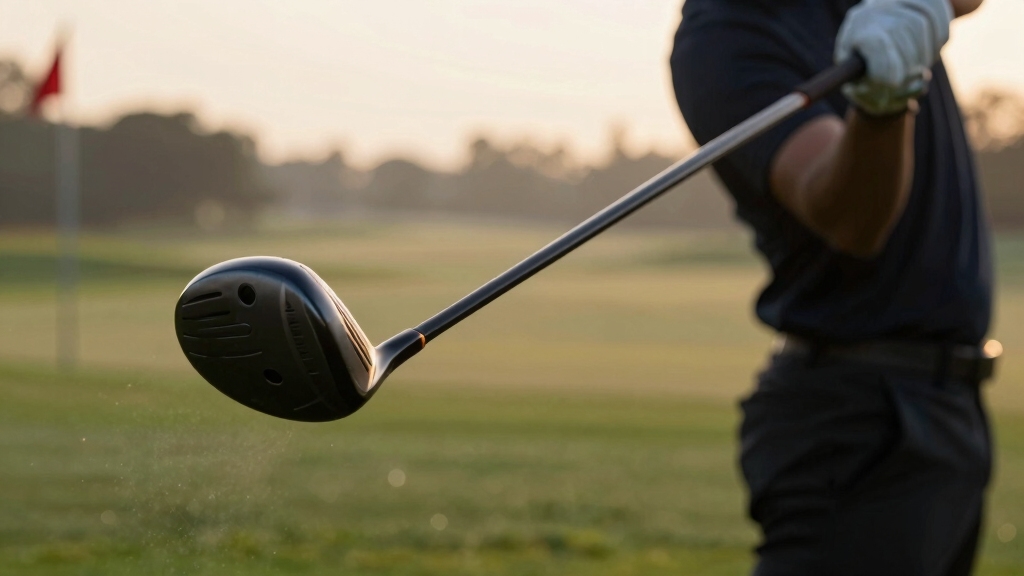
Although torque is just one of several shaft characteristics, understanding what low torque means is essential for optimizing your golf club’s performance.
Torque quantifies how much your shaft twists during the swing, measured in degrees. A low-torque shaft twists less, providing a firmer, more stable feel through impact.
Torque measures shaft twist during your swing; low torque means less twist and a more stable impact feel.
This reduced twisting enhances face stability, helping maintain a consistent clubface angle at ball contact. You’ll notice a lower, more penetrating ball flight with less spin, which suits aggressive, faster swingers who generate sufficient force.
However, low torque shafts typically pair with heavier, stiffer profiles aimed at high swing speeds. For slower swingers, this stiffness combined with minimal shaft twist may make squaring the face more challenging, often leading to less ideal launch and accuracy.
Proper fitting is vital to make certain torque matches your swing dynamics precisely. Additionally, considering tempo and changeover force is crucial since these factors influence how the shaft responds beyond just torque and stiffness.
How Higher Torque Shafts Help Slow Swingers Play Better?
When you opt for a higher torque shaft, something interesting happens. The increased twisting flex makes it easier to square the clubface at impact. This is super important, especially if you have a slower swing speed.
You’ll find that this added torque encourages a higher launch angle and brings in more forgiveness. That means you can still maintain both distance and accuracy, even if you’re not swinging as aggressively.
Essentially, higher torque shafts help optimize face closure and launch conditions. They effectively compensate for the reduced energy you might generate, making your game a bit easier and more enjoyable!
However, it’s important to consider that shaft weight and stiffness also play a crucial role in overall performance, affecting swing speed, tempo, and consistency, which can be critical for slower swingers looking to improve energy transfer consistency.
Easier Clubface Squaring
Because higher torque shafts allow more twist during the swing, they help you square the clubface more easily, especially if your swing speed is slower. This increased shaft flexion compensates for the limited force in your swing, enabling better face alignment at impact.
You gain more control over face angle, reducing slices and pushes. Higher torque shafts act like a timing buffer, smoothing out inconsistencies in your release.
Enhances clubface rotation timing by permitting controlled shaft twist.
Reduces tendency for open or closed face at impact.
Improves consistency in face alignment throughout the swing arc.
Compensates for slower tempo by aiding natural release mechanics.
This dynamic makes higher torque shafts a superior choice for slower swingers seeking precision and better ball striking.
Improved Launch And Forgiveness
Beyond easier clubface squaring, higher torque shafts also enhance your launch conditions and forgiveness, which are key for slower swing speeds.
The increased twisting in a higher torque shaft allows the clubface to close more naturally through impact, promoting a higher launch angle and more ideal spin rates.
This combination helps you maximize carry distance and maintain ball flight consistency despite a less aggressive swing.
Additionally, the softer feel from higher torque absorbs off-center hits better, reducing shot dispersion and improving overall forgiveness.
For slower swingers, this means you get more control over trajectory and a greater margin for error, which low torque shafts often fail to provide.
Ultimately, higher torque shafts adapt better to your tempo and power, helping you produce more reliable and effective shots.
Modern graphite shafts with higher torque provide vibration dampening that reduces joint strain, making them more comfortable for slower swingers during extended play.
Why Low Torque Shafts Don’t Suit Slow Swing Speeds?
If you have a slow swing speed, low torque shafts mightn’t be the best fit for you. You see, these shafts twist less, which means they need more force to get the clubface squared up just right. This can create some challenges when it comes to consistently hitting your target.
You might find yourself dealing with fades or blocks more often than you’d like.
Plus, low torque shafts can limit your launch angle and forgiveness. And let’s be honest—if you’re swinging slowly, you really want those aspects working in your favor to help you achieve better distance and accuracy.
For golfers looking to improve precision, stroke mechanics analysis can provide valuable feedback to optimize your swing and equipment choices.
Torque Impact On Control
Control hinges largely on how the golf shaft twists during the swing, a factor measured by torque. When you swing slowly, a low-torque shaft resists twisting too much, but you may lack the force needed to fully stabilize the clubface. This mismatch reduces your control, making the shaft feel stiff and less responsive.
Consider these torque control impacts:
Low torque limits shaft twist, requiring greater clubface control from you. Slower swings often don’t generate enough torque to benefit from low-torque shafts. Increased shaft stiffness can hinder proper clubface alignment during slower swings. Higher torque shafts provide a softer, more forgiving feel to aid face squaring.
For slower swing speeds, higher torque shafts typically enhance your control by accommodating natural shaft flex and twist. Shafts like the Raven Graphite Shaft offer mid-spin and mid-launch profiles with flex options tailored to slower swing profiles, improving playability and control.
Face Squaring Challenges
Although low torque shafts minimize twisting during your swing, they can create significant challenges in squaring the clubface if your swing speed is slow.
With slower swings, you generate less rotational force. A low torque shaft’s stiffness limits natural shaft rotation needed to square the face at impact.
This restriction often causes the clubface to remain open, leading to fades or blocks. You’ll find it harder to time your release correctly because the shaft doesn’t provide the subtle feedback or “whip” that higher torque shafts offer.
In contrast, shafts with higher torque allow more twisting, enabling easier face closure for slower swingers. Consequently, low torque shafts typically don’t accommodate the biomechanical demands of slower swings, making face squaring more difficult and reducing consistency in shot direction.
Selecting shaft flex based on swing speed and tempo is crucial to ensure optimal control and shot accuracy.
Launch And Forgiveness
The difficulty in squaring the clubface with low torque shafts extends to launch characteristics and forgiveness. When your swing speed is slower, a low torque shaft resists twisting. This sounds good but actually limits the clubface’s natural ability to close through impact.
This can cause lower launch angles due to insufficient shaft flexing, reduced forgiveness on off-center strikes, and an increased tendency for fades or pushes from face misalignment.
Additionally, there’s less energy transfer, leading to shorter carry distances. Higher torque shafts allow more shaft twist, helping you square the face more easily and generate a higher, more forgiving launch.
For slower swingers, this dynamic is critical to maximizing distance and accuracy. Consequently, low torque shafts often hinder launch and forgiveness rather than enhance them when your swing speed is moderate or slow.
Moreover, factors like weight distribution and balance in your equipment play a vital role in maintaining a smooth stroke and consistent pace, which is essential for optimizing your overall performance with slower swings.
When a Slow Swinger Should Try Low Torque Shafts?
Even if you swing slower, you should consider low torque shafts when your swing mechanics consistently square the clubface and you prioritize a firm, stable feel.
Low torque shafts reduce twisting, providing enhanced face control and a penetrating ball flight. This can benefit slower swingers with aggressive or precise releases.
However, this isn’t typical; most slower swingers benefit from higher torque’s forgiveness.
| Condition | Benefit |
|---|---|
| Consistent face squaring | Improved stability |
| Desire for firm feedback | Enhanced shot control |
| Preference for lower spin | More penetrating trajectory |
Use low torque shafts only after thorough fitting confirms your tempo and launch conditions align with their characteristics. This tailored approach guarantees peak performance despite slower swing speeds. Selecting the right flex and stiffness is crucial to avoid unstable ball flight and excessive spin.
Key Shaft Factors Beyond Torque for Slow Swing Speeds
When selecting a golf shaft for slower swing speeds, you need to take into account several critical factors beyond torque, such as flex, weight, and kick point. These elements collectively influence your launch conditions, ball flight, and overall feel.
Flex affects shaft bend and energy transfer, vital for optimizing distance and accuracy. Weight impacts swing speed and control. Lighter shafts generally help increase speed without sacrificing stability.
Kick point controls the launch angle and spin rate, directly affecting trajectory and forgiveness. Consider these key factors:
- Shaft Flex: Choose senior or regular flex for better energy release at slower speeds.
- Shaft Weight: Lighter shafts promote faster swings and improved tempo.
- Kick Point: Higher kick points produce lower ball flight; lower kick points raise launch.
- Shaft Profile: Balance between stiffness and smoothness to match your swing tempo.
Additionally, selecting shafts made from aerospace-grade carbon fiber can enhance ball speed and shot consistency, which is especially beneficial for players with slower swing speeds.
How to Choose Shaft Torque for Your Swing Speed and Style?
Although torque is just one aspect of shaft performance, you should carefully consider it alongside your swing speed and style to optimize feel and control. For slower swings, higher torque (4°–6°+) typically aids in squaring the clubface and improving launch conditions. If your tempo is aggressive or you prioritize face stability, a lower torque might suit your style better.
| Swing Speed (mph) | Recommended Torque (degrees) |
|---|---|
| < 80 | 5.0 – 6.5 |
| 80 – 85 | 4.5 – 6.0 |
| 86 – 95 | 3.0 – 5.0 |
| 96 – 105 | 2.0 – 4.0 |
| > 105 | 1.5 – 3.0 |
Choosing a shaft with Symmetry360 construction can further enhance clubhead stability and reduce torque-induced twisting for improved accuracy.
Match torque with your flex, weight, and tempo for ideal performance.
Frequently Asked Questions
How Does Shaft Torque Affect Shot Shape in Slower Swingers?
Think of shaft torque as the club’s personality twist during your swing.
For slower swingers, higher torque lets the shaft flex more, helping you square the clubface and prevent slices or fades.
Low torque shafts resist twisting, making it tougher to close the face, often causing pushes or fades.
Can Shaft Torque Influence Injury Risk During the Golf Swing?
Yes, shaft torque can influence injury risk during your golf swing. Higher torque shafts twist more, potentially causing inconsistent clubface angles that force compensations in your wrists or forearms, increasing strain.
Conversely, low-torque shafts offer greater stability but can transmit more shock to your joints if your swing isn’t smooth. Matching shaft torque to your swing mechanics helps reduce undue stress.
This lowers injury risk by promoting proper biomechanics and minimizing harmful forces.
Do Low Torque Shafts Impact Putting Performance or Feel?
Imagine you’re putting on a windy day: low torque shafts in your putter can reduce twisting, giving you a more stable, consistent stroke feel.
Yes, low torque impacts putting performance by providing firmer feedback and minimizing shaft deflection during impact. This control helps you square the face more reliably, improving accuracy.
However, if you prefer a softer, more forgiving feel, higher torque shafts might suit you better.
How Does Temperature Affect Shaft Torque Performance on the Course?
Temperature affects shaft torque by altering the shaft’s material stiffness.
When it’s colder, the shaft stiffens, reducing its torque slightly. This makes it feel firmer and less twisting during your swing.
Warmer temperatures soften the shaft, increasing torque and causing more twisting.
This change impacts your clubface stability and shot dispersion.
You should consider temperature variations on the course to maintain consistent feel and performance under varying weather conditions.
Are Low Torque Shafts Compatible With Hybrid or Fairway Woods?
Yes, low torque shafts can be compatible with hybrids and fairway woods, especially if you prioritize a stable, controlled feel and have a faster swing speed.
They reduce twisting through impact, promoting accuracy and a lower ball flight.
However, if your swing speed is slower or you need more forgiveness, higher torque shafts usually perform better.
Always consider your swing characteristics and get fitted to find the ideal torque for your hybrids and fairway woods.
Golf Shaft Torque Explained: Finding the Right Balance of Feel and Control
When you swing slowly, choosing the right shaft torque isn’t just a preference. It’s a performance game-changer.
Low torque shafts may seem tempting, but they often restrict your clubhead’s natural release, limiting distance and control.
Think of torque as the shaft’s flexibility dial; turning it too low can stiffen your rhythm.
Instead, match your slower swing with higher torque options that enhance feel and accuracy. This ensures every shot resonates with precision and power.