
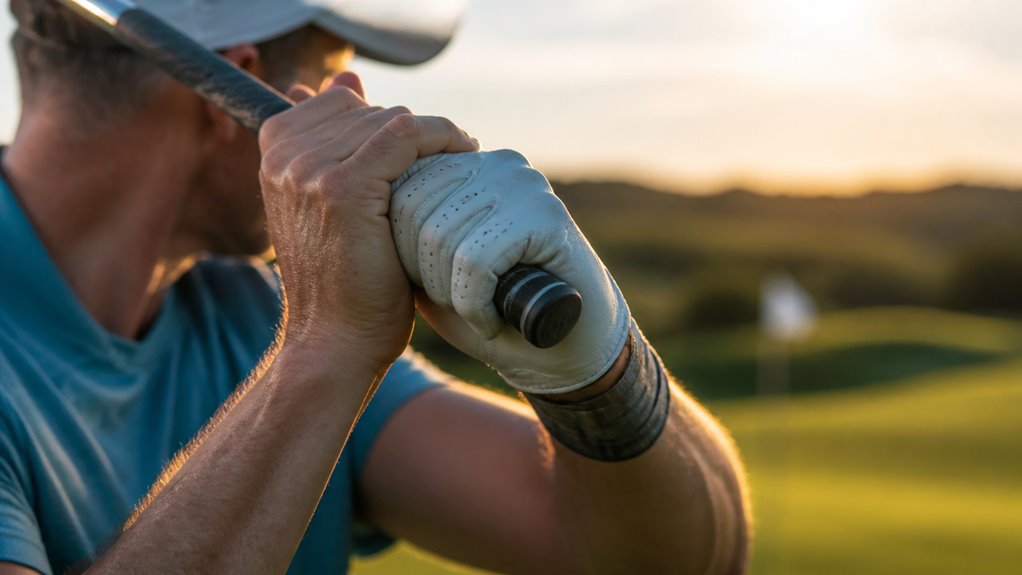
You can play golf with carpal tunnel syndrome if you manage symptoms carefully. Avoid overusing your wrist by limiting grip pressure and adjusting your swing to reduce strain.
Using larger, cushioned grips and wrist-supportive gloves helps protect your wrist. However, persistent numbness, weakness, or night pain requires medical evaluation to prevent nerve damage.
Understanding how carpal tunnel affects your swing and learning protective measures can help maintain performance and comfort during play.
- Key Takeaways
- Playing Golf With Carpal Tunnel Syndrome: Is It Possible?
- How Carpal Tunnel Symptoms Impact Your Golf Swing and Grip?
- Golf Swing Movements That Worsen Carpal Tunnel
- Swing Adjustments to Protect Your Wrist
- Equipment and Grip Tips for Carpal Tunnel Golfers
- When to See a Doctor for Carpal Tunnel Wrist Pain
- Frequently Asked Questions
- Can Carpal Tunnel Syndrome Develop From Playing Golf Regularly?
- Are There Specific Exercises to Strengthen Wrists for Golfers With CTS?
- How Long Does Recovery Take After Carpal Tunnel Release Surgery for Golfers?
- Can Wearing Gloves Reduce Carpal Tunnel Symptoms During Golf?
- Is Acupuncture Effective for Managing Carpal Tunnel Pain in Golfers?
- Keep Golfing While Protecting Your Wrists
Key Takeaways
- Playing golf is often possible with carpal tunnel, depending on symptom severity and flare-ups from overuse or repeated swings.
- Reducing grip pressure and avoiding excessive wrist flexion or extension helps control symptoms and prevent worsening during play.
- Use larger, cushioned grips and padded gloves to reduce wrist strain and vibration transmitted through the club.
- Persistent numbness, weakness, or night pain disrupting sleep requires medical evaluation before continuing golf activities.
- Early diagnosis and treatment can prevent long-term nerve damage and guide safe modifications for playing golf.
Playing Golf With Carpal Tunnel Syndrome: Is It Possible?

Although carpal tunnel syndrome can cause symptoms like numbness, tingling, and weak grip that may affect your golf game, playing golf with this condition is often possible depending on how severe your symptoms are.
You might experience worsening nerve irritation from repetitive gripping, wrist movements, and vibrations during play.
Overuse from long sessions or repeated swings can trigger symptom flares.
However, modifying your activity by reducing grip pressure and limiting wrist strain can help control symptoms and allow continued play. It’s important to monitor your wrists carefully and adjust your routine to avoid exacerbating median nerve compression.
If symptoms persist or worsen, seeking medical evaluation is advisable to prevent long-term damage and maintain your golfing ability safely. Proper warm-up routines and wrist-specific exercises can also help reduce injury risk and manage symptoms during play.
How Carpal Tunnel Symptoms Impact Your Golf Swing and Grip?
Carpal tunnel symptoms can really put a damper on your golf game. For starters, they often lead to reduced grip strength, which makes it tricky to hold the club securely during your swing. You know how important that grip is, right? If you can’t hold on tight, it’s going to affect your overall performance.
On top of that, limited wrist motion can restrict your backswing and follow-through. This limitation can mess with your swing mechanics, making it harder to execute those smooth, fluid movements. It’s frustrating when your body doesn’t cooperate with your game, isn’t it?
And let’s not forget about the numbness and tingling in your fingers. This can really impair your nerve sensation, which means you might struggle to control the club precisely. It’s tough to focus on your aim and technique when you’re dealing with those annoying sensations.
Managing symptoms during play with controlled swing modifications can help reduce strain and maintain performance despite discomfort.
Grip Strength Challenges
Frequently, people with carpal tunnel syndrome struggle with grip strength, which directly impacts their golf swing and club control.
You may notice weakness in your hand, making it harder to hold the club firmly or stabilize it during your swing.
This diminished grip strength stems from median nerve compression causing muscle weakness and numbness in your thumb, index, and middle fingers.
As a result, your control over clubface alignment and swing precision can decrease, affecting shot accuracy.
Additionally, reduced grip strength increases the risk of compensatory movements, potentially worsening symptoms or causing injury.
To manage this, focus on moderating grip pressure and using supportive devices like wrist splints.
Recognizing and addressing grip challenges early helps maintain your ability to play while minimizing nerve irritation and symptom progression.
Experimenting with grip size and position can also help find a more comfortable and effective grip that accommodates your symptoms.
Wrist Motion Limitations
Beyond grip strength challenges, limitations in wrist motion can markedly affect your golf swing and grip stability.
Carpal tunnel syndrome often restricts wrist flexion and extension, impairing your ability to execute a full backswing and follow-through.
This limitation reduces clubhead speed and compromises control, increasing the risk of errant shots.
Additionally, restricted wrist mobility may force you to compensate with altered swing mechanics, potentially causing strain in other joints.
During gripping, the reduced wrist range can destabilize your hold on the club, leading to inconsistent contact.
To minimize these effects, you should avoid excessive wrist bending and monitor discomfort levels closely.
Adjusting your technique and incorporating gentle wrist mobility exercises can help maintain function while reducing nerve compression during play.
Incorporating shoulder flexibility exercises can also support improved overall swing mechanics and reduce compensatory strain caused by wrist limitations.
Nerve Sensation Effects
Nerve sensation changes often affect your ability to maintain a secure and controlled grip on the golf club. Tingling, numbness, or burning in your thumb, index, and middle fingers can reduce tactile feedback. This makes it difficult to sense the club’s position.
This diminished sensation may cause you to grip too tightly or inconsistently, increasing wrist strain and worsening median nerve compression. Weakness in your hand muscles can further impair your ability to stabilize the club during swings, compromising control and accuracy.
Additionally, altered nerve signals can disrupt coordination, affecting swing mechanics. Recognizing these symptoms early and adjusting your grip pressure, swing technique, and rest intervals can help minimize nerve irritation and maintain performance while playing with carpal tunnel syndrome. Regular cleaning and maintenance of your grips can also improve traction and reduce slippage, which is crucial when managing grip tackiness issues related to carpal tunnel symptoms.
Golf Swing Movements That Worsen Carpal Tunnel
Certain golf swing movements can exacerbate carpal tunnel symptoms by increasing pressure on the median nerve.
When you grip the club too tightly, you elevate wrist and forearm strain, intensifying nerve compression.
Excessive wrist extension during your backswing or follow-through also heightens pressure within the carpal tunnel.
Repetitive swings, especially during prolonged sessions, contribute to cumulative irritation and inflammation.
Additionally, the vibration and impact forces transmitted through the club on ball contact can aggravate symptoms.
Movements that involve abrupt or forceful wrist flexion or extension increase median nerve irritation, worsening numbness and pain.
Being aware of these mechanics is vital to preventing symptom flare-ups.
Avoiding these exacerbating movements can help you manage carpal tunnel symptoms effectively while continuing to play golf.
Incorporating preventative measures such as warm-up exercises and technique adjustments can reduce strain and protect nerve function during play.
Swing Adjustments to Protect Your Wrist
Since gripping too tightly and excessive wrist extension can worsen carpal tunnel symptoms during your golf swing, adjusting these mechanics becomes key to protecting your wrist.
Focus on maintaining a relaxed grip pressure throughout the swing to reduce median nerve compression.
Limit wrist extension by keeping your wrist in a more neutral position, especially at the top of the backswing and during follow-through.
Avoid abrupt or forceful wrist movements that increase strain.
Incorporate a smooth tempo to minimize repetitive stress and vibration transmitted to the wrist.
Regularly monitor your symptoms during practice and modify your swing if you notice increased numbness or pain.
Including dynamic wrist circles in your warm-up routine can help prepare your wrists and hands, reducing the risk of irritation during play.
Equipment and Grip Tips for Carpal Tunnel Golfers
When managing carpal tunnel syndrome while golfing, choosing the right equipment and grip style plays a crucial role in minimizing wrist strain and nerve compression.
Opt for clubs with larger, cushioned grips to reduce the force needed to hold the club and decrease vibration transmitted to your wrist.
Choose clubs with larger, cushioned grips to lessen wrist strain and minimize vibration during your swing.
Make certain your clubs are properly fitted to your hand size and swing mechanics to promote comfort and control.
Use a lighter grip pressure to avoid exacerbating median nerve irritation.
Modify your grip by slightly loosening it and avoiding excessive wrist flexion or extension during swings.
Consider using gloves designed to provide additional padding and support.
These adjustments help protect your wrist, maintain club stability, and reduce symptoms, allowing you to play more comfortably despite carpal tunnel challenges.
Choosing grips with shock absorption features can further reduce impact on sensitive wrists and improve comfort.
When to See a Doctor for Carpal Tunnel Wrist Pain
If you’re dealing with wrist numbness or tingling that just won’t go away, even after you’ve tried resting and changing up your activities, it’s a good idea to see a doctor. They can evaluate your symptoms and figure out what’s going on.
During your visit, the doctor might suggest some diagnostic tests, like nerve conduction studies, to confirm if you have carpal tunnel syndrome. Getting an early diagnosis is super important—it helps in finding the right treatment and can prevent any further nerve damage down the line. So don’t wait too long to get checked out!
Additionally, just as cold exposure can cause material stress accumulation in golf clubs over time, untreated carpal tunnel syndrome can lead to progressive nerve damage that worsens if ignored.
Persistent Symptoms Assessment
Although mild carpal tunnel symptoms may improve with rest and activity modification, persistent numbness, tingling, or weakness in your hand warrants prompt medical evaluation.
If these symptoms continue beyond a few weeks or worsen during or after golf, you should seek assessment to prevent nerve damage.
Notice if your grip strength declines or if you struggle with fine motor tasks, as these signs indicate worsening compression.
Frequent nighttime symptoms disrupting sleep also require attention.
Early evaluation helps determine if conservative treatments are effective or if further intervention is necessary.
Ignoring persistent symptoms risks progression to permanent nerve impairment, which could limit your ability to play golf or perform daily activities.
Timely medical consultation guarantees appropriate management and better outcomes for your wrist health.
Ensuring your golf glove has a snug fit can help maintain grip stability and reduce strain on your wrist during play.
Diagnostic Testing Importance
Persistent or worsening symptoms signal the need for diagnostic testing to accurately assess the extent of carpal tunnel syndrome. If you experience ongoing numbness, tingling, or weakness that affects your grip during golf or daily activities, seeing a doctor is essential. Early evaluation prevents further nerve damage and guides appropriate treatment.
Here’s when diagnostic testing becomes important:
| Symptom Severity | Duration | Impact on Function |
|---|---|---|
| Persistent numbness | > 4 weeks | Difficulty gripping |
| Progressive weakness | Increasing over time | Limits golf swing |
| Night pain disrupting sleep | Frequent occurrence | Impairs daily tasks |
Tests like nerve conduction studies or EMG confirm diagnosis and help tailor your treatment plan. Don’t delay medical assessment if symptoms interfere with play or worsen.
Frequently Asked Questions
Can Carpal Tunnel Syndrome Develop From Playing Golf Regularly?
Yes, you can develop carpal tunnel syndrome from playing golf regularly.
Repetitive gripping, wrist flexion, and vibration during swings can cause median nerve compression. This leads to symptoms like numbness, tingling, and wrist pain.
Overuse during long practice sessions increases your risk. To minimize this, reduce grip pressure, adjust your swing mechanics, and allow adequate rest between rounds. This helps prevent nerve irritation and worsening of symptoms.
Are There Specific Exercises to Strengthen Wrists for Golfers With CTS?
Yes, specific wrist exercises can help golfers with CTS.
You should focus on nerve gliding, wrist flexor and extensor stretches, and gentle strengthening with resistance bands or light weights.
These exercises improve flexibility, reduce median nerve compression, and enhance grip stability.
It’s crucial to perform them cautiously to avoid aggravating symptoms.
Consult a physical therapist to tailor a program that fits your condition and golf demands, ensuring safe and effective wrist conditioning.
How Long Does Recovery Take After Carpal Tunnel Release Surgery for Golfers?
After carpal tunnel release surgery, you can typically expect to return to golf in about four to six weeks.
Recovery involves gradually regaining wrist strength and flexibility while avoiding excessive strain.
Follow your surgeon’s rehabilitation plan, including rest, splinting, and exercises.
Full symptom relief and improved function may take several months, but most golfers resume play within this timeframe safely, minimizing the risk of complications or symptom recurrence.
Can Wearing Gloves Reduce Carpal Tunnel Symptoms During Golf?
Yes, wearing gloves can help reduce carpal tunnel symptoms during golf by providing additional wrist support and cushioning vibration from the club.
Gloves can also encourage a lighter grip pressure, minimizing wrist strain and median nerve compression.
However, they’re not a cure and should be combined with proper swing mechanics, rest, and stretching.
If symptoms persist, consult a healthcare professional for tailored management.
Is Acupuncture Effective for Managing Carpal Tunnel Pain in Golfers?
Acupuncture can help manage carpal tunnel pain by stimulating nerves and improving circulation, which may reduce inflammation and relieve symptoms.
However, evidence is mixed, and results vary among individuals.
You should consider acupuncture as a complementary treatment alongside conventional therapies like wrist splints and activity modification.
Always consult your healthcare provider to confirm it fits your overall treatment plan and to monitor symptom changes during your golf activities.
Keep Golfing While Protecting Your Wrists
You can play golf with carpal tunnel, but you need to listen to your body and make smart adjustments.
Avoid movements that aggravate your symptoms and use proper grip techniques to minimize strain.
Remember, it’s better to nip wrist pain in the bud than let it sideline your game.
If pain persists or worsens, consult a healthcare professional promptly.
With the right approach, you can keep swinging without compromising your wrist health.