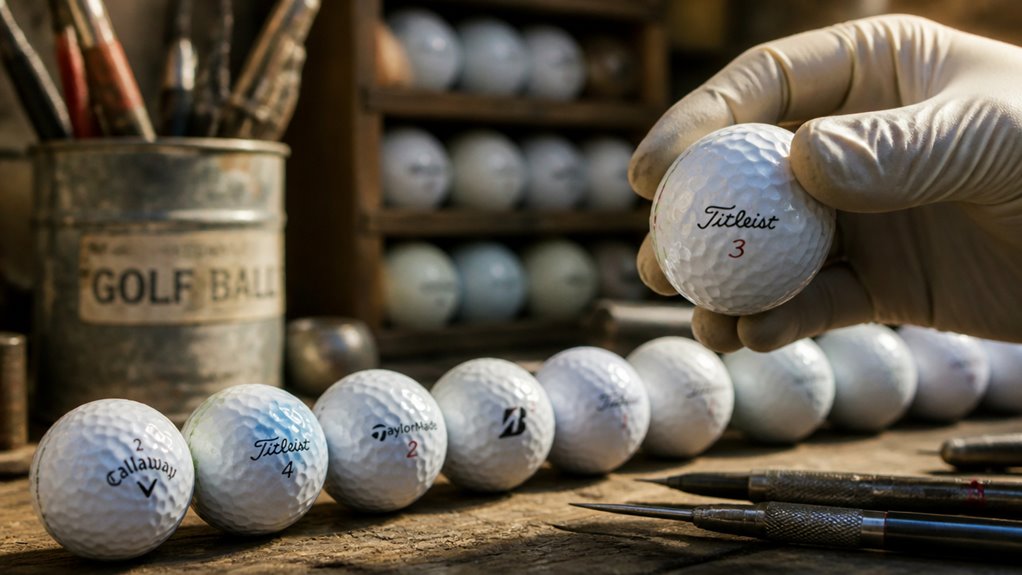
A refurbished golf ball is a used ball professionally cleaned, chemically stripped, repainted, and restamped to look nearly new while retaining its original core and internal structure.
You get a cosmetically restored ball at a lower cost, though its performance may slightly vary due to hidden core wear and added paint layers.
These refinishing steps improve appearance but don’t guarantee new-ball feel or flight. Understanding the refurbishment process and effects can help you make an informed choice.
- Key Takeaways
- What Is a Refurbished Golf Ball?
- Refurbished vs. Used and New Golf Balls: What’s the Difference?
- How Refurbished Golf Balls Are Restored?
- Why Refurbished Golf Balls Look Like New?
- How Refinishing Affects Golf Ball Performance?
- How to Choose the Best Refurbished Golf Balls?
- Who Should Buy Refurbished Golf Balls?
- Final Thoughts on Refurbished Golf Balls
Key Takeaways
- A refurbished golf ball is a used ball cosmetically restored to look almost new through cleaning, repainting, and restamping.
- The core and internal structure remain from previous use despite the renewed outer appearance.
- Refinishing involves chemical stripping, fresh paint, and a glossy finish to conceal scuffs and discoloration.
- Refurbished balls cost 30–60% less than new ones but may have subtle performance differences due to core wear and added paint layers.
- Visual similarity to new balls makes distinguishing refurbished balls difficult without close inspection or performance testing.
What Is a Refurbished Golf Ball?
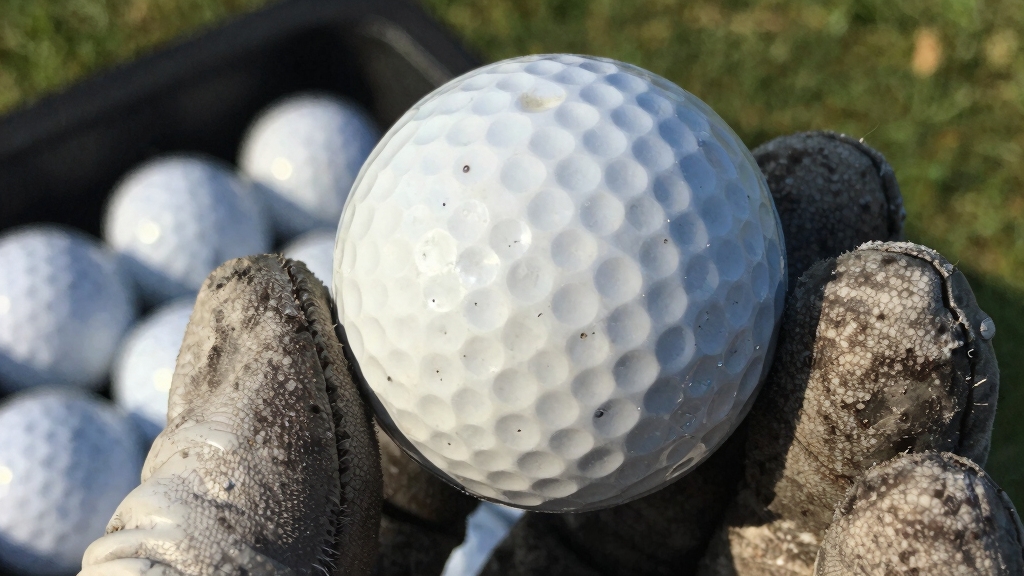
When you pick up a refurbished golf ball, you’re holding a used ball that’s been carefully restored to look nearly new.
A refurbished golf ball is a used ball meticulously restored to appear almost brand new.
This involves a defined process: first, thorough cleaning removes debris, dirt, and stains.
Then, chemical stripping may eliminate the original outer finish, preparing the surface for repainting.
A fresh paint layer and glossy finish are applied, often followed by restamping brand logos or markings.
These balls usually come from previously played stock, selected for near-perfect cover condition before restoration.
Despite their new appearance, the core and internal structure have experienced prior use.
The term “refurbished” can vary among sellers, sometimes interchangeable with “refinished” or “reconditioned,” but the essence remains consistent: cosmetic restoration beyond basic cleaning to extend resale value while maintaining visual appeal.
Professional refurbishment often includes grading to assess quality and usability before resale, ensuring the balls perform close to new. This process is part of the grading and inspection that supports consistent play and resale value.
Refurbished vs. Used and New Golf Balls: What’s the Difference?
Although refurbished, used, and new golf balls might appear similar at first glance, they differ markedly in origin, treatment, and performance characteristics.
Used golf balls are typically cleaned and sorted but remain largely unaltered, retaining their original finish and cover integrity.
Refurbished balls undergo cosmetic restoration, including stripping, repainting, and restamping, which can affect surface texture, size, and weight.
New balls, in contrast, come directly from manufacturers with pristine cores, covers, and coatings, ensuring consistent performance.
You should note that refurbished balls may have compromised flight and spin properties due to alterations.
Used balls reflect their prior play conditions without modification.
Choosing between these depends on your performance expectations and budget.
Refurbished balls offer aesthetic renewal at a lower cost but with potential trade-offs in playability compared to new golf balls.
Additionally, the cover material significantly influences feel, spin control, and durability, which can vary widely between new, used, and refurbished balls.
How Refurbished Golf Balls Are Restored?
Restorers begin by thoroughly cleaning each golf ball to remove dirt, grass stains, and surface debris, preparing it for further cosmetic treatment.
Next, they often apply chemical stripping agents to remove the original outer finish, exposing a clean surface for refinishing.
After stripping, the balls receive a fresh coat of paint, restoring their outer appearance and adding a uniform glossy finish.
Precision restamping follows, where logos and markings are reapplied or enhanced to mimic the original design.
Finally, restorers perform cosmetic touch-ups, correcting any imperfections such as faded arrows or minor scuffs.
This multi-step process guarantees the golf ball’s exterior looks consistent and polished, though it doesn’t alter the ball’s core or internal structure, which remain from prior use.
To ensure clear and lasting identification on the course, many refurbished balls feature durable, waterproof ink in their restamping process.
Why Refurbished Golf Balls Look Like New?
The thorough cleaning, stripping, repainting, and restamping steps create a surface that closely mimics the appearance of a brand-new golf ball.
Meticulous cleaning and refinishing craft a surface nearly identical to that of a pristine new golf ball.
You start with used balls in good condition, then remove dirt and old finish through chemical stripping, eliminating wear indicators.
Next, repainting applies a uniform, glossy outer layer that conceals scuffs and discoloration.
Restamping replaces faded logos and markings with sharp, clear prints, restoring the original branding aesthetics.
This multi-stage cosmetic restoration guarantees the ball’s outer surface looks flawless to the casual observer.
Although the core remains used, these precise refinishing techniques give refurbished golf balls their pristine, like-new look.
This makes it challenging for you to distinguish them visually from new balls without close inspection or performance testing.
Refurbished balls often use a low compression core design similar to beginner golf balls to maintain playability despite prior use.
How Refinishing Affects Golf Ball Performance?
Refinishing a golf ball alters its aerodynamic properties and can impact its flight characteristics.
When you apply extra layers of paint or clear coat, you increase the ball’s diameter and weight marginally, which affects drag and lift forces during flight.
These changes can reduce carry distance and alter spin rates, especially on short irons and wedges where control is critical.
Additionally, chemical stripping and repainting may modify the surface texture, potentially smoothing out or filling dimples.
This disrupts airflow and reduces lift efficiency.
You might notice inconsistencies in ball flight and feel compared to new balls because the core has already undergone compression during prior play.
While refinishing enhances cosmetic appeal, you should expect subtle but measurable performance deviations, particularly in spin, trajectory, and overall consistency.
Such refinishing also affects the ball’s surface friction, which is crucial for spin and control during putting and short game shots.
Debunking Common Myths About Refurbished Golf Balls
You might think that refurbished golf balls perform just like new ones, but that’s not always the case. The processes used to restore them can actually change their flight and spin characteristics in subtle ways.
Sure, they may look a lot like brand-new balls, but just because they’ve had a cosmetic makeover doesn’t mean their performance is identical.
So, it’s really important to weigh the trade-offs. While you can save some cash with refurbished balls, you also want to consider the quality.
Understanding what you prioritize in your game can help you make the best choice for yourself.
Many golfers find that factors like low compression design and durable covers significantly influence ball performance and value.
Performance Differences Explained
Understanding the true impact of cosmetic restoration on golf ball performance requires separating fact from fiction. When you play with refurbished balls, slight variations in weight and surface texture from repainting can influence flight and spin. However, these differences are typically subtle and often negligible for most golfers.
| Factor | Impact on Performance |
|---|---|
| Extra paint layers | May increase weight, altering flight |
| Surface texture | Can affect spin and control |
| Core condition | Generally unchanged post-restoration |
| Water exposure history | Potential internal degradation |
| Restamping | No functional effect, cosmetic only |
You should consider that while refurbished balls might perform slightly differently, the core playability usually remains intact. Additionally, understanding how compression ratings influence ball deformation helps explain why minor surface changes have limited impact on overall performance.
Appearance Versus Functionality
Although refurbished golf balls often look nearly indistinguishable from new ones, their cosmetic restoration can lead to misconceptions about performance equivalence.
You should understand that refinishing processes, such as repainting and chemical stripping, alter the ball’s surface properties. This can potentially affect aerodynamics and spin rates.
The added paint layers increase weight marginally and may change the ball’s diameter within allowable tolerances, influencing flight characteristics.
Furthermore, internal core degradation from prior use isn’t visually detectable but can impact compression and resilience.
When you evaluate refurbished balls, rely on objective performance data rather than appearance alone.
While their restored finish provides a fresh look, it doesn’t guarantee the ball will replicate the exact feel or behavior of a new ball during play.
Recognizing this distinction helps you set realistic expectations and make informed choices.
It is important to consider how compression ratings influence energy transfer and overall ball performance when assessing refurbished golf balls.
Cost Versus Quality
Maneuvering the balance between cost and quality in refurbished golf balls requires separating fact from common misconceptions. You’ll find these balls offer significant savings, but understanding their true value means recognizing performance trade-offs.
- Price Advantage: Refurbished balls cost appreciably less than new ones. This makes them attractive if budget constraints matter.
- Performance Variability: Restoration processes may slightly alter weight and aerodynamics. This can impact flight and spin consistency compared to new balls.
- Quality Control: Top-tier refurbishing selects near-perfect covers and applies precise cosmetic restoration. However, internal core condition remains uncertain.
When you weigh cost against quality, know refurbished golf balls serve best as economical alternatives. They aren’t exact substitutes for new premium balls. Your choice depends on whether you prioritize savings or consistent, peak performance.
Additionally, the choice of cover material, such as urethane or Surlyn, can further influence durability and playing characteristics, which may be affected in refurbished balls.
How to Choose the Best Refurbished Golf Balls?
Start by evaluating the condition of the refurbished golf balls’ covers. The quality of the outer layer directly impacts performance and durability.
Look for balls with minimal surface imperfections. Cracks or deep scuffs can compromise flight consistency and lifespan.
Verify the uniformity of the refinishing process. Multiple paint layers may alter weight and aerodynamics, affecting spin and trajectory.
Check for reputable branding or restamping to guarantee transparency in restoration quality.
Consider the source and restoration method. Balls chemically stripped and professionally repainted typically offer better reliability than those with superficial cleaning only.
Finally, assess any “refinished” markings indicating cosmetic work. This can help differentiate between lightly cleaned and fully restored balls.
Prioritize sellers who provide detailed condition reports and allow you to choose based on specific performance needs.
For some refurbished golf balls, the paint fill can be removed or softened using acetone or heat methods to ensure a smoother surface finish.
Who Should Buy Refurbished Golf Balls?
Typically, you’ll find refurbished golf balls appealing if you prioritize cost savings without requiring brand-new performance standards.
You should consider them if you:
- Are a casual or beginner golfer who values affordability over precise ball flight and spin characteristics.
- Play frequently and need a large quantity of balls, where minor performance variations won’t impact your overall game.
- Want an environmentally friendly option by reusing golf balls that have been cosmetically restored.
Refurbished balls offer a budget-friendly alternative, especially if you accept subtle differences in weight and surface finish caused by repainting and restamping.
They suit players who focus on playability and cost rather than strict adherence to the original manufacturer’s specifications or peak performance.
If you fit these criteria, refurbished golf balls can provide exceptional value.
Refurbished Golf Balls in the Market
You’ll find refurbished golf balls popping up all over the place, from specialized retailers to online marketplaces. The best part? They’re usually priced much lower than brand-new models, which is a nice bonus for your wallet!
But before you dive in, it’s good to think about how the cosmetic restoration might affect performance. You want to make sure you’re getting a great deal that reflects the ball’s previous use and the quality of any refinishing.
Taking a moment to understand these market factors can really help you make a smart choice. It’s all about balancing those cost savings with the playability you expect on the course!
Market Availability Overview
Numerous retailers and online platforms offer refurbished golf balls, catering to budget-conscious golfers seeking aesthetically restored options. You’ll find these balls available through specialty golf shops, large e-commerce sites, and niche refurbishing vendors. Each source varies regarding selection criteria, restoration quality, and transparency about prior use.
Here are three common channels where you can find refurbished golf balls:
- Dedicated refurbishers: Companies specializing in cleaning, repainting, and restamping used balls.
- Online marketplaces: Platforms like eBay or Amazon where individual sellers offer mixed-quality refurbished stock.
- Golf pro shops: Local shops sometimes stock refurbished balls sourced from course recoveries or trade-ins.
When choosing, consider the vendor’s restoration standards and labeling practices to gauge the ball’s condition and reliability.
Pricing and Value
When shopping for refurbished golf balls, you can expect significant savings compared to new premium models. This makes them an attractive option if you want to cut costs without sacrificing appearance.
Refurbished balls typically cost 30-60% less than new counterparts, reflecting their used core and cosmetic restoration. Price variations depend on brand, restoration quality, and ball condition.
While their exterior may look pristine, keep in mind refinishing processes can affect weight and aerodynamics slightly. This can influence value perception.
For budget-conscious golfers, refurbished balls offer a cost-effective alternative, especially when exact performance replication isn’t critical. However, the trade-off involves accepting potential minor inconsistencies in flight and spin.
Buyer Considerations
Although refurbished golf balls offer a visually appealing and cost-effective option, you should carefully evaluate factors such as restoration quality, ball condition, and seller transparency before purchasing.
Assessing these guarantees you avoid performance inconsistencies or misleading claims.
- Restoration Quality – Confirm the methods used (cleaning, repainting, restamping) preserve ball integrity without excessive added weight or altered aerodynamics.
- Ball Condition – Verify the core’s age, exposure history, and any internal damage, as these affect flight and spin despite cosmetic enhancements.
- Seller Transparency – Look for clear labeling and provenance. Reputable sellers disclose refurbishment extent and avoid misrepresenting refurbished balls as new or premium originals.
Frequently Asked Questions
How Long Do Refurbished Golf Balls Typically Last in Play?
Refurbished golf balls typically last through several rounds, but their durability varies based on prior use and restoration quality.
You might notice quicker wear due to existing core fatigue and altered cover integrity. Extra paint layers can affect spin and control, potentially shortening performance lifespan compared to new balls.
If you play frequently or demand consistent flight, expect refurbished balls to degrade faster. They’re better suited for casual rounds or practice sessions.
Are Refurbished Golf Balls Allowed in Official Tournaments?
You can use refurbished golf balls in official tournaments only if they conform to the USGA and R&A equipment rules. The balls must have the proper markings and meet size, weight, and performance standards.
Since refurbished balls have altered covers and finishes, verify their certification carefully. Many tournaments require brand-new or certified balls to avoid performance inconsistencies. Always check the specific event’s regulations before competing with refurbished balls.
Can I Tell if a Golf Ball Is Refurbished by Its Packaging?
You won’t find a wax seal from the Victorian era on refurbished golf ball packaging, but you can still spot clues.
Manufacturers often label refurbished balls clearly, sometimes with words like “refinished” or “reconditioned.”
Packaging may include disclaimers about prior use or altered cosmetics.
However, some sellers omit such details, making it harder to tell.
Always check for these explicit indicators rather than relying solely on packaging design or branding.
Do Refurbished Golf Balls Include Any Purchase Protection?
Refurbished golf balls rarely include the same manufacturer support or buyer protection that comes with new balls.
However, some sellers offer limited guarantees, such as satisfaction or refund policies, covering defects related to refurbishment.
You should carefully review the seller’s terms before buying, since buyer protection varies widely and often excludes performance issues caused by prior use or restoration.
Expect minimal coverage compared to new golf balls, so consider risk tolerance accordingly.
How Environmentally Friendly Are Refurbished Golf Balls Compared to New Ones?
Refurbished golf balls are more environmentally friendly than new ones because they extend the life cycle of existing balls, reducing waste and the demand for raw materials.
You’re cutting down on manufacturing emissions and the energy used to produce new balls.
However, the refurbishment process uses some chemicals and energy, so it’s not impact-free.
Final Thoughts on Refurbished Golf Balls
Choosing refurbished golf balls is like finding hidden gems in a sea of options. You’re not just saving money; you’re getting a product restored with precision, designed to perform like new.
By understanding the refurbishing process and quality standards, you’ll confidently select balls that deliver consistency and durability on the course.
So, gear up with refurbished balls that blend value and performance, turning every swing into a smart, informed play.