
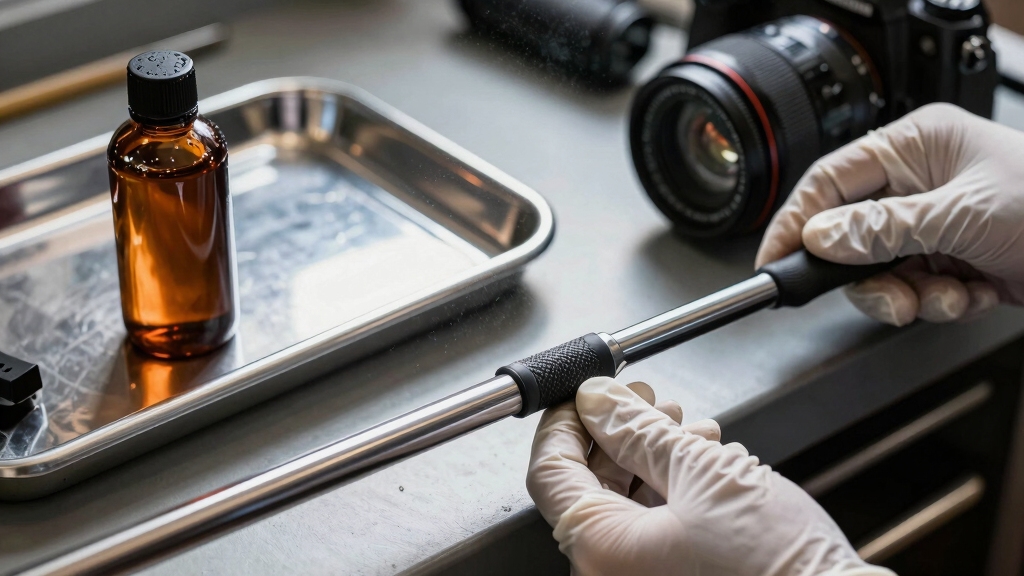
You should use a purpose-built grip solvent made specifically for golf grips, as it lubricates, activates adhesive, and evaporates quickly without leaving residue. Avoid harsh solvents like acetone or mineral spirits, which can damage grips or leave tacky films.
Grip solvents guarantee smooth installation, fast drying, and secure adhesion. Applying them properly also helps maintain grip longevity and performance.
Keep exploring to understand the best products, application methods, and safety tips for flawless grip installation.
- Key Takeaways
- Types of Solvents Used for Golf Grip Installation
- Characteristics of Effective Grip Solvents
- Comparing Grip Solvent and Mineral Spirits
- Popular Commercial Grip Solvent Products
- How to Properly Apply Grip Solvent?
- Best Practices for Grip Installation Using Solvent
- Safety Precautions When Handling Grip Solvents
- Environmental Impact and Disposal Guidelines
- Alternatives to Traditional Grip Solvents
- Frequently Asked Questions
- Can Grip Solvent Improve Grip Performance in Wet Weather Conditions?
- How Long Can Grip Solvents Be Stored Without Losing Effectiveness?
- Are There Solvent Options Safe for Natural Rubber Grips?
- Does Temperature Affect the Drying Time of Grip Solvents?
- Can Grip Solvent Be Used to Remove Residue From Old Grips?
- Get Better Results by Using the Correct Golf Grip Solvent
Key Takeaways
- Grip-specific solvents provide ideal lubrication and rapid evaporation without leaving residue, ensuring smooth golf grip installation and strong adhesion.
- Mineral spirits dry slower and can leave tacky residues, making them less efficient for golf grip installation compared to specialized solvents.
- Avoid acetone as it is too aggressive and can damage grip finishes and materials during installation.
- Water alone dries slowly and lacks adequate lubrication unless combined with specialized grip tapes or additives.
Types of Solvents Used for Golf Grip Installation
When installing golf grips, you’ll typically use a solvent designed specifically for this purpose, as it provides ideal lubrication and rapid evaporation to secure the grip quickly.
These grip-specific solvents outperform alternatives by evaporating swiftly, allowing the grip to set without delay. Mineral spirits are sometimes used but remain tacky longer, reducing installation efficiency.
Acetone, while a strong solvent, is too aggressive and risks damaging grip finishes, making it unsuitable. Water alone dries too slowly and often fails to lubricate adequately unless combined with specialized grip tapes.
Paint thinners or similar solvents pose risks to grip surfaces and are generally avoided. Safer options like water-activated grip tape with mild soap or glass cleaner exist but require different installation methods. It is also important to remove old tape thoroughly from the shaft before applying new solvent and grips to ensure a clean surface for proper adhesion.
Characteristics of Effective Grip Solvents
When it comes to choosing a solvent, you’ll want one that quickly activates adhesive properties. This is super important because it helps reduce installation delays. Nobody likes waiting around, right? Using a solvent that allows for quick grip removal can save significant time during the process.
It’s also essential that the solvent leaves no residue behind. Any leftover material could mess with grip adhesion and lead to a less secure bond. You definitely want a clean surface to work with!
And let’s not forget about safety! Opt for a solvent that’s non-toxic and has low flammability. This keeps you protected during handling and application, which is always a top priority. Additionally, selecting a solvent that is compatible with all grip materials ensures versatility and reliable performance regardless of the grip type you are installing.
Adhesive Activation Properties
Effective grip solvents dissolve the adhesive’s molecular bonds just enough to reduce tackiness and enable smooth grip sliding during installation. This controlled molecular disruption is temporary; as the solvent evaporates, adhesive bonds rapidly reform and often exceed their original strength.
To guarantee peak activation, you need a solvent that uniformly coats both grip tape and inner grip surfaces without damaging materials. Key adhesive activation properties include:
- Temporary molecular bond liquefaction for reduced tackiness and easy grip positioning.
- Reversible bond disruption allowing quick but controlled reformation to prevent slippage.
- Compatibility with all grip tape types, preserving tape and shaft integrity. Many high-quality solvents are designed to be universal and reusable across different grip tape varieties.
- Balanced solvent volume to facilitate lubrication without causing excessive slipperiness or weak bonding. Proper preparation, including cleaning and occasional grip maintenance, enhances solvent effectiveness and grip longevity.
Drying Time Requirements
Although drying time varies markedly among grip solvents, understanding these requirements is essential for ensuring proper grip installation and performance. Traditional solvent-based grips dry in 30 minutes to 2 hours, while water-based ones need up to 24 hours. Quick-dry formulas enable play within 10-15 minutes, enhancing workflow. Environmental factors like temperature and airflow greatly affect drying speed. Applying excessive solvent prolongs drying and risks slippery grips. Using the correct solvent also ensures proper adhesion when applying carpet tape for golf grips. One innovative method uses compressed air, which achieves instant drying and allows immediate grip adjustment without residue. Here’s a summary:
| Solvent Type | Drying Time | Notes |
|---|---|---|
| Traditional Solvent | 30 min – 2 hours | Moderate evaporation rate |
| Water-Based | Up to 24 hours | Environmentally friendly |
| Quick-Dry Formulation | 10–15 minutes | Fast turnaround, mineral spirits blend |
| Mineral Spirits | 30–60 minutes | Effective grip tape activation |
| Engineered Blend | 10–60 minutes | Low VOC, reusable |
Residue and Safety
Selecting the right solvent goes beyond drying time. It also involves understanding residue formation and safety considerations.
You want a solvent that dissolves adhesive without leaving sticky residues, which can cause grips to slip or twist after installation. Water-based solvents evaporate cleanly but need longer cure times. Petroleum-based solvents evaporate fast yet require careful handling due to flammability. Some alternatives, like mineral spirits, risk gooey residue and grip failure.
Keep these points in mind:
- Choose solvents that leave no sticky residue to guarantee grip stability.
- Use non-flammable or low-flammability solvents to reduce fire hazards.
- Ensure adequate ventilation to minimize inhalation risks.
- Dispose of solvents properly per environmental regulations to maintain safety.
Additionally, using grip solvent application techniques such as wiping grips with a damp towel after solvent use can help speed up drying and improve grip installation.
Comparing Grip Solvent and Mineral Spirits
When you compare grip solvent and mineral spirits, you’ll find that grip solvents are specifically formulated to activate modern grip tapes efficiently while minimizing drying time and residue.
Grip solvents contain aggressive cutting agents tailored for contemporary grip materials, ensuring rapid drying, typically within 30 to 60 minutes, and clean evaporation. The All Purpose Grip Solvent by The GolfWorks, for example, features a new formula introduced for 2019 designed to improve cutting action and drying performance. Proper drying is crucial to maintain grip tackiness and prevent slippage during play.
Mineral spirits, petroleum-derived solvents, may leave a gooey residue that compromises adhesive set and grip stability, even after extended drying.
Additionally, grip solvents often feature safer handling profiles, lower flammability, and compatibility with all modern grip tapes, unlike mineral spirits which risk damaging finishes and pose greater health hazards.
For reliable grip adhesion and consistent installation, grip solvents outperform mineral spirits by balancing fast activation with secure, residue-free drying, reducing risks of grip slippage or twisting over time.
Popular Commercial Grip Solvent Products
Several commercial grip solvent products dominate the golf equipment market, each engineered to optimize grip installation with specific formulations and application methods.
You’ll find options tailored for efficiency, safety, and compatibility with solvent-based grip tapes. Consider these top choices:
- The GolfWorks Grip Solvent offers aggressive cutting agents with quick drying, suitable for all grip materials and available in multiple sizes.
- Brampton HF-100 is non-toxic, odorless, and cost-effective, compatible with all double-sided tapes, and features convenient spray application. It is available in an 8-oz spray bottle that measures 7.38 by 2 by 2 inches.
- Billy Bob’s HF-100 reduces VOC emissions by 70%, uses less solvent, and guarantees quick grip setup with low ventilation needs.
How to Properly Apply Grip Solvent?
Before you dive into applying grip solvent, it’s super important to get everything ready. Start by cleaning the shaft and grip really well—make sure to remove any old residue. Also, don’t forget to tape the shaft properly; this step is crucial! Applying grip tape evenly(apply new tape) along the shaft where the grip will seat helps ensure a secure fit. Using mineral spirits to clean surfaces can help remove stubborn residue before applying solvent.
Now, when you’re ready to apply the solvent, don’t hold back! Put a good amount inside the grip and on the taped part of the shaft. This helps ensure that the grip slides on smoothly and sticks well.
Once you’ve slid the grip into place, let the solvent dry and set completely. This way, you’ll know the grip is secure before you start using it. Trust me, taking these steps will make a big difference!
Preparing the Grip
Although applying grip solvent may seem straightforward, properly preparing the grip guarantees peak adhesion and ease of installation.
Start by covering the grip’s small hole at the butt end with your finger or tape to prevent solvent leakage.
Next, pour a generous amount of grip solvent, about halfway full, inside the grip.
Shake the grip thoroughly to distribute the solvent evenly across the interior surface.
Using a solvent specifically formulated for grips or mineral spirits secures a safe, low-abrasion application. Choosing the correct solvent is crucial to avoid damage and ensure durability and optimal performance.
It is important to work quickly after applying the solvent because you want to keep the solvent on the tape only as long as needed for lubrication.
Follow these steps precisely:
- Seal the grip hole to retain solvent during application.
- Fill the grip halfway with solvent for adequate coverage.
- Shake the grip to coat the interior uniformly.
- Use recommended solvents to avoid damage and secure smooth sliding.
Applying the Solvent
When you apply grip solvent, make certain to fully coat the inside of the grip and the adhesive tape on the shaft to guarantee smooth installation and ideal bonding.
Start by blocking the vent hole at the grip butt with your finger to prevent leakage.
Pour solvent generously inside the grip, filling about halfway, then pinch the open end and shake to evenly wet the interior. This step is critical for ensuring proper adhesive activation.
Next, pour the excess solvent over the double-sided tape on the shaft, ensuring full coverage to activate the adhesive and reduce friction.
Use a catch surface to collect drips for reuse.
Apply additional solvent spray if needed to maintain slipperiness.
Begin sliding the grip onto the shaft immediately to utilize the solvent’s wet phase, enabling proper alignment before the solvent starts to set.
Ensure the butt end of the grip is fully wet with solvent for easier installation and to prevent damage during the process preparing for grip installation.
Drying and Setting
After applying the solvent thoroughly inside the grip and on the shaft tape, you need to allow it to dry properly to guarantee strong adhesion. Solvent evaporation activates the adhesive on the tape, securing the grip once fully dry.
Under normal conditions, drying takes 30 minutes to 1 hour, but full adhesion may require up to 6 hours.
To make certain of ideal drying and setting, follow these steps:
- Rest the club upright in a well-ventilated area to promote solvent evaporation and runoff.
- Avoid using heat or forced airflow, which can compromise adhesive curing.
- Confirm the grip surface is tack-free before handling or play.
- Store the club away from heat sources and keep solvents safely contained.
This process ensures grip stability and prevents slippage during use. Regularly checking grips for wear or looseness helps maintain optimal swing mechanics and grip performance.
Best Practices for Grip Installation Using Solvent
Because proper solvent application directly impacts grip adhesion and longevity, mastering the installation technique is essential.
Begin by applying abundant solvent inside the grip, swishing it to coat evenly and lubricate fully. This ensures the grip maintains durability and traction during play.
Plug the weephole to prevent leakage and pour excess solvent onto the taped shaft, ensuring the tape is completely wetted without gaps.
Slide the grip in one smooth motion immediately after solvent application to avoid premature drying.
Use a towel over the grip’s end for better handling and protect against solvent spray.
Firmly tap the butt end to seat the grip, and verify alignment before the solvent sets.
If resistance occurs, remove the grip and reapply solvent liberally.
Proper tape preparation and solvent use guarantee consistent adhesion and grip performance.
Many professional clubfitters prefer to use compressed air as an effective alternative to solvent for installing grips.
Safety Precautions When Handling Grip Solvents
Although golf grip solvents vary in chemical composition, you should always handle them with caution due to their potential health hazards.
Many solvents contain petroleum distillates that can irritate your skin, eyes, and respiratory system.
To guarantee safety, follow these precautions:
- Wear protective gloves and safety goggles to prevent skin and eye contact.
- Work in well-ventilated areas or use respiratory protection to avoid inhaling harmful vapors.
- Keep solvent containers tightly closed when not in use to minimize vapor release. The All Purpose Grip Solvent features a pleasant citrus odor that reduces the strong solvent smell but does not eliminate the need for proper ventilation.
- Eliminate ignition sources nearby, as some solvents may still pose fire risks despite claims of being non-flammable.
Environmental Impact and Disposal Guidelines
When you choose golf grip solvents, understanding their environmental impact is essential for responsible use and disposal.
Traditional petroleum-based solvents emit volatile organic compounds (VOCs), posing air quality and health risks.
Improper disposal risks groundwater and soil contamination, harming aquatic ecosystems.
You should never pour excess solvent down drains or onto soil; instead, use absorbents like cat litter and handle contaminated materials as hazardous waste.
Store solvents safely away from heat until disposal per federal and local regulations.
Recycling solvents by straining and returning them to containers reduces waste.
Additionally, be aware of product recalls and labeling accuracy to prevent exposure to toxic substances.
Opting for eco-friendly water- or bio-based solvents can further minimize environmental hazards, but all disposal must comply strictly with hazardous waste guidelines.
Alternatives to Traditional Grip Solvents
Among the various options available, common household solvents like mineral spirits, and acetone serve as practical alternatives to traditional golf grip solvents. Each offers unique drying times and lubrication properties that affect grip installation.
- Rubbing : Evaporates quickly with no residue; demands rapid grip application.
- Mineral Spirits: Slower drying extends adjustment time but risks tacky tape residue. Many golfers prefer odorless mineral spirits for reduced smell and faster drying compared to some grip solvents.
- Acetone: Dries very fast; requires compatibility verification with grip materials.
- Soapy Water: Provides basic lubrication; needs longer drying for secure adhesion.
Use these solvents by applying inside the grip and over double-sided tape, adjusting speed according to evaporation rate. Note that some alternatives may compromise tape adhesive strength or require safety precautions due to flammability or fumes.
Frequently Asked Questions
Can Grip Solvent Improve Grip Performance in Wet Weather Conditions?
Yes, grip solvent can improve your grip performance in wet weather by ensuring the grip adheres firmly to the shaft, preventing slippage or twisting.
When applied properly, it distributes adhesive evenly and allows the grip to maintain tackiness, especially on synthetic grips.
Using solvent with corded or hybrid grips enhances moisture wicking, providing superior traction.
Just make sure you allow adequate drying time for maximum adhesion and grip stability during wet play.
How Long Can Grip Solvents Be Stored Without Losing Effectiveness?
You can store grip solvents for up to 2 to 5 years without losing effectiveness, as long as you keep them sealed in a cool, dry place.
Some solvents, like HF-100®, even boast an unlimited shelf life at room temperature. Avoid temperature extremes and sunlight, and always seal containers tightly.
If solvents become tacky or dry too fast, it’s time to replace them for consistent performance.
Are There Solvent Options Safe for Natural Rubber Grips?
Yes, you can use safe solvents like HF-100, specifically formulated for natural rubber grips, ensuring effective adhesive activation without damage.
Water-based solutions mixed with mild dish soap also work well, providing lubrication without harsh chemicals.
Avoid mineral spirits or strong petroleum solvents, as they risk grip slippage or degradation.
Always test solvents on a small area first to confirm compatibility with your grip and shaft materials before full application.
Does Temperature Affect the Drying Time of Grip Solvents?
Yes, temperature markedly affects the drying time of grip solvents. When it’s cold, solvents evaporate slower, extending drying and curing times.
Warm temperatures speed up evaporation, shortening your working window. Excessive heat can degrade solvent quality, and extreme cold may alter viscosity.
For consistent results, apply solvents around 70-75°F (21-24°C). Ensure proper ventilation to optimize drying speed and safety during grip installation.
Can Grip Solvent Be Used to Remove Residue From Old Grips?
Yes, you can use grip solvent to remove residue from old grips effectively. It loosens the double-sided tape adhesive, making grip removal easier and cleaning sticky residue simpler when combined with tools like scrapers or grip bore cleaners.
Just apply the solvent precisely, allow it to penetrate, then work the residue off gradually. Avoid excess solvent on the shaft to prevent adhesion issues when installing new grips.
Get Better Results by Using the Correct Golf Grip Solvent
So, you’ve learned that choosing the right grip solvent isn’t rocket science unless you count making your golf grips stick without turning into a chemical hazard.
Use proper solvents, follow safety rules, and don’t treat mineral spirits like your morning coffee.
Remember, the environment isn’t your personal waste bin, and alternatives exist if you want to save the planet while perfecting your swing.
Now go forth, solvent-savvy, and grip like a pro without slipping into chemical chaos.