
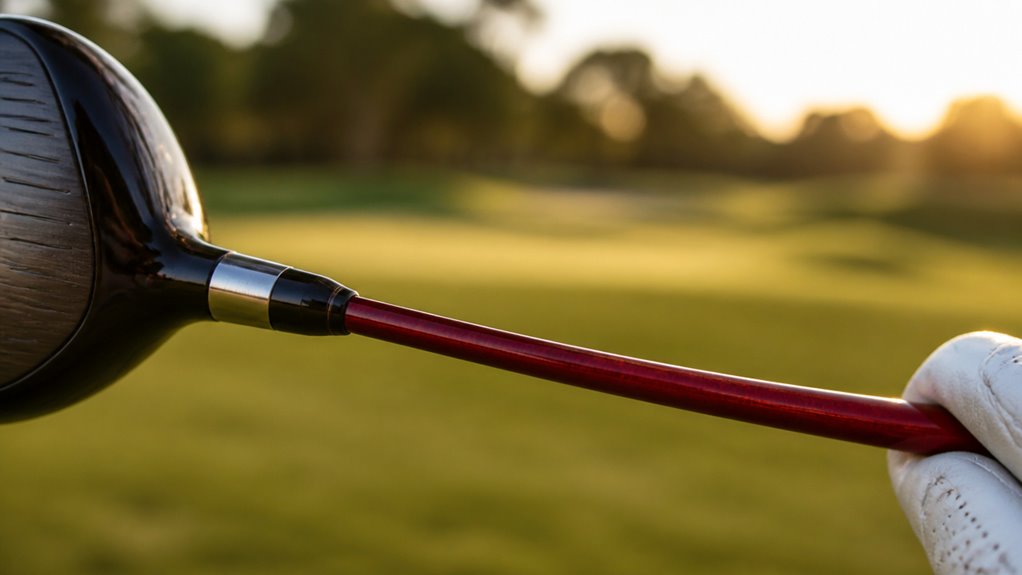
The Ventus Red 5 driver shaft offers moderate torque values around 3.8° for R2, 3.6° for R, and 3.4° for S flex.
These values balance stability and responsiveness by minimizing clubface twist during your swing.
Its design smooths energy transfer while maintaining control and feel, avoiding a harsh, boardy sensation.
The TR Red 5 variant lowers torque slightly for added stability.
If you want to understand how these torque characteristics impact launch, spin, and flex choice, there’s more to explore.
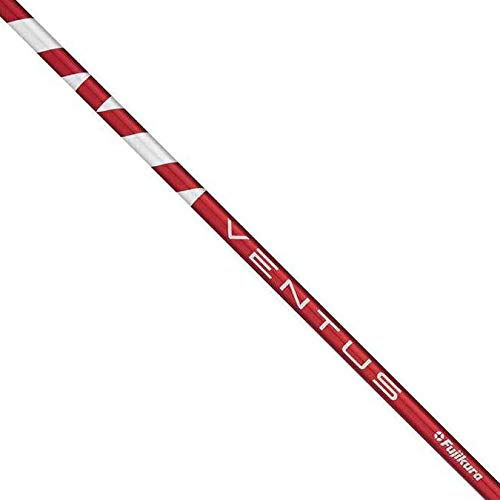
- Featuring Proprietary High Inertia Tip Technology, Phantium Paint Finish, Generate More Power and…
- Key Takeaways
- What Ventus Red 5 Torque Means for Your Swing?
- How Flex Changes Affect Ventus Red 5 Torque Specs?
- Standard vs TR Red 5: Torque Differences Explained
- How Ventus Red 5 Torque Influences Launch and Spin?
- How to Pick the Right Ventus Red 5 Torque for Stability and Feel?
- Frequently Asked Questions
- Is the Ventus Red 5 Torque Right for Your Swing?
Key Takeaways
- Ventus Red 5 shafts have moderate torque values (3.4°–3.8°) balancing stability, control, and smooth feel for mid to mid-high launch profiles.
- Torque decreases slightly with stiffer flexes, providing firmer feedback and improved directional control for faster or aggressive swings.
- The TR Red 5 variant offers reduced torque (approx. 0.2° less) for enhanced stability and less clubface twist at impact.
- Moderate torque levels help maintain consistent spin rates and reduce excessive face rotation for better distance and accuracy.
- Choosing appropriate torque depends on swing speed and feel preference, with lower torque benefiting swings above 105 mph for tighter dispersion.
What Ventus Red 5 Torque Means for Your Swing?
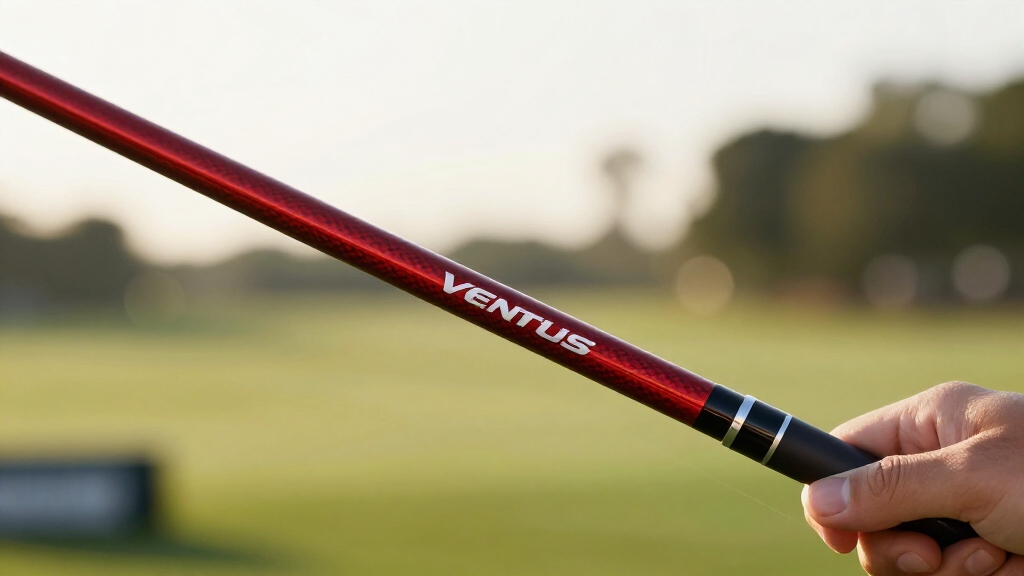
When you look into the torque ratings of the Ventus Red 5 shaft, you’re fundamentally examining how much the shaft will twist during your swing. This directly affects feel and control.
Torque ratings reveal how much shaft twist influences your swing’s feel and control.
The Red 5’s torque ranges from about 3.4° in stiff flex (S) to 3.8° in R2 flex, placing it in a moderate torque category. This means the shaft provides a balanced blend of stability and responsiveness, avoiding the overly stiff, boardy feel of ultra-low torque shafts.
You’ll experience less clubface twist at impact compared to higher-torque options, enhancing directional control without sacrificing smooth loading.
The slight torque drop from R2 to S flex supports progressively firmer feedback as you move up flexes, matching the shaft’s mid to mid-high launch profile. This makes it versatile for various swing speeds.
Additionally, the shaft’s design with a straight taper and advanced materials contributes to consistent ball flight and control, similar to the technology found in the Ventus Blue shafts.
How Flex Changes Affect Ventus Red 5 Torque Specs?
Although the Ventus Red 5 shaft maintains a consistent design philosophy, its torque values shift subtly as you move through the flex options. This reflects the shaft’s tailored response to different swing dynamics.
For example, Fujikura’s official specs list torque at 3.8° for R2, 3.6° for R, and 3.4° for S flexes. This indicates a gradual decrease in torque with increasing stiffness.
This progression helps the shaft provide a firmer feel and reduced twisting as you move to stiffer flexes. It enhances control for faster swing speeds.
You’ll notice that these torque adjustments support smoother energy transfer and stability without sacrificing the shaft’s moderate launch and spin characteristics.
This flexibility in torque values guarantees the Ventus Red 5 adapts well across various player profiles.
Understanding the impact of shaft flex on ball flight and control is crucial for optimizing driver performance with shafts like the Ventus Red 5.
Standard vs TR Red 5: Torque Differences Explained
Following the torque variations across flexes in the standard Ventus Red 5, the TR Red 5 model presents a refined approach by slightly lowering torque values throughout its flex range. This reduction enhances shaft stability, offering a firmer feel with less face twist during the swing.
The difference, though subtle, can influence your control and feedback, especially if you prioritize precision over feel softness.
| Flex | Standard Red 5 Torque (°) | TR Red 5 Torque (°) |
|---|---|---|
| R2 | 3.8 | 3.7 |
| R | 3.6 | 3.5 |
| S | 3.4 | 3.3 |
| Source Variation | 3.9 / 3.7 / 3.5 | 3.7 / 3.5 / 3.3 |
| Torque Range Avg | 3.7 | 3.5 |
Choosing TR Red 5 means opting for a slightly tighter torque profile for better stability. This enhanced stability is achieved through the use of multi-material bias core construction, which significantly reduces torsional deformation for improved control.
How Ventus Red 5 Torque Influences Launch and Spin?
- Featuring Proprietary High Inertia Tip Technology, Phantium Paint Finish, Generate More Power and…
Since torque directly affects shaft flex and twist during your swing, the Ventus Red 5’s mid-range torque values play a crucial role in balancing launch conditions and spin rates.
Torque influences shaft flex and twist, making Ventus Red 5’s mid-range values key for balanced launch and spin.
With torque ranging roughly between 3.4° and 3.9° depending on flex, the shaft provides enough twist to slightly soften feel without sacrificing stability.
This moderate torque allows the clubhead to square more efficiently at impact, promoting a consistent mid to mid-high launch trajectory.
It also controls excessive face rotation, helping maintain a medium spin rate that suits players seeking a blend of distance and control.
You’ll notice the Red 5 helps moderate swing speed golfers achieve easier loading and smoother energy transfer, optimizing launch and spin characteristics for reliable, repeatable performance.
Its advanced graphite construction enhances shaft responsiveness and feel, critical for maintaining consistency throughout dynamic swing loads.
How to Pick the Right Ventus Red 5 Torque for Stability and Feel?
When choosing the right Ventus Red 5 torque for your driver shaft, you need to balance stability and feel based on your swing characteristics and preferences.
If you have a faster, more aggressive swing, opting for the lower torque S flex (around 3.4°) or the TR Red 5 variants with slightly reduced torque offers enhanced stability and less shaft twist. This promotes tighter dispersion.
Conversely, if your swing speed is moderate or you prefer a softer feel, the R or R2 flexes with torque closer to 3.6°–3.8° provide more torsional flex. This improves feedback and feel without sacrificing control.
Always consider the trade-off: lower torque yields a firmer feel and stability, while higher torque enhances smoothness but may reduce precision.
Matching torque to your tempo and control needs guarantees peak performance.
For aggressive swings above 105 mph, shafts with torque around 3.0° or less help stabilize the clubhead and improve accuracy.
Frequently Asked Questions
What Is the Tip Diameter of the Ventus Red 5 Shaft?
The tip diameter of the Ventus Red 5 shaft is 0.608 inches. This measurement is standard across Fujikura’s current spec tables and is essential for ensuring proper clubhead fitting and performance.
When you install this shaft, you can expect compatibility with most driver heads designed for a 0.600 to 0.620-inch tip diameter. This size helps maintain the shaft’s balance and overall feel during your swing.
How Much Does the Ventus Red 5 Shaft Weigh?
The Ventus Red 5 shaft weighs around 59 to 59.5 grams depending on the flex and source.
This relatively light weight makes it ideal if you want a driver shaft that promotes faster swing speeds without sacrificing stability.
The shaft’s 46-inch raw length and moderate torque complement its lighter mass, offering a balanced feel.
You’ll find it suits players looking for a mid-launch, mid-spin profile with smooth, controlled performance.
What Is the Raw Length of the Ventus Red 5 Shaft?
Think of the Ventus Red 5 shaft’s raw length as the backbone of your setup.
It measures a precise 46 inches before trimming or installation.
This length is standard across Fujikura’s published specs, ensuring consistency in swing dynamics and balance.
Knowing this helps you understand how it fits within your driver build and influences factors like swing weight and feel.
The 46-inch raw length supports the shaft’s design for peak performance and playability.
Does Ventus Red 5 Have a Low or High Kick Point?
The Ventus Red 5 has a low to medium-low kick point, which means it promotes a mid to mid-high launch angle.
You’ll find this kick point helps players generate easier launch without sacrificing control.
It balances stability with a smoother feel, making it suitable for moderate swing speeds.
How Do Different Retailers’ Torque Specs for Red 5 Vary?
Think of different retailers as watchmakers tuning the same clock slightly differently.
Their torque specs for the Red 5 vary within a narrow band—around 3.4° to 3.9° depending on flex.
Fujikura’s main specs show 3.8° (R2), 3.6° (R), and 3.4° (S).
Some retailers list slightly higher or lower values, reflecting minor version differences or measurement nuances.
These variations don’t drastically alter the shaft’s stable, mid-torque feel.
Is the Ventus Red 5 Torque Right for Your Swing?
Choosing the right Ventus Red 5 torque is like tuning a precision instrument. One golfer I know dropped his spin rate by 300 RPM just by switching to the TR Red 5, gaining more control without losing feel.
Torque directly affects your swing’s stability and launch conditions. Understanding these subtle shifts helps you optimize performance. By dialing in your torque, you’re not just swinging harder; you’re swinging smarter, with consistent, technical precision.
- Featuring Proprietary High Inertia Tip Technology, Phantium Paint Finish, Generate More Power and…
Last update on 2026-10-07 / Affiliate links / Images from Amazon Product Advertising API