
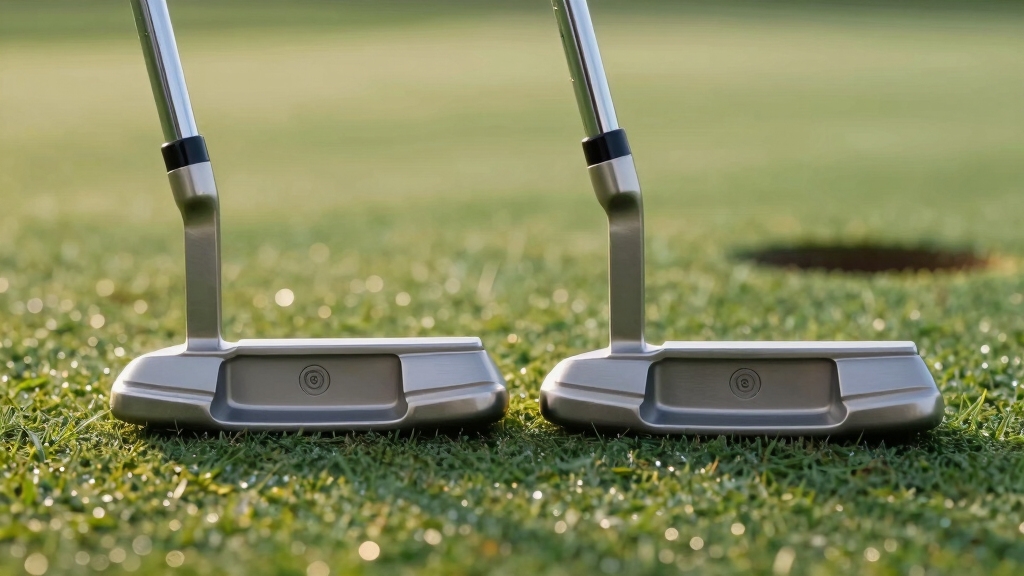
You’ll want a single bend putter if your stroke is straight-back-straight-through. It offers minimal offset, face-balanced stability, and limits face rotation for repeatable control.
If your stroke naturally arcs, a double bend putter suits you better. It provides enhanced offset, promotes controlled face rotation, and positions the head behind the ball for improved alignment.
Each design matches distinct wrist action and stroke mechanics. Understanding these nuances will help you optimize your putting consistency and confidence.
- Key Takeaways
- Single Bend vs Double Bend Putter: Side-by-Side Comparison
- Single Bend Vs Double Bend Putters: Which Fits Your Stroke?
- Comparing Offset And Alignment In Single And Double Bend Putters
- How Single Bend Putters Support Straight-Back-Straight-Through Strokes?
- How Double Bend Putters Help With Arcing Putting Strokes?
- Stability And Forgiveness In Single Vs Double Bend Putters
- Face Rotation And Wrist Action: Single Bend Vs Double Bend Designs
- Classic Vs Modern Looks: Which Putter Boosts Your Confidence?
- Choosing Single Or Double Bend Putters For Your Skill Level
- Frequently Asked Questions
- How Does Shaft Material Affect Single and Double Bend Putters?
- Are There Differences in Putter Weight Distribution Between Single and Double Bends?
- Can Single or Double Bend Putters Be Customized for Left-Handed Golfers?
- What Impact Do Single and Double Bend Putters Have on Green Reading?
- Do Single or Double Bend Putters Require Different Maintenance or Care?
- Single Bend or Double Bend Putter: Match Your Stroke
Key Takeaways
- Single bend putters suit straight-back-straight-through strokes by minimizing wrist action and maintaining a square face throughout the stroke.
- Double bend putters accommodate arced strokes by allowing controlled face rotation and natural wrist hinge with increased offset.
- Single bend offers minimal offset and a classic look, promoting direct hand-face alignment and precise visual setup.
- Double bend provides greater forgiveness on mishits, improved alignment aid with enhanced offset, and positions the clubhead behind the ball.
- Choosing between single and double bend depends on matching putter design to stroke type for optimal control, consistency, and confidence.
Single Bend vs Double Bend Putter: Side-by-Side Comparison
| Feature | Single Bend Putter | Double Bend Putter |
|---|---|---|
| Best For Stroke Type | Straight-back-straight-through | Arcing stroke path |
| Face Rotation | Minimal, promotes square face | Controlled rotation through arc |
| Offset | Minimal offset | Greater offset for alignment |
| Forgiveness | More precise, less forgiving | Higher MOI, more forgiving |
| Wrist Action | Restricts excessive movement | Allows natural wrist hinge |
| Alignment Feel | Clean, classic address view | Enhanced target visibility |
| Player Skill Fit | Skilled, consistent stroke players | Beginners or arc-style players |
Single Bend Vs Double Bend Putters: Which Fits Your Stroke?
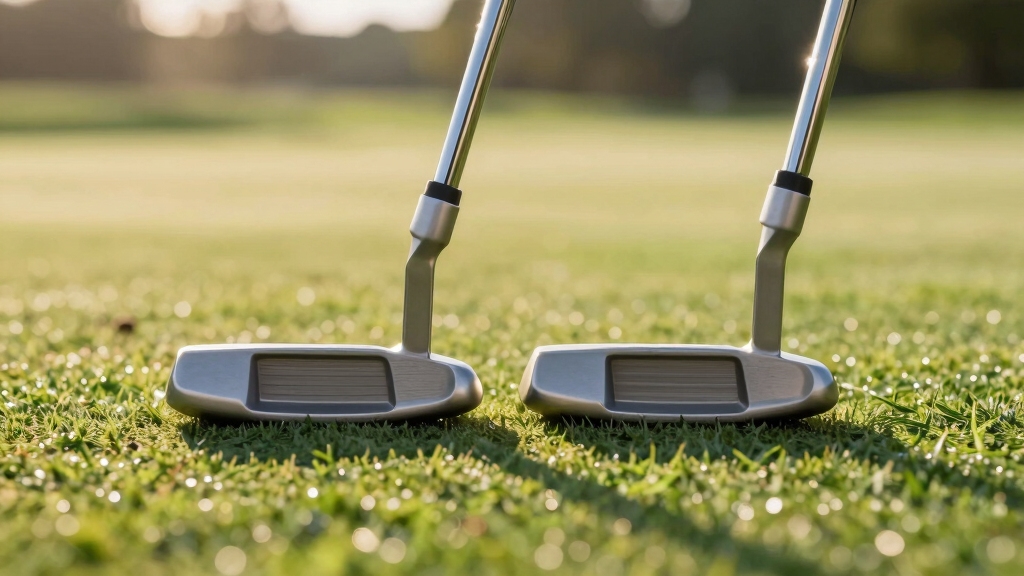
When choosing between single bend and double bend putters, you’ll want to zero in on your natural putting stroke to maximize performance.
Single bend putters, featuring one shaft bend near the hosel, suit straight-back-straight-through strokes by promoting a square face throughout the stroke. They minimize wrist action and stabilize the clubhead, offering a clean, classic address view ideal for blade heads.
Conversely, double bend putters incorporate two bends close to the hosel, creating greater offset that complements arced strokes by allowing controlled face rotation. This design increases forgiveness and moment of inertia, making it favorable for wrist-active players or those employing an arc path.
Understanding your stroke path—straight or arced—is critical to selecting the putter that maintains face balance and optimizes your putting consistency. Face-balanced mallet putters generally suit straight strokes, while toe-hang blades complement arced strokes, emphasizing the importance of matching putter design to your stroke mechanics.
Comparing Offset And Alignment In Single And Double Bend Putters
Although both single bend and double bend putters aim to enhance your putting accuracy, they achieve alignment and offset through distinct design principles that affect how you set up and visualize your stroke.
Single bend putters feature a single shaft bend near the hosel, creating minimal offset and a clean, face-balanced appearance.
This design offers direct hand-face alignment, giving you a straightforward, classic address view that promotes consistent forearm positioning.
In contrast, double bend putters incorporate two bends close to the hosel, producing greater offset and positioning the clubhead behind the ball.
This enhanced offset improves target visibility and aids your aiming by allowing more precise alignment, especially useful for arcing strokes.
Ultimately, your choice depends on whether you prioritize a minimal, traditional setup or enhanced visual alignment through offset.
Additionally, choosing between these designs can influence your feel and sound, which varies based on putter construction and personal preference.
How Single Bend Putters Support Straight-Back-Straight-Through Strokes?
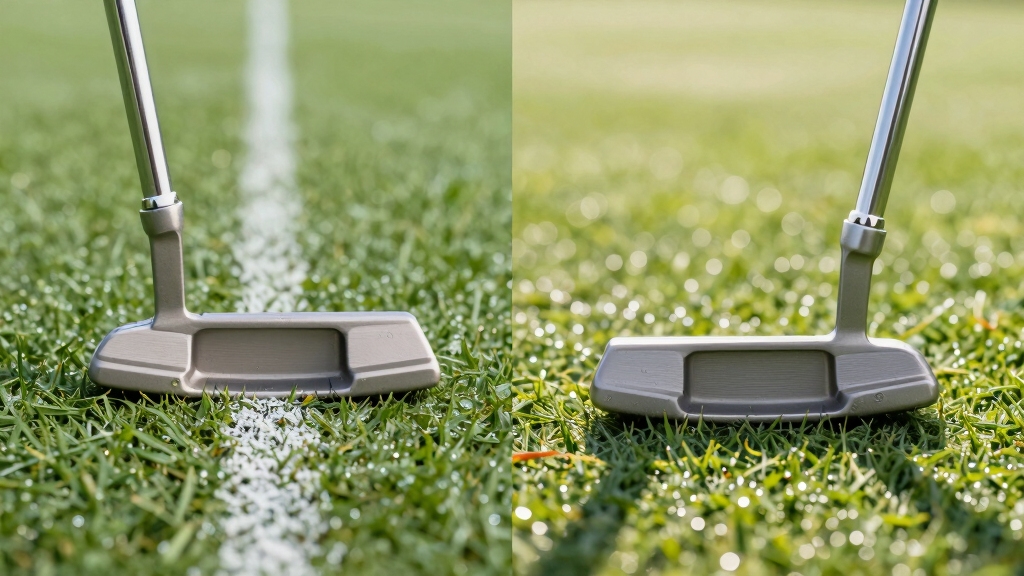
Single bend putters excel at locking in a straight-back-straight-through stroke by minimizing wrist action and promoting a square clubface throughout the motion.
When you use a single bend putter, the minimal offset and face-balanced design help maintain consistent forearm alignment, reducing unintended face rotation.
This design supports a repeatable stroke path essential for precision on fast greens. Key technical advantages include:
Reduced clubface twisting due to straight shaft alignment near the hosel.
Enhanced visual feedback with a clean, classic address position.
Consistent hand positioning that stabilizes the putter through impact.
Additionally, maintaining a smooth rhythm during the putting stroke helps prevent tension and promotes consistent contact.
How Double Bend Putters Help With Arcing Putting Strokes?
Double bend putters cater specifically to golfers who rely on an arcing putting stroke by allowing the clubface to rotate naturally through the swing path.
The dual bends near the hosel create greater offset, positioning the clubhead slightly behind the ball. This enhances alignment and promotes fluid face rotation during the stroke.
This design accommodates your natural wrist hinge and forearm rotation, enabling the putter head to follow a curved path without forcing the face square prematurely.
Unlike single bend putters that limit face rotation for straight-back-straight-through strokes, double bend models encourage an S-shaped arc, matching your stroke’s geometry.
Choosing the correct grip size and material on your putter can further improve control and comfort during your putting stroke by optimizing grip pressure and traction.
Stability And Forgiveness In Single Vs Double Bend Putters
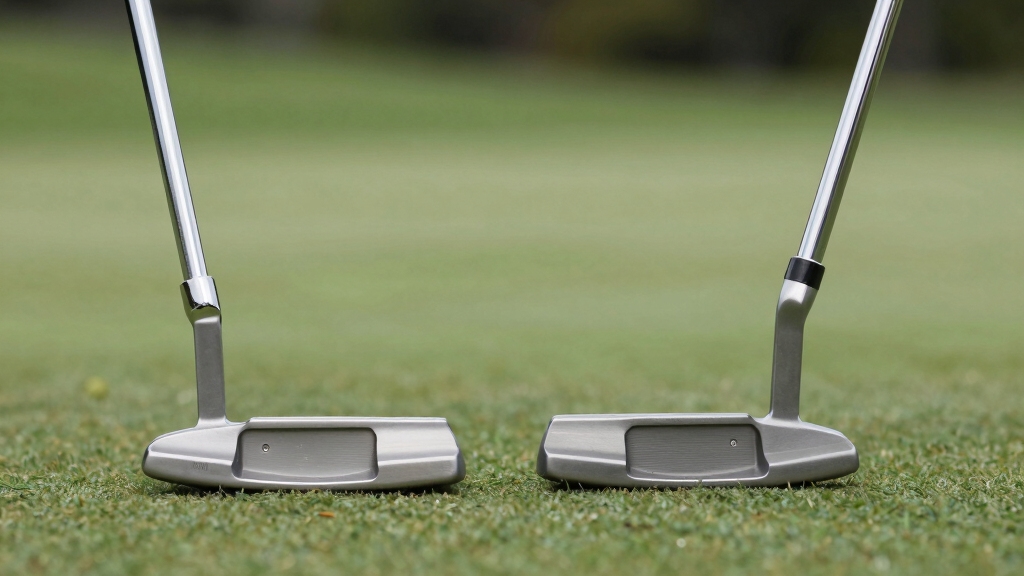
Understanding how putter design impacts stability and forgiveness helps you choose the right tool for your stroke type.
Single bend putters offer exceptional stability for straight-back-straight-through strokes by minimizing face rotation and promoting consistent forearm alignment. Their lower moment of inertia means you’ll experience less forgiveness on off-center hits but gain precise feedback.
Single bend putters provide outstanding stability for straight strokes with precise feedback but less forgiveness on mishits.
Double bend putters, with increased offset and a higher moment of inertia, provide greater forgiveness on mishits and stabilize the clubhead during arcing strokes.
Consider these key differences:
Single bend excels in reducing face over-rotation, enhancing stability for straight strokes.
Double bend increases forgiveness by resisting twisting on off-center strikes.
Double bend’s offset improves alignment and confidence with enhanced target visibility.
Choose based on your stroke path and need for stability versus forgiveness. Proper fitting and understanding of stroke mechanics can further optimize putter performance.
Face Rotation And Wrist Action: Single Bend Vs Double Bend Designs
When you’re using a single bend putter, you’ll notice that your wrist movement is kept to a minimum. This is great because it helps keep the face square throughout your stroke, which can really improve your accuracy.
On the flip side, a double bend design is a bit different. It allows for more face rotation, which means it accommodates that natural wrist action we all have, especially if you tend to have an arcing stroke.
Choosing the right design can be influenced by your putting style, as some styles benefit from more wrist action while others prioritize face control.
Wrist Movement Control
Although both single bend and double bend putters aim to optimize wrist movement during your stroke, they manage face rotation and wrist action quite differently.
With a single bend putter, you experience minimal wrist deviation, promoting a square face throughout the stroke. This makes it ideal for straight-back-straight-through motions.
Double bend designs accommodate more wrist hinge, facilitating controlled face rotation during arcing strokes.
Consider how each design impacts wrist movement control:
Single bend putters restrict excessive wrist break, enhancing stability and reducing face over-rotation.
Double bend putters allow a natural wrist hinge to match your arcing stroke, improving fluidity.
The offset in double bends positions the hands ahead, increasing leverage and wrist feel.
Understanding these distinctions helps you select a putter that complements your wrist movement and stroke style precisely.
Additionally, maintaining proper grip pressure during putting is essential to ensure consistent control and avoid unwanted face rotation.
Face Rotation Impact
Because face rotation directly influences putt accuracy and distance control, the design of your putter’s shaft bend plays a critical role in managing it. A single bend putter limits face rotation, keeping your putter face square throughout the stroke. This is ideal for straight-back-straight-through swings.
In contrast, a double bend shaft allows controlled face rotation, accommodating arced strokes and promoting natural wrist action. Understanding these differences helps you select a putter that complements your stroke style and improves consistency.
Players often find that using a putter with the appropriate wrist action for their stroke type can significantly enhance control and consistency on the greens.
| Feature | Single Bend | Double Bend |
|---|---|---|
| Face Rotation | Minimal, promotes square face | Allows moderate rotation |
| Wrist Action | Restricts excessive movement | Facilitates natural arc motion |
| Stroke Compatibility | Straight strokes | Arced strokes |
| Offset | Minimal | Greater, aids alignment |
| Stability | High for straight strokes | Forgiving on off-center hits |
Classic Vs Modern Looks: Which Putter Boosts Your Confidence?
Whether you prefer a clean, classic look or a modern, bold design, the visual appeal of your putter greatly influences your confidence at address.
Classic single bend putters provide a minimalist, blade-style appearance with a straight shaft and subtle offset. This offers a timeless feel that promotes focus.
On the other hand, double bend putters feature a distinctive S-shaped shaft, providing more offset and a contemporary aesthetic. This can boost confidence through enhanced alignment cues.
Consider these factors when choosing your style:
- Classic single bend: Clean lines, face-balanced, ideal for precise visual setup.
- Modern double bend: Bold offset, improved target visibility, stabilizes arcing strokes.
- Psychological impact: Confidence rises when the putter’s look matches your stroke mechanics and personal preference.
Selecting the right visual style helps you trust your stroke and improve consistency. Additionally, ensuring your grip feels natural and balanced is essential to maintain control and comfort during your putting stroke, as a proper grip feel significantly affects performance.
Choosing Single Or Double Bend Putters For Your Skill Level
When it comes to picking the right putter, it’s super important to match your choice to your skill level. First off, think about your stroke type and how much control you want. If you have a straight-back-straight-through stroke, a single bend putter might be just what you need. These putters are designed for stability and they help reduce face rotation, which is great for skilled players who are consistent with their game.
On the other hand, if you’re just starting out or have an arced stroke, a double bend design could really work in your favor. These putters tend to offer more forgiveness and have alignment aids that can really help you find your way. So, whether you’re a seasoned pro or just getting your feet wet, choosing the right putter can make a big difference in your game! Choosing grips with enhanced traction can also improve your control and confidence when putting without gloves.
Skill Level Considerations
As your putting stroke develops, selecting between a single bend and double bend putter hinges on your skill level and stroke mechanics.
If you’re a lower handicap player with a consistent, straight stroke, a single bend putter offers stability and minimizes face rotation, promoting precise alignment.
Alternatively, if you’re still refining your stroke or prefer a slight arc, a double bend putter provides added forgiveness and offset for better targeting.
Consider these points when choosing:
Single bend putters suit players seeking blade-style precision and minimal wrist action.
Double bend putters benefit beginners or wrist-active players by enhancing forgiveness and alignment.
Your confidence can improve with the putter that best complements your natural stroke pattern and control.
Choosing correctly optimizes both accuracy and consistency on the greens.
Stroke Type Compatibility
Because your putting stroke’s path directly influences putter performance, selecting between single bend and double bend designs hinges on matching their mechanical benefits to your stroke type.
If your stroke follows a straight-back-straight-through path, a single bend putter suits you best. Its minimal offset and face-balanced design promote a square clubface throughout the stroke, minimizing wrist action and encouraging consistent forearm alignment.
Conversely, if your stroke features an arcing motion, a double bend putter will enhance your performance. Its greater offset accommodates natural face rotation, improving alignment and allowing the putterhead to follow the arc precisely.
This design also positions the clubhead behind the ball, aiding aiming and control. Understanding these distinctions guarantees you pick a putter that complements your stroke, maximizing accuracy and consistency on the greens.
Forgiveness And Control
While mastering your putting stroke is essential, selecting a putter that balances forgiveness and control according to your skill level can greatly impact performance.
If you’re a lower handicap player with a consistent, straight-back-straight-through stroke, a single bend putter offers superior control and minimal face rotation.
Conversely, if you tend to have a wrist-active, arcing stroke, a double bend design provides extra forgiveness and stability through its higher moment of inertia.
Consider these factors when choosing:
Single bend putters reduce face over-rotation, promoting precision but demand consistent technique.
Double bend putters increase forgiveness on off-center hits, ideal for beginners or fluctuating strokes.
Your skill level should dictate whether you prioritize control (single bend) or forgiveness (double bend).
Match your putter choice to your stroke and skill for best results.
Frequently Asked Questions
How Does Shaft Material Affect Single and Double Bend Putters?
Shaft material markedly influences feel and feedback in both single and double bend putters.
Steel shafts provide consistent stiffness and solid feedback, enhancing control in single bend designs that favor straight strokes.
Graphite shafts offer lighter weight and vibration dampening, which can complement double bend putters, aiding fluid arcing strokes and reducing fatigue.
You’ll find steel shafts promote stability, while graphite supports smoother tempo and feel.
Are There Differences in Putter Weight Distribution Between Single and Double Bends?
Imagine a single bend putter’s weight focused more toward the clubhead, offering stability and a clean feel, contrasted with a double bend design that shifts weight slightly rearward and increases the moment of inertia.
This distribution in double bends enhances forgiveness and helps maintain face control during arced strokes.
Can Single or Double Bend Putters Be Customized for Left-Handed Golfers?
Yes, you can customize both single and double bend putters for left-handed golfers.
Manufacturers typically offer left-handed shaft bends and hosel orientations, ensuring proper alignment and stroke mechanics for lefties.
Whether you prefer the minimal offset of a single bend or the enhanced alignment of a double bend, customization lets you maintain the putter’s intended performance characteristics.
It also ensures stroke compatibility and feel tailored specifically to your dominant side and putting style.
What Impact Do Single and Double Bend Putters Have on Green Reading?
Think of green reading like decoding a complex map.
Single bend putters offer a straight, stable path, helping you focus on subtle breaks with minimal distraction from hand movement.
Double bend putters provide enhanced offset, improving your alignment and targeting confidence, especially on arced strokes.
This alignment aid acts like a compass, sharpening your aim and helping you better interpret slopes and grain.
Ultimately, it influences your read and stroke precision on the green.
Do Single or Double Bend Putters Require Different Maintenance or Care?
You don’t need drastically different maintenance for single or double bend putters, but be mindful of their unique shaft bends.
Clean the hosel bends carefully to prevent dirt buildup, which can impact feel and alignment. Use a soft brush or cloth around the bends to avoid damage.
Regularly check for shaft straightness and grip wear. Both styles benefit from routine cleaning and storage in a dry place to preserve performance and longevity.
Single Bend or Double Bend Putter: Match Your Stroke
When choosing between single bend and double bend putters, consider your stroke type, alignment needs, and wrist action.
Single bend putters suit straight-back-straight-through strokes, offering stability and minimal face rotation.
Double bend putters complement arcing strokes, enhancing forgiveness and offset alignment.
Whether you prefer classic or modern aesthetics, match your skill level to maximize confidence and control.
Ultimately, understanding these nuances helps you select the putter that refines your technique and improves your consistency.