
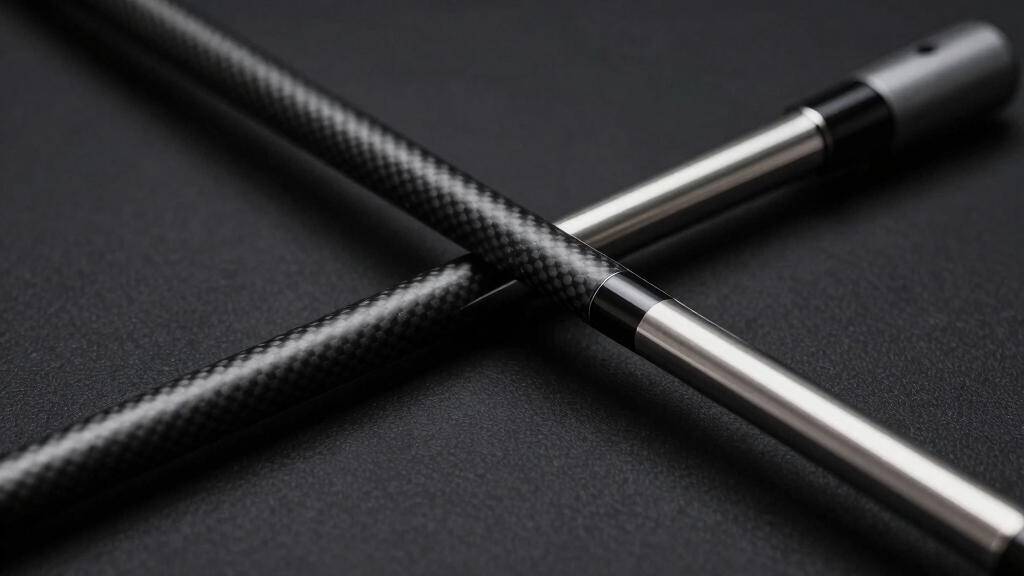
Choosing between graphite and steel golf shafts hinges on your swing speed, control needs, and feel preferences. Graphite shafts are lighter (32–125g), boosting your swing speed and offering higher launch with more vibration dampening. They are ideal if you seek distance and comfort.
Steel shafts, heavier (90–130g), deliver consistent flex, tighter shot dispersion, and sharper feedback. They favor precision and workability for faster swingers. Each material impacts ball flight, stability, and durability differently. Exploring these factors helps refine your ideal setup.

- 0.370″ shaft tip diameter with 5.5” parallel tip section, 0.580” butt diameter
- Convenient combination ladies and senior flex shaft design for hybrids, irons, and wedges
- Shaft Weight – 66 grams, Ball Flight – High launch angle


- STS Steel Technology state-of-the-art Stepless Shaft Design
- Tight Shot Dispersion, Solid Feel at Impact AAA+++ Feedback
- Virtually No Spine, Top Grade, Smooth on all 4 Quadrants
- Key Takeaways
- Side-by-Side Comparison: Graphite & Steel Shaft Golf
- Weight Differences Between Graphite and Steel Shafts
- How Shaft Material Affects Swing Speed?
- Flexibility and Feel: Graphite vs Steel
- Impact on Control and Accuracy
- Ball Flight Characteristics With Different Shafts
- Durability and Cost Considerations
- Player Profiles Best Suited for Graphite Shafts
- Player Profiles Best Suited for Steel Shafts
- Advances in Shaft Technology
- Choosing the Right Shaft Based on Playing Conditions
- Frequently Asked Questions
- Can Graphite Shafts Affect My Golf Club Fitting Options?
- How Do Graphite and Steel Shafts Compare in Terms of Environmental Impact?
- Are There Specific Maintenance Tips Unique to Graphite or Steel Shafts?
- Do Graphite Shafts Influence the Sound of the Club at Impact?
- How Do Shaft Materials Affect the Resale Value of Golf Clubs?
- Upgrade Your Game with the Right Golf Shaft
Key Takeaways
- Graphite shafts are lighter (32–125g), increasing swing speed and distance, while steel shafts are heavier (80–130g), enhancing control and shot accuracy.
- Steel shafts provide consistent flex, lower torque, and tighter shot dispersion, favored for precision and faster swing speeds.
- Graphite shafts offer superior vibration dampening, reducing fatigue and improving comfort, especially beneficial for players with joint discomfort.
- Graphite shafts typically produce higher launch angles and spin, resulting in longer carry distances, whereas steel shafts yield lower, penetrating ball flights.
- Steel shafts are more budget-friendly and maintain resale value better; graphite shafts cost more due to advanced materials and technology.
Side-by-Side Comparison: Graphite & Steel Shaft Golf
| Feature | Graphite Shaft | Steel Shaft |
|---|---|---|
| Weight Range | Lightweight (32–125g) | Heavier (90–130g) |
| Swing Speed Impact | Boosts swing speed and distance | Promotes controlled, steady tempo |
| Feel at Impact | Softer feel with vibration dampening | Crisp feedback and solid response |
| Shot Control | More forgiveness, slightly higher dispersion | Tighter shot dispersion and precision |
| Ball Flight | Higher launch and increased carry | Lower, penetrating trajectory |
| Comfort Level | Ideal for joint relief and reduced fatigue | Less forgiving on hands and arms |
| Durability | Advanced but more delicate construction | Highly durable and long-lasting |
| Cost & Value | Higher price due to technology | More budget-friendly with strong resale |
Weight Differences Between Graphite and Steel Shafts
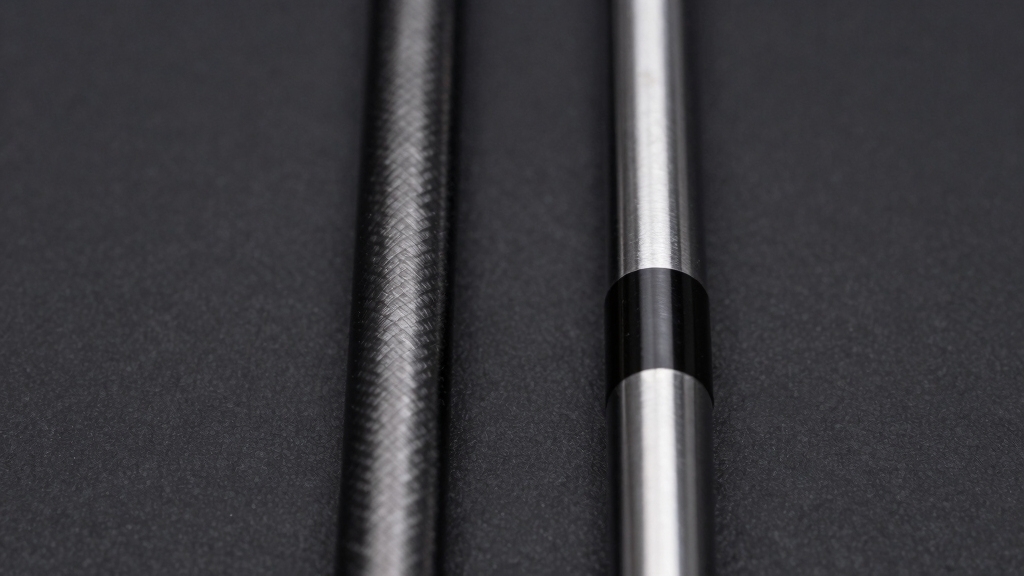
When comparing graphite and steel golf shafts, you’ll notice significant differences in their weight ranges that directly affect performance and feel.
Steel shafts usually weigh between 80g and 130g, with irons clustering around 90-130g, offering a consistent, solid feel favored for precision. These weight differences also influence the swing weight of the club, affecting control and shot accuracy.
Graphite shafts vary more widely, from as light as 32g up to 125g, allowing more customization.
Most graphite woods weigh 60-70g, while graphite irons typically range 70-80g, with premium models reaching the heavier end to mimic steel’s control.
This broader range lets you select lighter graphite shafts for reduced fatigue and longer clubs or heavier options that balance stability.
Steel’s uniform metal alloys limit weight reduction, while graphite’s composite layers enable precise tailoring of stiffness and weight, influencing your club’s overall balance and vibration dampening.
Graphite shafts are composed of multiple layers of carbon fiber, enabling diverse design options that contribute to these weight variations.
How Shaft Material Affects Swing Speed?
You’ll often find that graphite shafts generate 2 to 3 mph higher clubhead speeds than steel shafts under controlled conditions.
This increase primarily stems from graphite’s lighter weight, ranging from 40 to 125 grams, compared to steel’s heavier 90 to 130 grams. The reduced mass allows for improved swing tempo, which can be crucial for maximizing energy transfer and shot distance.
The reduced mass allows you to accelerate the clubhead more efficiently, translating to slightly higher ball speeds and marginally increased carry distances, typically around 0.8 yards.
However, testing shows that graphite shafts may produce a slightly higher spin rate and more dispersed shot patterns compared to steel.
Advanced graphite composites like VeloCore enhance energy transfer and minimize shaft deformation at high speeds, narrowing performance gaps with steel.
While steel shafts offer greater rigidity and consistency, their weight can limit swing tempo and speed.
Graphite’s design flexibility lets you tailor shaft weight and stiffness to your swing, optimizing speed without sacrificing control.
Therefore, shaft material directly influences your swing dynamics and potential distance gains.
Flexibility and Feel: Graphite vs Steel
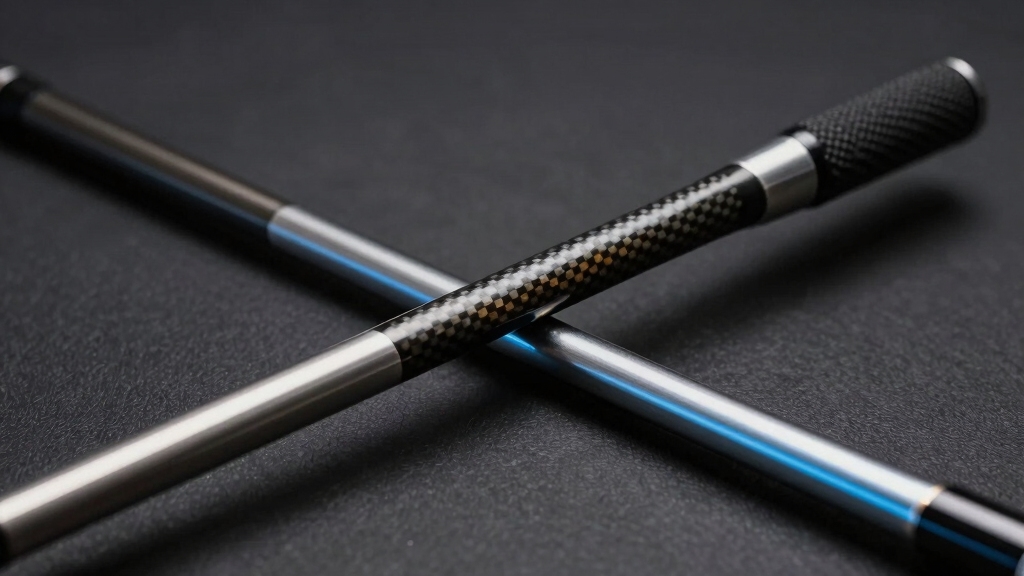
When it comes to golf shafts, you’ll find that graphite shafts tend to flex more, thanks to their composite design. This can really help boost your swing speed and add some extra distance, especially if your swing tempo is on the slower side. Graphite shafts are commonly used in drivers, fairway woods, and hybrids because they offer greater flexibility and help maximize launch and distance.
On the flip side, steel shafts offer a stiffer and more consistent flex profile. This is something that many faster swingers appreciate because it can really improve control and shot precision. For example, the KBS Max 85 Steel shaft provides a mid-bend point that enhances trajectory and spin control, making it ideal for moderate to faster swing speeds and helping players maintain shot consistency.
Another thing to consider is how each material feels during play. Graphite shafts have a fantastic vibration dampening quality, which means they can enhance your comfort on the course by reducing strain on your hands and arms.
Meanwhile, steel shafts provide a sharper feedback, allowing you to assess your shots more effectively. So, it really comes down to your personal preference and playing style!
Shaft Flex Differences
Although both graphite and steel shafts offer various flex options, their flexibility and feel differ markedly due to material properties and weight.
Graphite’s composite construction grants greater overall flexibility, aiding slower swingers in generating clubhead speed with a lighter weight of 40–125 grams. This flexibility often results in a higher launch and more spin. Additionally, the lightweight construction of graphite shafts helps reduce joint strain by dampening vibrations during swings. Adjusting the shaft weight can also influence the club’s swing weight, affecting the overall feel and control.
Conversely, steel shafts, typically heavier at 95–130 grams, provide a stiffer, more rigid flex profile that favors faster swingers by maintaining control and promoting a lower ball flight. Steel’s uniform flex guarantees consistent performance and tighter shot dispersion. Modern graphite shafts have improved stability through advanced composites but may still exhibit higher torque and flex variation.
Your choice depends on swing speed and desired balance between distance, control, and feel.
Vibration and Comfort
When comparing vibration and comfort, graphite shafts excel at dampening impact shock and reducing vibration transmission to your hands and arms. This makes them especially beneficial for players prone to joint discomfort or fatigue. Graphite’s composite materials absorb vibrations better than steel, providing a softer feel that reduces strain during long sessions. This shock-absorbing property of graphite shafts enables players to practice longer and experience less physical strain overall. Steel shafts deliver sharper feedback but transmit more harsh vibrations, potentially increasing fatigue and discomfort. Proper maintenance of shafts, including protecting graphite shafts with furniture wax to prevent scratches, helps preserve their vibration dampening qualities and overall performance.
| Feature | Graphite Shaft | Steel Shaft |
|---|---|---|
| Vibration Dampening | High (30%+ reduction) | Low |
| Feel | Softer, smoother | Crisp, precise |
| Joint Comfort | Ideal for arthritis, tendonitis | May exacerbate joint pain |
| Feedback | Muted, less tactile | Sharp, detailed |
| Weight | Lighter (40–115g) | Heavier (95–130g) |
Swing Speed Impact
Vibration dampening plays a key role in comfort, but swing speed and shaft flexibility directly influence your performance and feel during the swing.
Graphite shafts, being lighter (40–125 grams), typically increase your swing speed by 2 to 3 mph compared to steel shafts, which weigh 90–130 grams. Proper shaft weight supports optimal swing tempo and shot trajectory, enhancing overall performance.
This weight difference allows smoother energy transfer and faster clubhead speed, especially beneficial if your swing speed is slower or average.
Graphite’s greater flexibility can enhance distance but may increase shot dispersion.
Steel shafts, with consistent stiffness, offer better control and precise ball striking, favored by faster swingers above 90 mph.
Modern graphite designs, such as those with VeloCore technology, improve stability and reduce dispersion, narrowing the gap with steel in feel and performance.
Choosing the right flex tailored to your swing speed optimizes ball flight and control.
Additionally, graphite shafts absorb shock, reducing strain on joints and improving comfort during extended play.
Impact on Control and Accuracy
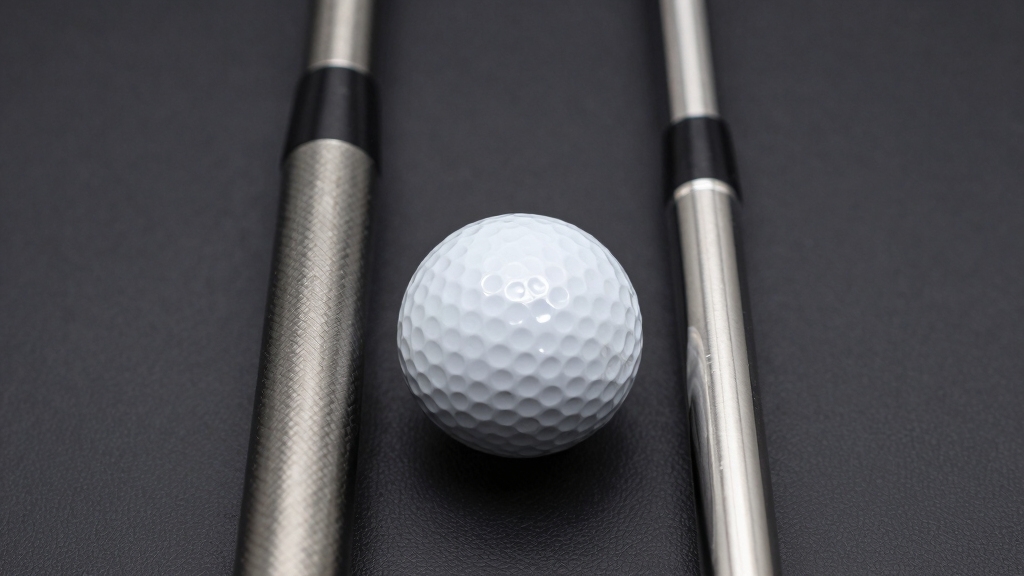
When you look at shot dispersion, you’ll often find that steel shafts generally provide tighter groupings. This is mainly because they’ve low torque and high rigidity, which means they offer better stability. But here’s the interesting part: advanced graphite shafts, especially those with multi-material cores, have come a long way. They now do a great job of minimizing twist and reducing misdirection, which really helps close the accuracy gap.
Additionally, graphite shafts typically weigh less than steel, enabling faster swing speeds that can benefit distance without greatly sacrificing control due to these technological improvements in shaft materials. Moreover, the multi-layer graphite construction enhances stability and shaft loading, improving shot consistency and control.
Shot Dispersion Differences
Understanding shot dispersion differences between graphite and steel golf shafts can help you optimize control and accuracy based on your playing style and conditions.
Steel shafts typically offer tighter dispersion due to their lower torque and higher stiffness, which benefits skilled players prioritizing precision. In tests comparing shafts matched for weight and stiffness, steel shafts provided a more stable and solid feel at impact, which can enhance confidence in shot consistency. Their consistent performance is often preferred on flat and smooth terrains where precision is crucial.
However, modern graphite shafts, like those with AXIOM’s VeloCore Technology, minimize shaft twist, sometimes matching or surpassing steel in tightness and forgiveness on off-center hits. Additionally, graphite shafts are generally lighter, contributing to reduced fatigue and easier swing mechanics over extended play.
Consider these key points:
- Steel shafts provide consistent, penetrating shots with less curvature, ideal for shot shaping and control.
- Graphite shafts can increase ball speed and reduce fatigue, enhancing dispersion consistency over longer rounds.
- Improper graphite fitting may lead to wider or “wild” dispersion patterns, especially at high swing speeds.
Proper fitting is essential to leveraging either shaft’s dispersion advantages effectively.
Shaft Stability Effects
Although both graphite and steel shafts offer distinct benefits, their differences in stability directly influence your control and accuracy on the course.
Steel shafts feature lower torque and superior rigidity, minimizing twisting during your swing and providing a consistent flex profile that enhances predictability and shot stability. Their heavier weight also contributes to a stable swing path, improving tempo and accuracy, while modern high-modulus graphite shafts approach steel’s stability with less weight.
Traditional graphite shafts exhibit higher torque, which can increase clubface rotation at impact, reducing control. However, advanced models like AXIOM’s VeloCore technology achieve twisting resistance comparable to steel. Additionally, graphite’s vibration dampening reduces fatigue, but steel’s sharper feedback might aid skilled players fine-tuning their control. Steel shafts offer durability
Ultimately, your choice depends on balancing stability, feel, and performance requirements, and understanding how shaft torque affects swing speed can help you make an informed decision.
Ball Flight Characteristics With Different Shafts
Since shaft choice directly influences launch conditions, you’ll notice that graphite shafts generally produce a higher launch angle and increased ball flight height due to their lighter weight and greater flexibility.
Graphite shafts typically offer higher launch angles and increased ball flight height thanks to their lightness and flexibility.
This results in longer carry distances, often 5-10 yards more than steel shafts. In contrast, steel shafts generate a lower, more penetrating trajectory, valued for control and wind resistance.
Consider these key differences:
1. Launch and Spin: Graphite shafts yield higher launch angles and spin rates, aiding stopping power but potentially increasing shot dispersion.
Steel shafts offer lower launch and spin, promoting tighter shot patterns and consistency.
2. Distance Potential: Lighter graphite shafts boost clubhead speed and distance, especially for slower swing speeds.
Steel shafts favor efficient energy transfer and precise control in faster swings.
3. Trajectory Control: Steel’s rigidity enhances trajectory shaping, while graphite’s flexibility supports higher, softer landings.
The choice between graphite and steel shafts also affects swing speed and feel, influencing how the clubhead transfers energy to the ball.
Durability and Cost Considerations
When it comes to durability, steel shafts really take the lead. They tend to outlast graphite shafts because of their tough metal composition. This means they resist wear and can keep performing well over many seasons. Steel is also less affected by weather conditions and requires only regular cleaning to prevent rust, adding to its long-term durability.
On the other hand, graphite shafts are lighter and come with some advanced features, but they don’t quite hold up as well. They wear out faster and require a bit more care, which can definitely impact how long they last.
Now, let’s talk about costs. Steel shafts usually offer better value for your money. They’ve lower upfront prices and you won’t need to replace them as often.
In contrast, graphite shafts are more expensive. However, many people feel that the lightweight benefits and the way they dampen vibrations justify the higher price.
Longevity and Wear
When evaluating longevity and wear, steel shafts outperform graphite in durability due to their rigid metal construction and resistance to environmental factors like moisture and temperature changes.
Steel’s robustness helps it withstand frequent play without significant performance degradation, while graphite shafts, though lighter and more flexible, are prone to splintering and internal fatigue from repeated flexing.
To maintain your shafts’ condition, consider these points:
- Steel shafts require minimal maintenance, just regular cleaning to prevent rust and preserve integrity.
- Graphite demands careful handling and frequent inspections to detect cracks or splinters early, as damage can escalate quickly.
- Environmental exposure affects graphite more, necessitating proper storage to avoid accelerated wear and material fatigue.
The availability of a wide range of shaft weights and profiles means durability considerations can also vary within each material type.
Choosing steel means opting for longer lifespan and structural stability, while graphite sacrifices some durability for weight and vibration reduction.
Price and Value
Durability differences between steel and graphite shafts naturally influence their price and overall value.
Steel shafts, known for longevity and consistent performance, typically cost less upfront—around $20–$45 per shaft. This makes them budget-friendly, especially for full sets.
Graphite shafts, while lighter and offering vibration dampening, command higher prices due to advanced materials and technology, ranging from $35 to $380 depending on club type and quality.
You’ll find mixing graphite in long irons and steel in wedges helps balance cost and performance.
Resale value favors steel shafts, which maintain demand better than graphite despite their higher initial price.
| Shaft Type | Typical Cost Range (Per Shaft) | Durability & Resale Value |
|---|---|---|
| Steel | $20–$45 (irons) | High durability, strong resale |
| Graphite | $35–$380 (woods/irons) | Less durable, faster depreciation |
| Premium Graphite | $80–$380 | Advanced tech, retains value if well-maintained |
Player Profiles Best Suited for Graphite Shafts
Stepping into the world of graphite shafts means tapping into advantages tailored for specific player profiles. If you’re aiming to optimize your swing and comfort, graphite offers distinct benefits.
Discover how graphite shafts enhance your swing and comfort with benefits tailored just for you.
Consider these key player types best suited for graphite:
- Moderate to slower swing speed players, including seniors and juniors, who benefit from the lighter weight that enhances clubhead speed and reduces strain.
- Players with joint pain or fatigue issues appreciate graphite’s vibration damping, which minimizes discomfort during extended play.
- Serious amateurs and elite players seeking stability and distance find graphite’s reduced torque and deflection improve shot consistency and control, promoting higher, controllable ball flights.
Player Profiles Best Suited for Steel Shafts
Selecting steel shafts suits players who demand precision and control at higher swing speeds. You’ll benefit from their heavier weight (90–130 grams), which stabilizes your swing and reduces torque. This enhances shot accuracy. Steel shafts provide clear feedback on mishits, helping players sharpen their swing techniques.
Steel’s consistent flex aids aggressive or steady tempos, making it ideal for shaping shots and controlling trajectory. You’ll appreciate the tactile feedback steel provides, which is pivotal for fine-tuning your swing.
However, if you have joint issues or prefer lighter clubs, steel may not suit you.
| Player Profile | Steel Shaft Advantage |
|---|---|
| Advanced/Competitive | Superior control and durability |
| High Swing Speed | Stiffer shaft reduces twisting |
| Shot-Workability Focus | Consistent flex for shaping |
Advances in Shaft Technology
While steel shafts excel in control and feedback for advanced players, recent advances in shaft technology have reshaped the performance landscape. Modern graphite shafts now rival steel in stability and accuracy, thanks to innovations in materials and design. The introduction of boron and other materials has significantly reduced twisting and increased durability in graphite shafts, enhancing overall performance.
You’ll find:
- Material Innovations: Graphite shafts use premium carbon fiber and boron blends, making them about 14 times stronger than steel for the same weight. This enables lighter, more durable designs. Steel alloys have also evolved to be lighter and stronger, sometimes under 100 grams.
- Performance Enhancements: Graphite offers enhanced flex, vibration dampening, and optimized flex profiles per iron type. This boosts launch and carry distances by 5-10 yards. Steel shafts maintain lower torque and less flex, ideal for controlled ball flight.
- Hybrid Technologies: Emerging multi-material shafts combine graphite and steel to balance weight, feel, and control. This merges the best traits of both materials.
Choosing the Right Shaft Based on Playing Conditions
Because shaft choice directly affects your swing dynamics and shot outcome, you need to take into account playing conditions carefully when selecting between graphite and steel.
If you often play in windy or cold environments, steel shafts maintain consistent flexibility and deliver lower, penetrating ball flights for better control. Steel shafts are also typically more affordable than graphite alternatives, making them a cost-effective choice.
Conversely, graphite shafts may stiffen in cold weather, slightly impacting performance.
If you face long rounds or rough terrain, steel’s durability and resistance to damage offer cost-effective longevity.
For slower swings or joint issues, graphite’s lighter weight and vibration dampening enhance comfort and increase swing speed, translating to more distance.
However, graphite’s greater flexibility can increase shot dispersion compared to steel’s superior rigidity, which provides tighter dispersion and stable clubface control.
Ultimately, match shaft material to your swing speed, comfort needs, and typical course conditions for peak performance.
Frequently Asked Questions
Can Graphite Shafts Affect My Golf Club Fitting Options?
Yes, graphite shafts can materially affect your club fitting options.
Because they’re lighter and offer more flex variations than steel, fitters can customize length, flex, and torque to match your swing speed and tempo.
Their vibration-dampening benefits also influence recommendations, especially if you need comfort.
However, graphite requires precise fitting and professional installation, making adjustments more involved than steel.
This customization enhances performance but demands careful evaluation during fitting.
How Do Graphite and Steel Shafts Compare in Terms of Environmental Impact?
You’d think graphite shafts, being lighter, are greener, but steel shafts actually have a lower environmental impact.
Steel’s well-established recycling and longer lifespan contrast sharply with graphite’s energy-heavy carbon fiber production and difficult recycling.
While graphite shafts degrade faster and rely on petrochemical resins, steel shafts boast durable performance and efficient reuse.
Are There Specific Maintenance Tips Unique to Graphite or Steel Shafts?
Yes, you need to handle graphite shafts gently to prevent scratches and cracks, using mild soap and avoiding abrasives. Then apply sealants to protect the finish.
Steel shafts tolerate rougher treatment but require rust prevention through drying and occasional fine steel wool for rust removal.
Both need regular cleaning and inspection, but graphite demands more careful storage and impact avoidance.
Steel benefits from rust control and easier repairs.
Do Graphite Shafts Influence the Sound of the Club at Impact?
Imagine your club’s impact sound as the signature note in your golf symphony.
Graphite shafts soften this note, muffling vibrations and producing a muted, warmer tone compared to the crisp, metallic snap steel shafts deliver.
This happens because graphite’s carbon fiber composition absorbs shock, altering acoustics.
You’ll notice less harsh feedback at contact, which can ease joint strain but may reduce the sharpness some players rely on for precise ball-striking cues.
How Do Shaft Materials Affect the Resale Value of Golf Clubs?
Shaft materials markedly impact your golf club’s resale value.
Steel shafts, being more durable and consistent, maintain higher long-term value. They appeal to players seeking control and feedback.
Graphite shafts, while lighter and aiding swing speed, depreciate faster due to fragility and limited market demand, especially in used sales.
If you want better resale returns, steel is typically your safer bet. However, premium graphite from top brands can still hold decent value.
Upgrade Your Game with the Right Golf Shaft
When choosing between graphite and steel shafts, you’ll weigh lighter versus heavier, prioritize swing speed versus control, and balance flexibility against stability. You’ll consider how each material influences ball flight and suits your playing style, whether you need forgiveness or precision.
Advances in shaft technology have narrowed gaps, but your conditions and preferences still guide your choice. Ultimately, you’ll select the shaft that complements your swing, enhances your performance, and matches your on-course demands.
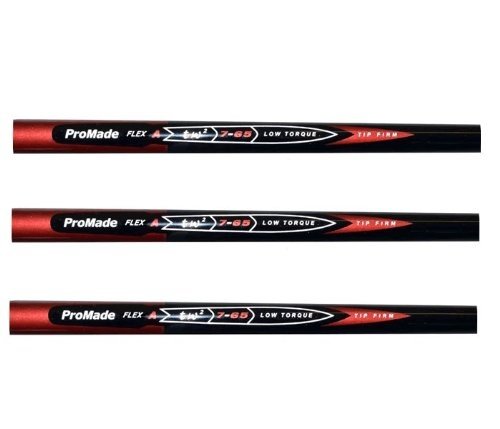
- Features a unique composite construction and innovative shaft flex profile for MAXIMUM DISTANCE…
- OUTSTANDING “KICK” THROUGH IMPACT TO MAXIMIZE BALL SPEEDS
- OUTPERFORMS THE EXPENSIVE $49.99+ OEM GRAPHITE IRON SHAFTS
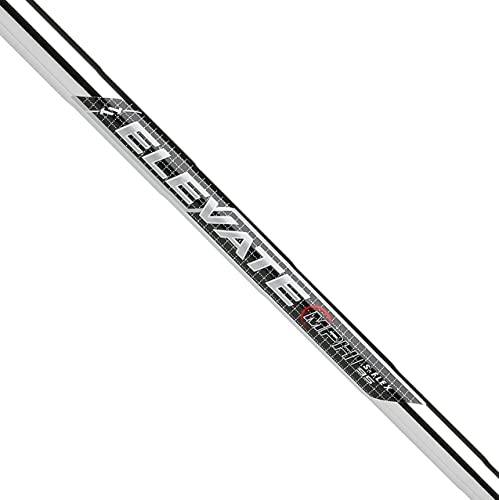
- True Temper Elevate MPH 95 Steel Iron Shaft
- Tip Size: .370 Parallel
- Weight: (Regular – 90g), (Stiff – 90g)
Last update on 2026-04-09 / Affiliate links / Images from Amazon Product Advertising API