
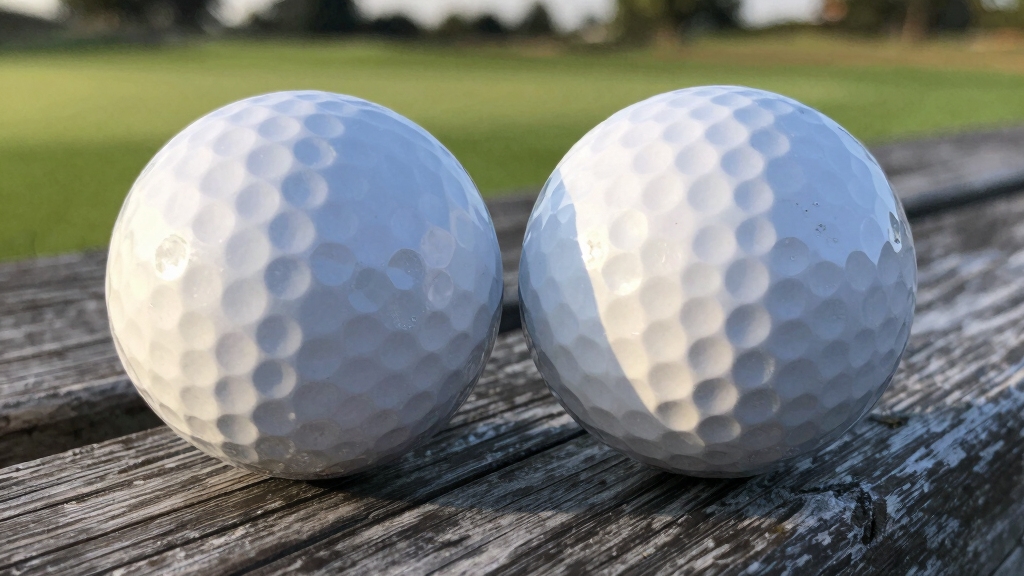
If you prioritize spin, control, and soft feel around the greens, urethane covers give you superior backspin and shot-shaping due to their tackier, more elastic surface.
Conversely, Surlyn offers firmer durability, lower spin promoting straighter shots, and better resistance to cuts, making it ideal for slower swings and cost-conscious players.
Your choice hinges on balancing enhanced playability against longevity and price, with further insights available on matching cover types to your skill level and game style.

- 3 PIECE CONSTRUCTION : Designed to enhance energy transfer for maximum distance, lower spin on long…
- 350 AERODYNAMIC DIMPLES : Promoting a stable, consistent trajectory for improved flight performance.
- 85 COMPRESSION : Engineered to deliver the ideal mix of distance, spin, and feel at any swing speed.

- ONE DOZEN BALLS, READY TO LAUNCH – Stock your bag P*ss Missile and go have some fun; Our signature…
- 4-PIECE CONSTRUCTION FOR POWER & PRECISION – These bad boys are engineered to reduce spin, giving…
- HIGH COMPRESSION CORE FOR MAXIMUM ENERGY TRANSFER – the inner core gives peak energy transfer and…
- Key Takeaways
- Golf Ball Urethane or Surlyn: Performance Comparison at a Glance
- Material Composition and Feel Differences
- Spin Rates and Control Characteristics
- Distance and Performance Comparison
- Durability and Cost Considerations
- Ideal Player Profiles for Each Cover
- Key Trade-offs Between Urethane and Surlyn
- Frequently Asked Questions
- Can Urethane or Surlyn Covers Affect Golf Ball Visibility on the Course?
- Do Temperature Changes Impact Urethane and Surlyn Ball Performance Differently?
- Are There Environmental Concerns With Disposing of Urethane vs. Surlyn Balls?
- How Do Urethane and Surlyn Covers Influence Ball Compression Ratings?
- Can Cover Type Affect a Ball’s Performance in Wet or Rainy Conditions?
- Match Your Swing Style with the Right Golf Ball Cover
Key Takeaways
- Urethane covers provide softer feel, higher spin, and superior greenside control favored by advanced players and professionals.
- Surlyn covers offer greater durability, lower spin, and more distance, ideal for beginners and casual golfers prioritizing forgiveness.
- Urethane balls wear faster and cost more, while Surlyn balls resist cuts and abrasions, lasting longer and costing less.
- Urethane’s softer cover enhances shot-shaping and feedback but is less forgiving on mishits compared to Surlyn’s firmer surface.
- Surlyn balls maintain consistent performance in varied weather, benefiting players with slower swing speeds seeking distance and durability.
Golf Ball Urethane or Surlyn: Performance Comparison at a Glance
| Feature | Urethane Golf Balls | Surlyn Golf Balls |
|---|---|---|
| Feel at Impact | Soft, responsive, premium feel | Firm, solid, more muted feel |
| Spin & Control | High spin, excellent greenside control | Low spin, straighter ball flight |
| Distance Potential | Consistent for faster swing speeds | Longer carry for slower swings |
| Forgiveness | Less forgiving on mishits | More forgiving and stable |
| Durability | Wears faster, prone to scuffs | Highly durable, cut-resistant |
| Cost Range | Premium pricing | Budget-friendly |
| Best Suited For | Low to mid handicappers | Beginners and high handicappers |
Material Composition and Feel Differences
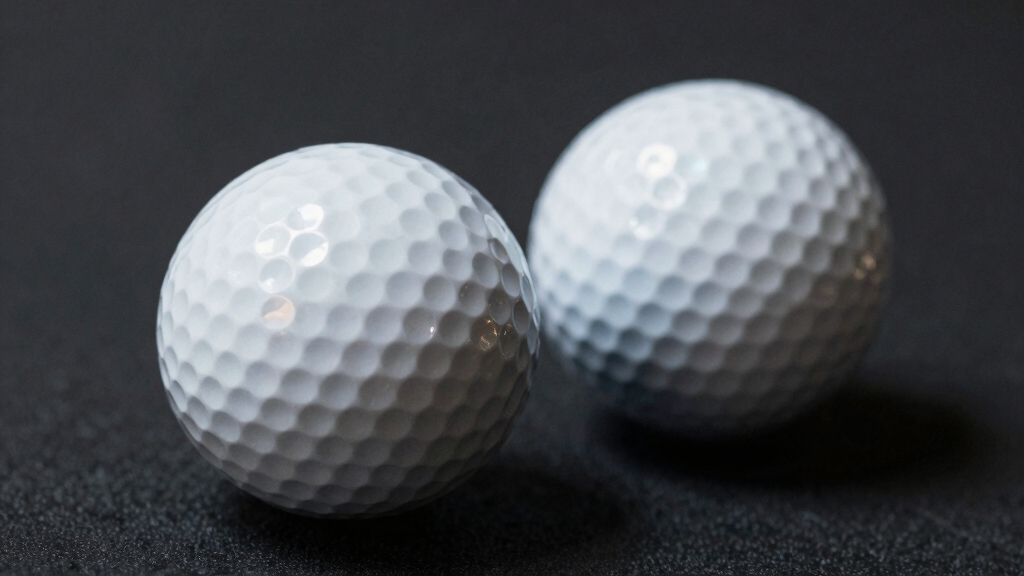
Although both urethane and Surlyn serve as common golf ball cover materials, their chemical compositions fundamentally influence feel and performance characteristics you’ll notice immediately.
Urethane is a thermoset polymer, chemically cured inside molds to produce a soft, tough cover favored for its customizable softness and durability balance. It provides greater short-game control and spin, making it the preferred choice for experienced players who can exploit these advantages.
Urethane’s chemically cured thermoset structure creates a soft yet durable golf ball cover with customizable feel.
Surlyn, a DuPont-developed ionomer copolymer, is a thermoplastic resin known for its hardness and superior resistance to cuts and abrasions. This material also offers greater durability, which is especially beneficial for beginners or players with slower swing speeds.
You’ll find urethane covers on premium multi-layer balls, delivering a softer, responsive feel with distinct tactile feedback, particularly appreciated around greens.
Surlyn’s firmer, thicker covers offer a consistently solid feel, masking minor mishits and prioritizing durability. This material contrast explains why urethane feels softer but less resilient, while Surlyn provides enhanced toughness and a firmer impact sensation.
Spin Rates and Control Characteristics
You’ll notice that urethane balls tend to generate higher spin rates. This really enhances your ability to shape shots and control trajectory, especially when you’re using wedges or short irons. Soft balls with urethane covers generate higher spin, enhancing greenside control and stopping power, making them ideal for players seeking shot precision.
On the flip side, Surlyn balls produce lower spin off the tee and around the greens. This can be beneficial for those who prefer straighter flights and longer rollouts, but keep in mind it might limit your shot-shaping precision. Surlyn covers are known for their firmer feel and lower spin profile, which helps reduce hooks and slices.
So, understanding these spin differences is pretty important! It can really help you optimize your control on the course. Plus, it allows you to tailor your ball choice to match your swing speed and playing style.
Spin Differences Explained
When comparing urethane and Surlyn golf ball covers, you’ll notice that urethane consistently produces higher spin rates, especially on short irons and around the green. This is due to its softer, more elastic surface that increases friction with the clubface. This softer cover also provides a noticeably softer feel compared to Surlyn.
This friction enhances backspin, enabling sharper stopping power on greens. Surlyn’s harder thermoplastic resin cover generates less spin, minimizing side spin and promoting straighter shots, particularly beneficial off the tee.
Urethane balls exhibit greater spin variability influenced by shot conditions. Surlyn balls maintain more consistent, lower spin rates. Higher spin from urethane aids advanced shot shaping and trajectory control. Surlyn’s lower spin reduces hooks and slices for less skilled players.
Control Impact on Shots
Because urethane covers generate higher friction with the clubface, they produce markedly greater spin rates on iron and wedge shots, giving you enhanced control and precision around the greens. This increased friction arises from the softer urethane material, which enables higher backspin and side spin, allowing you to shape shots and control trajectories effectively.
The responsive, softer feel provides superior feedback, pivotal for delicate short-game execution. Additionally, urethane covers tend to offer a softer tactile experience, which many skilled players prefer for better shot consistency.
In contrast, Surlyn covers produce lower spin rates due to their harder, less frictional surface. This results in reduced stopping power and shot-shaping capability, but offers straighter, more forgiving ball flights with less dispersion on full shots.
Surlyn is also recognized for its extreme durability, making it ideal for players who frequently encounter hazards. Therefore, urethane balls favor skilled players prioritizing shot control, while Surlyn balls emphasize durability and consistency, sacrificing finesse near the green.
Distance and Performance Comparison
Compare the distance and performance of urethane and Surlyn golf balls by examining their spin rates, energy transfer, and control characteristics.
Surlyn balls achieve lower spin rates off the tee, enabling higher energy transfer and longer drives, especially for mid-to-high handicappers. Their lower compression also makes them easier to compress for slower swing speeds, enhancing distance and forgiveness.
Urethane balls, while offering similar distance for skilled players with faster swing speeds, excel in control and spin on approach shots. Your choice depends on swing speed and shot precision requirements. Surlyn’s reduced spin produces straighter trajectories and consistent distance, benefiting amateurs.
Urethane generates increased backspin, enhancing shot stopping power on greens. Distance off the driver is comparable for advanced players using either cover. Surlyn’s moisture resistance sustains performance across varied weather conditions.
Additionally, surlyn-covered balls are known for their greater durability compared to urethane balls, making them a cost-effective option for many golfers. Understanding these factors helps you optimize ball selection for your playing style.
Durability and Cost Considerations
When you’re looking at golf balls, it’s important to think about how long they’ll last and how much they’ll cost you in the long run. Urethane covers are known for their top-notch performance, but they can take quite a beating, which means you might’ve to replace them more often. That can really add up in terms of expenses. Professionals almost exclusively use urethane-covered balls because of their superior feel and spin.
On the other hand, Surlyn balls are a great option if you’re someone who values durability and wants to keep costs down. They tend to last longer and are generally more budget-friendly. So, if you’re looking to save some money while still getting a decent performance, Surlyn might be the way to go!
Longevity and Wear
Although urethane covers provide superior feel and control, they don’t match Surlyn’s durability, which offers substantial resistance to cuts, scuffs, and abrasions. You’ll notice Surlyn balls maintain surface integrity longer, especially under frequent impacts with hard surfaces like cart paths or rocks.
Urethane balls, while softer, show wear faster, particularly with imprecise strikes. This wear can alter spin and control, reducing performance consistency over time. Key considerations include:
- Surlyn’s hardness extends ball lifespan despite rough play.
- Urethane’s softer cover demands precise hits to minimize surface damage.
- Frequent rough impacts accelerate urethane cover degradation.
- Surlyn balls suit players prioritizing durability and longevity over feel.
Understanding these factors helps you select the right ball for your play style and course conditions. Additionally, compression ratings influence how cover wear impacts spin and control, as softer urethane covers tend to generate higher spin but degrade faster under rough conditions.
Price and Value
Since price and durability directly affect your overall investment in golf balls, understanding their relationship is essential. The dimple count and cover material both influence a ball’s performance and longevity.
Urethane balls cost between $40 and $55 per dozen, reflecting premium materials and multi-layer designs favored by pros.
Surlyn balls, priced $20 to $40, use thicker covers that resist cuts and scuffs better, extending lifespan and reducing replacement frequency. Surlyn is extremely tough and ideal for higher-handicap players seeking straight, far shots and lower cost.
For you, this means Surlyn offers superior cost-effectiveness if you play casually or lose balls often.
However, if you’re a skilled player prioritizing control and spin, urethane’s softer cover justifies higher expense despite lower durability.
Additionally, golfers with swing speeds under 100 mph may gain more distance from Surlyn balls, enhancing value.
Ultimately, your skill level and performance needs should guide your choice between the durability-cost trade-offs of urethane and Surlyn covers.
Ideal Player Profiles for Each Cover
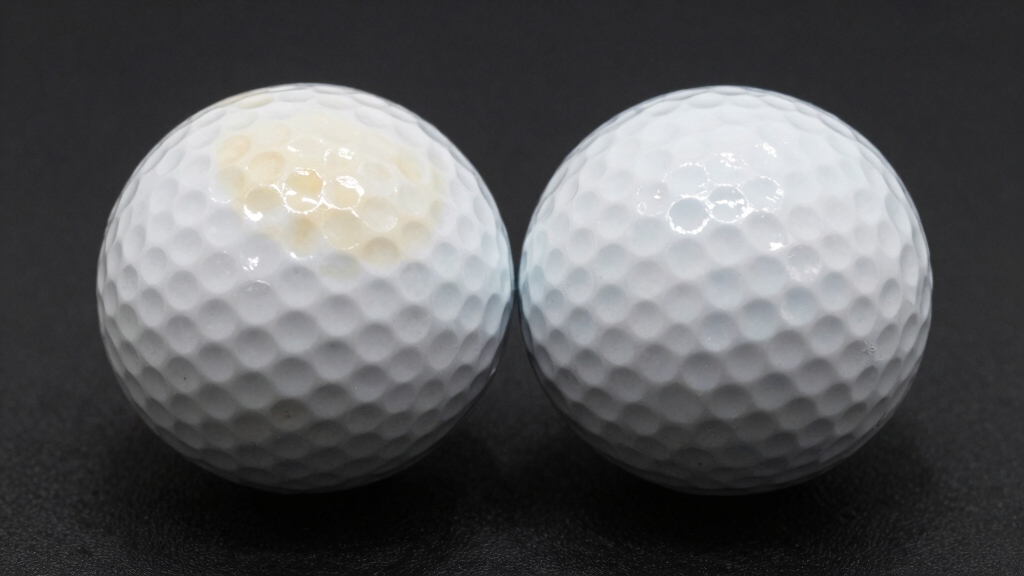
Because different skill levels and playing styles demand distinct performance characteristics, choosing between urethane and Surlyn covers hinges on your specific priorities.
Selecting urethane or Surlyn covers depends on your skill level and playing style priorities.
If you’re an advanced player, urethane suits you by offering superior spin control, softer feel, and enhanced greenside precision. Conversely, if durability, distance, and cost-efficiency matter more, Surlyn fits beginners or high-handicap players better. This differentiation aligns with the way blades and cavity back irons serve different player types and skill levels.
Consider these profiles:
Urethane excels for skilled golfers prioritizing shot-shaping and short game finesse. Surlyn benefits those seeking durability, lower spin, and longer drives.
Players valuing feedback and softness gravitate toward urethane for better touch and control. Golfers needing forgiveness on off-center hits often prefer Surlyn for predictable performance.
Additionally, Surlyn covers provide exceptional durability that makes them less prone to cuts and scuffs. Understanding these profiles guarantees you align ball cover choice with your technical and strategic needs on the course.
Key Trade-offs Between Urethane and Surlyn
When selecting between urethane and Surlyn golf ball covers, you must weigh key trade-offs involving feel, spin control, durability, and cost.
Urethane offers a softer, tacky cover that enhances spin and shot control, ideal for skilled players prioritizing precision and short game finesse.
However, it’s less durable and costs substantially more.
Surlyn, by contrast, features a harder, more resilient cover that reduces spin but increases durability and distance, especially for slower swing speeds.
This makes it cost-effective and suited for beginners or budget-conscious golfers.
While Surlyn balls resist scuffs and maintain performance over time, their harder feel limits shot-shaping capabilities.
Ultimately, your choice depends on your swing speed, skill level, and whether you prioritize control and feel over durability and affordability.
For example, balls like the Vice Pro Plus use a urethane cover to maximize spin and control, while models such as the Vice Pro employ Surlyn for enhanced durability.
Frequently Asked Questions
Can Urethane or Surlyn Covers Affect Golf Ball Visibility on the Course?
Yes, urethane and Surlyn covers can affect your golf ball’s visibility differently.
Urethane’s softer, matte finish may reduce glare but shows scuffs more, possibly hindering clarity.
Surlyn’s harder, glossy surface resists dirt and maintains brightness, though it can reflect sunlight sharply.
Your ball’s color, spin, and trajectory also influence visibility more than cover type alone.
Ultimately, you’ll notice cover effects, but environmental and ball design factors play bigger roles in tracking.
Do Temperature Changes Impact Urethane and Surlyn Ball Performance Differently?
Think of your golf ball as a chameleon adapting to its environment.
Yes, temperature changes impact urethane and Surlyn differently.
Urethane’s softer cover reacts to heat and cold by altering spin and feel, potentially reducing greenside control in cold conditions.
Surlyn’s harder resin maintains consistent firmness and distance across temperatures, offering predictable performance.
Are There Environmental Concerns With Disposing of Urethane vs. Surlyn Balls?
Yes, you should be concerned about disposing of both urethane and Surlyn balls since neither biodegrades markedly.
Both persist for decades, fragmenting into microplastics that pollute ecosystems and harm aquatic life.
Toxic additives may leach into soil and water, disrupting ecological balance.
Recycling options are limited, so lost balls contribute to long-term environmental damage.
Choosing biodegradable alternatives or supporting recovery programs can mitigate these impacts.
How Do Urethane and Surlyn Covers Influence Ball Compression Ratings?
Urethane covers increase ball compression ratings by being softer, allowing the ball to compress more efficiently at higher swing speeds. This enhances energy transfer and spin control.
Surlyn covers are harder and typically paired with lower compression cores, resulting in reduced compression that favors distance over spin, especially at slower swing speeds.
Can Cover Type Affect a Ball’s Performance in Wet or Rainy Conditions?
When rain paints the course, your ball’s cover becomes a silent strategist. Yes, cover type affects wet performance.
Urethane’s softer texture grips your clubface better, retaining spin and control amid moisture, like a dancer gliding on a slick stage. Surlyn resists cuts and keeps distance steady, but offers less spin in damp conditions.
Match Your Swing Style with the Right Golf Ball Cover
Choosing between urethane and Surlyn covers is like picking between the finesse of a surgeon’s scalpel and the durability of a seasoned craftsman’s hammer. Urethane offers you superior spin and control, ideal for precision shots, while Surlyn delivers greater distance and resilience.
Understanding these trade-offs lets you tailor your game equipment to your style and goals, ensuring you wield the right tool for every shot on the course with confidence and technical edge.

- 3-Piece Urethane Cover Golf Ball
- Conforms with USGA and R&A Rules
- high performance ball suitable for recreational and…

- PROFESSIONAL PERFORMANCE: Premium golf balls engineered for optimal distance and accuracy on the…
- LARGE 20 PACK: Convenient 20-pack bag of golf balls ensures you have plenty of balls for multiple…
- DISTANCE FOCUSED: New golf balls designed specifically to maximize carry and roll for improved total…
Last update on 2026-04-09 / Affiliate links / Images from Amazon Product Advertising API