
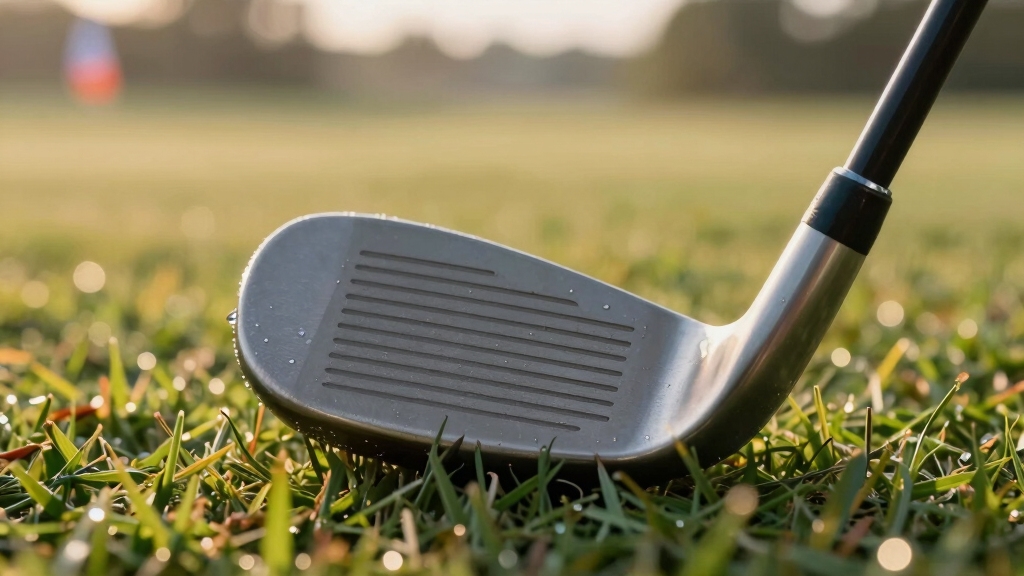
You’ll find forged irons demand precise ball striking because their smaller sweet spot and softer carbon steel construction severely penalize off-center hits.
They provide unmatched feedback and control but require consistent tempo and centered contact to perform well. While modern design tweaks have improved forgiveness, forged irons still reward skilled players who prioritize shot-shaping over raw distance.
If you want to understand why forged irons behave this way and how to optimize your game with them, there’s much more to explore.
- Key Takeaways
- What Makes Forged Irons Different From Cast Irons?
- Why Are Forged Irons Harder for Average Golfers?
- How Modern Technology Has Made Forged Irons More Forgiving?
- Best Golfers for Forged Irons
- How Forged Irons Affect Ball Speed and Distance?
- Durability and Maintenance of Forged Irons
- How to Hit Forged Irons Better?
- Frequently Asked Questions
- Experience the Perfect Balance of Distance and Control
Key Takeaways
- Forged irons have smaller clubheads and sweet spots, requiring precise ball striking and consistent contact for best results.
- They offer less forgiveness on off-center hits, leading to significant loss of distance and control for mishits.
- Their softer feel and enhanced feedback appeal to skilled players who can consistently strike the ball well.
- Modern forged irons incorporate design improvements that increase forgiveness and make them more playable for a wider range of golfers.
- Mid- and high-handicap players may find forged irons challenging due to their demand for precision and smaller margin for error.
What Makes Forged Irons Different From Cast Irons?
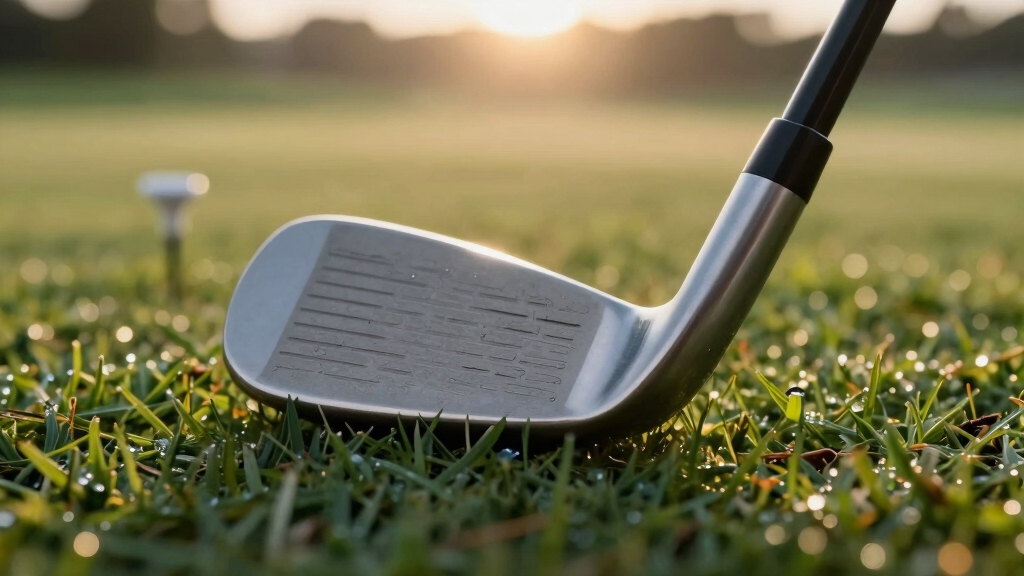
Although both forged and cast irons serve the same basic function, forged irons differ substantially in construction and performance.
Forged irons offer distinct construction and performance advantages despite sharing the core purpose of cast irons.
When you choose forged irons, you get a smaller clubhead with a slimmer profile, which enhances feedback and delivers a softer feel at impact.
The forging process uses uniform, high-quality steel, often softer carbon steels like 1018-1035, ensuring predictable performance.
These irons usually have weaker lofts, varying by manufacturer, prioritizing control over distance.
In contrast, cast irons typically have larger heads and stronger lofts, generating higher ball speeds.
Forged irons appeal mainly to lower-handicap players who value precision and shot-shaping ability.
You’ll notice forged irons provide tighter dispersion patterns but demand consistent ball striking due to the reduced forgiveness compared to cast irons.
Advanced designs like the Apex CF irons combine forged bodies with 17-4 stainless steel face cups to enhance ball speed and forgiveness while maintaining feel.
Why Are Forged Irons Harder for Average Golfers?
Forged irons can be pretty tricky for the average golfer. You see, they come with a smaller sweet spot. This means that if you don’t hit the ball just right, you mightn’t get the performance you’re hoping for.
Now, with that smaller margin for error, if you miss the center of the clubface even a little, you can really feel it—loss of distance and control can be significant. So, as an average golfer, it’s essential to work on making consistent contact.
These clubs demand that extra level of precision, and it can be a challenge to master! Players seeking control and workability often prefer models like the Iron 201 that offer a balance between forgiveness and feel.
Smaller Sweet Spot
Forged irons typically feature a smaller sweet spot compared to cast irons, which demands greater precision from your swing to achieve peak contact. This reduced margin for error means any off-center strike results in significant loss of ball speed and control, affecting distance and accuracy.
Unlike cast irons, which distribute weight to enlarge the sweet spot and increase forgiveness, forged irons prioritize compact clubhead designs for enhanced feedback and shot shaping. As you strike the ball closer to the perimeter, you experience immediate performance drop-off due to lower moment of inertia.
Consequently, if your swing consistency wavers, you’ll notice more pronounced mis-hits. Understanding this characteristic is essential, as it explains why forged irons challenge average golfers who haven’t yet developed the precise, repeatable impact needed for peak results. Additionally, forged blades typically require precise ball striking to maximize control and shot shaping capabilities.
Precision Demands
Because forged irons have a smaller sweet spot and a slimmer profile, they require exceptional swing precision to maintain consistent ball contact.
You must deliver a repeatable, centered strike because even minor deviations cause significant distance loss and erratic ball flight.
The reduced perimeter weighting lowers forgiveness, so off-center hits translate into poor dispersion and reduced launch efficiency.
Forged irons prioritize shot-shaping and control, demanding precise weight transfer, posture, and impact position.
As an average golfer, inconsistent tempo or improper setup increases the likelihood of mis-hits, magnifying performance issues.
Unlike cast irons, which compensate for errors with a larger MOI, forged irons demand refined technique and consistent mechanics.
This precision requirement challenges mid-handicappers still developing swing fundamentals, making forged irons less forgiving and harder to hit consistently.
Their design enhances workability by enabling skilled players to intentionally shape shots and control trajectory without major swing changes.
How Modern Technology Has Made Forged Irons More Forgiving?
You know, modern forging techniques have really stepped up the game when it comes to the forgiveness of forged irons. It’s pretty impressive how they’ve managed to enhance that without losing the classic feel we all love.
Take, for example, the advanced perimeter weighting and optimized center of gravity designs. These innovations boost the moment of inertia, which means if you hit the ball a bit off-center, it’s not going to hurt you as much.
What’s cool is that these tech improvements really bridge the gap between having control over your shots and making the clubs more playable. So, whether you’re a seasoned pro or just starting out, forged irons are now much more accessible to everyone.
Additionally, features like an Integrated Vibration Absorbing System help reduce shock and improve feel, making mishits less punishing and enhancing overall comfort.
Forging Meets Forgiveness
Although traditional forged irons have long been seen as challenging to hit, advances in manufacturing and design have markedly improved their forgiveness without sacrificing feel.
You’ll find that modern forging techniques use softer carbon steels, like 1018-1035, allowing a uniform grain structure that enhances consistency.
Perimeter weighting and optimized center of gravity (CoG) distribution materially increase moment of inertia (MOI), reducing twisting on off-center strikes.
These design refinements expand the effective sweet spot, so mishits lose less distance and accuracy.
Plus, precision forging guarantees predictable spin and trajectory control, maintaining the feedback you expect from forged irons.
While the clubhead remains compact, subtle cavity backs and tailored thicknesses improve stability.
When you swing these irons, you get a blend of traditional responsiveness with modern forgiveness that supports skill development without compromising shot feel.
Additionally, pairing forged irons with shafts that offer the right balance of shaft stability and flex can further enhance control and consistency.
Tech Innovations Impact Performance
Advancements in forging technology have transformed how forged irons perform, making them markedly more forgiving without compromising their signature feel.
By integrating perimeter weighting and optimizing the center of gravity (CoG), manufacturers increase the moment of inertia (MOI), reducing clubhead twisting on off-center hits.
You’ll find softer carbon steels like 1018-1035 used to maintain that classic forged feel while enhancing durability.
Precision forging now allows for consistent face thickness, which boosts ball speed and forgiveness despite smaller clubheads.
Modern design tweaks, such as cavity backs and variable face thickness, also expand the sweet spot.
These features help you achieve better distance control and tighter dispersion.
These technological innovations counter the traditional drawbacks of forged irons, making them more accessible and effective for a broader range of players.
For example, deep grooves and back cavity designs, as seen in models like MAZEL irons, further improve control and forgiveness for amateurs.
Best Golfers for Forged Irons
Choosing forged irons suits golfers who’ve developed consistent ball-striking skills and seek precise control over shot shaping and trajectory.
You’ll find forged irons ideal if you’re a low-handicap player who values feedback from a smaller clubhead and a softer feel at impact.
These irons demand precision due to their smaller sweet spot and less forgiving nature. Mid- and high-handicap players might struggle with consistent contact.
If you refine your technique and prioritize shot dispersion and control over raw distance, forged irons reward your skill with predictable performance and tighter gapping.
Experimentation is key; matching the forged iron’s feel to your swing dynamics guarantees optimal results.
Ultimately, skilled players who master weight transfer and posture will maximize the advantages forged irons offer.
Models like the Japan Kamitaki Forged Iron exemplify how precise offset and loft angles enhance shot control for experienced golfers.
How Forged Irons Affect Ball Speed and Distance?
When you swing forged irons, you’ll generally experience slightly lower ball speeds compared to cast irons. This is largely due to their design and loft characteristics.
Forged irons typically feature weaker lofts and a smaller clubhead, which reduce launch velocity and limit maximum ball speed. This results in shallower landing angles and less carry distance, especially noticeable with mid to slower swing speeds.
While cast irons generate higher ball speeds, often around 105 mph versus forged irons’ 102 mph, the trade-off lies in control and shot shaping.
Forged irons prioritize precision over raw distance, benefiting skilled players who can consistently strike the smaller sweet spot. Consequently, you might sacrifice some yardage but gain tighter dispersion and enhanced feedback.
This is essential for refining your ball striking and trajectory management.
Additionally, forged irons utilize 1025 Boron carbon steel, which provides enhanced feel and shot-shaping ability compared to traditional steel.
Durability and Maintenance of Forged Irons
Although forged irons deliver superior feel and control, their durability requires careful attention.
Forged irons offer unmatched feel and control but need diligent care to maintain durability.
You’ll find forged irons made from softer carbon steels like 1018-1035 wear faster and show visible damage sooner than cast alternatives.
Their brittleness has increased with modern designs, making them harder to bend for lie and loft adjustments without risking cracks.
Compared to cast irons, which offer easier tweaking and greater toughness, forged irons demand careful handling and maintenance.
Regular inspection for nicks and scratches is essential to prevent structural compromise.
While 304 stainless steel variants bend more easily, they sacrifice the soft impact feel forged irons are prized for.
Ultimately, your maintenance routine must balance preserving the club’s integrity with retaining its signature responsive feel.
For example, the precise craftsmanship seen in clubs like the Equalizer wedge highlights the importance of forged carbon steel construction for both feel and durability.
How to Hit Forged Irons Better?
Mastering forged irons demands precise ball striking and consistent setup fundamentals, given their smaller sweet spot and lower forgiveness compared to cast clubs.
To hit forged irons better, focus on maintaining a square clubface at impact and ensuring a centered strike on the clubface. Position the ball slightly forward in your stance to optimize launch angle and compress the ball effectively.
Prioritize a steady weight transfer, avoiding excessive lateral movement that can cause off-center hits. Use a controlled tempo to promote consistent contact and better feel.
Regularly check your posture; keeping your sternum over the ball helps maintain balance through impact. Incorporate drills that enhance hand-eye coordination and feedback sensitivity, as forged irons reward small technique adjustments with tighter dispersion and improved control.
Frequently Asked Questions
How Do Forged Irons Impact My Golf Swing Tempo?
Forged irons demand a smoother, more controlled swing tempo because their smaller sweet spot punishes rushed or erratic strikes.
You’ll need to maintain consistent rhythm and weight transfer to maximize feedback and control.
Their softer feel encourages precise timing, so accelerating too quickly can lead to mis-hits.
Adjusting your tempo to a steadier pace helps you optimize ball contact and trajectory, ultimately enhancing your shot accuracy and consistency with forged irons.
Can Forged Irons Be Customized for Different Playing Conditions?
You can customize forged irons down to the molecular level for any playing condition imaginable.
Adjust lofts, lie angles, shaft flex, and even grip textures to optimize your performance.
Their softer carbon steel composition lets clubmakers tweak weight distribution precisely, enhancing control in varying weather or turf conditions.
This technical adaptability guarantees you maintain consistent ball flight and feel, regardless of course challenges.
Custom fitting is essential to unleash their full potential.
What Are the Best Practice Drills for Mastering Forged Irons?
To master forged irons, focus on drills enhancing precision and solid contact. Start with the gate drill to improve swing path and clubface control. Place tees just wider than the clubhead.
Incorporate impact tape or foot spray to monitor strike quality. Practice half-swings emphasizing crisp, descending strikes to optimize ball compression.
Finally, use alignment rods for consistent setup and posture. Refine weight transfer and sternum position to guarantee repeatable, accurate shots with forged irons.
How Do Forged Irons Perform in Wet or Windy Weather?
Weather-worn warriors, forged irons face wet and windy conditions with mixed mettle.
You’ll find their smaller clubhead and precise design offer consistent control.
However, moisture can slightly muffle your ball’s spin and reduce grip.
Wind challenges trajectory, demanding your skillful shot-shaping.
Forged irons don’t inherently resist weather better than cast.
Instead, you must adapt stance and swing to maintain accuracy and distance amid the elements’ erratic effects.
Are Forged Irons Suitable for Left-Handed Golfers?
Yes, forged irons are suitable for left-handed golfers, provided you find models manufactured specifically for lefties.
Many brands offer forged irons in left-handed versions with identical construction, feel, and performance characteristics.
Since forged irons prioritize control and feedback, you’ll benefit from precise shot shaping.
Just make certain proper fitting to match your swing dynamics, as lofts and lie angles may need adjustment for your stance and posture to optimize contact and ball flight.
Experience the Perfect Balance of Distance and Control
While forged irons have a reputation for being tough to master, modern advancements have made them far more forgiving than the “olden days” suggest.
You’ll find their precision and feel unmatched, rewarding skillful swings with exceptional control and feedback. If you’re willing to commit to proper technique and maintenance, forged irons can elevate your game.
They offer optimized ball speed, distance, and shot-shaping ability. With practice, you’ll harness their full potential confidently and consistently.