

You’re hitting the ball so high because your swing path and angle increase the clubface’s effective loft at impact, often from an out-to-in path or steep downswing.
Poor posture and insufficient forward shaft lean raise launch angles, while inconsistent weight transfer leaves the clubface open, boosting backspin.
Using a high-lofted driver or flexible shaft can worsen this. Adjusting these factors helps lower trajectory and spin.
Understanding these elements will clarify how to control your ball flight better.
- Key Takeaways
- How Your Swing Path and Angle of Attack Affect Ball Flight?
- How Posture and Spine Angle Increase Loft and Ball Height?
- How Shaft Lean at Impact Controls Ball Flight Trajectory?
- How Poor Weight Transfer Increases Ball Flight and Spin?
- How Driver Loft and Shaft Flex Affect Ball Flight?
- How Excessive Backspin Raises Ball Flight and Limits Distance?
- How to Adjust Your Setup and Swing to Lower Ball Flight?
- Troubleshooting Common High Ball Flight Problems
- Frequently Asked Questions
- Take Control of Your Trajectory Like a Pro
Key Takeaways
- An out-to-in swing path with a steep angle of attack increases loft at impact, causing higher ball launch.
- Poor posture and spine tilt away from the target raise clubface loft, resulting in elevated ball flight.
- Lack of forward shaft lean at impact increases effective loft, producing higher trajectories and spin.
- Using a driver with too much loft or a flexible shaft can cause excessive ball height and spin.
- Excessive backspin generated by swing mechanics or equipment leads to higher, less penetrating ball flights.
How Your Swing Path and Angle of Attack Affect Ball Flight?

Understanding how your swing path and angle of attack influence ball flight is essential for controlling trajectory.
If your swing path moves out-to-in, it typically creates a steep angle of attack, making it hard to get ahead of the ball at impact.
When you steepen your angle of attack during the downswing, you increase the loft delivered to the clubface, causing higher launches.
A positive attack angle, hitting up on the ball, naturally produces a higher ball flight compared to a negative, descending blow.
If you notice a descending blow with your driver, your swing arc is dropping rather than hitting up, resulting in lower launch angles.
Additionally, inconsistent shaft lean at impact alters effective loft, causing unpredictable ball heights.
Mastering these elements helps you maintain consistent, controlled ball flight trajectories.
Proper hip and shoulder alignment at address can significantly influence your ability to control launch angle and ball flight.
How Posture and Spine Angle Increase Loft and Ball Height?
Your posture and spine angle at address directly influence the effective loft of your club and, consequently, the height of your ball flight.
When your spine tilts away from the target, it increases the club’s loft at impact, launching the ball higher.
Tilting your spine away from the target increases club loft, resulting in a higher ball launch.
Similarly, an upward shoulder plane promotes excessive loft delivery.
Poor posture often leads to the shaft leaning away from the ball, further increasing loft and ball height.
Additionally, improper weight transfer limits your ability to deloft the clubface effectively.
Correcting these factors controls loft and optimizes ball height.
Maintaining a smooth weight transfer during the swing helps manage clubface loft and ball trajectory.
How Shaft Lean at Impact Controls Ball Flight Trajectory?
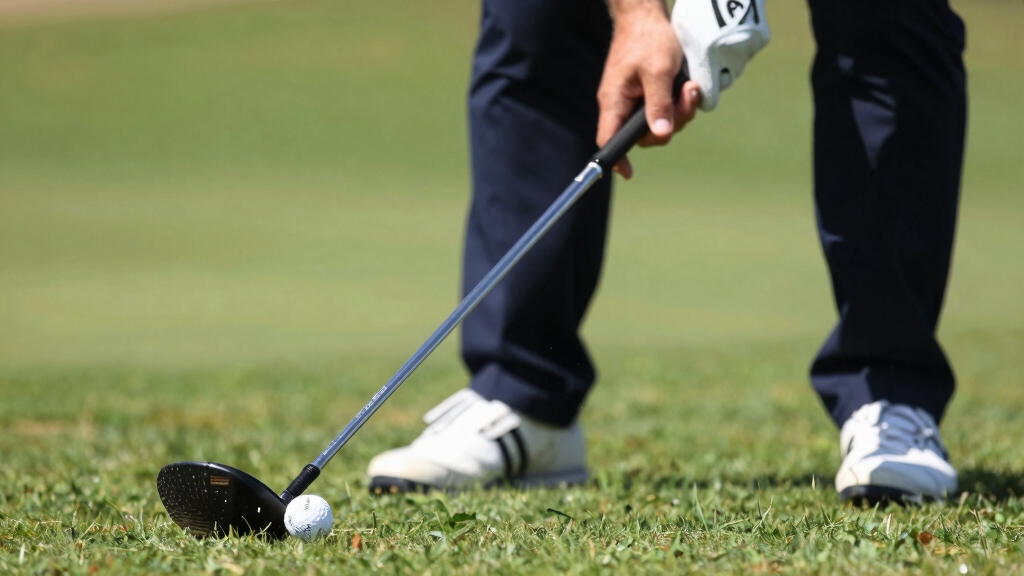
Mastering shaft lean at impact directly influences the clubface’s effective loft, which in turn controls your ball’s launch angle and spin rate.
When you lean the shaft forward, you deloft the clubface, producing a lower, more penetrating ball flight. Conversely, an upright shaft increases effective loft, raising the trajectory and spin.
Consistency in your shaft lean is essential; inconsistent lean leads to unpredictable ball heights and spin rates.
| Shaft Lean at Impact | Ball Flight Effect |
|---|---|
| Forward lean | Lower launch, reduced spin |
| Neutral (vertical) | Moderate launch and spin |
| Upright (leaning back) | Higher launch, increased spin |
Adjusting your club’s swing weight can help you achieve a more consistent shaft lean by optimizing the club’s balance and feel during the swing.
How Poor Weight Transfer Increases Ball Flight and Spin?
Hey there! So, let’s talk about weight transfer in your golf swing. If you don’t transfer your weight properly through impact, it can really mess things up. You end up weakening your impact position, which means you’re not generating that solid forward momentum you need.
When your body weight doesn’t move as it should, the club ends up striking the ball with too much loft and spin. This leads to a high, inefficient ball flight. Not exactly what you want, right? So, mastering that weight shift is super important.
It can help you reduce both the launch angle and spin, giving you better distance and control. Trust me, it makes a world of difference! Consistent practice focusing on proper setup and weight transfer is essential to improve your driving accuracy and overall ball flight.
Impact Position Weakness
Failing to transfer your body weight properly through impact weakens your impact position, causing the club to strike the ball with excessive loft and spin.
When your weight lingers on the back foot or fails to shift forward, the clubface tends to remain open, increasing effective loft. This weak position also often leads to a lack of forward shaft lean, which further elevates launch angle and spin rate.
To improve, focus on stabilizing your lower body and maintaining a solid base through impact.
Key indicators of impact position weakness include:
- Upright shaft angle at contact without forward lean
- Clubface cutting across the ball, creating out-to-in path
- Weight remaining behind the ball at impact
- Excessive dynamic loft caused by poor body rotation
- High spin rates combined with elevated launch angles
Correcting these will help lower your ball flight and reduce spin. Additionally, selecting the appropriate shaft flex that matches your swing speed can optimize energy transfer and further improve impact stability.
Body Weight Movement
When your body weight doesn’t shift properly through the swing, you increase the likelihood of producing a higher ball flight with excessive spin.
Failing to transfer weight onto your front foot during downswing weakens your impact position, causing the clubface to deliver more loft at contact.
This elevated loft, combined with an out-to-in swing path often linked to poor weight shift, launches the ball higher and increases backspin.
Additionally, retaining weight on your trail foot prevents your shaft from leaning forward, which would otherwise help deloft the clubface.
To control ball flight, focus on a smooth, progressive weight transfer from your back to front foot, ensuring your body moves through the shot.
This creates a stronger impact position, reduces effective loft, and minimizes spin, resulting in a more penetrating, lower trajectory.
Improving shoulder flexibility and control through targeted exercises also supports better weight transfer and swing mechanics.
How Driver Loft and Shaft Flex Affect Ball Flight?
A driver’s loft and shaft flex markedly influence your ball flight by controlling launch angle and spin rate. When you use a higher loft driver, the clubface naturally produces a higher launch, often coupled with more backspin, elevating your ball flight.
Driver loft and shaft flex are key to shaping launch angle and spin, directly affecting ball flight height.
Similarly, a more flexible shaft can increase spin by allowing the clubface to lag through impact, which also raises trajectory. Conversely, a stiffer shaft promotes a more penetrating ball flight by reducing spin and stabilizing the clubhead.
Higher loft drivers increase launch angle but can add unwanted spin. Flexible shafts often create higher trajectories due to increased clubhead lag. Stiff shafts help produce lower, more controlled ball flights.
Matching shaft flex to your swing speed optimizes launch conditions. Excessive loft combined with soft shaft flex can cause sky-high ball flights. Adjust these settings carefully to control your ball’s height effectively.
Additionally, selecting a shaft with appropriate torque levels can balance shaft twisting to promote higher launch and maintain control.
How Excessive Backspin Raises Ball Flight and Limits Distance?
Although generating some backspin helps control your shot, excessive backspin dramatically raises your ball flight. This causes it to climb too quickly and lose forward momentum.
When your clubface imparts too much spin, the ball ascends rapidly but stalls at its apex, limiting carry distance. High backspin also makes the ball more susceptible to wind resistance, further reducing its forward travel.
Using a high lofted driver or a flexible shaft often contributes to this spin excess. The result is a popping trajectory that sacrifices rollout and overall distance.
To optimize distance, you need to manage backspin levels carefully. Excessive spin negates the benefits of launch angle and speed by causing premature peak height and early descent. This ultimately prevents your shots from reaching their full potential.
Ideal driver spin rates typically range between 2,000–3,000 RPM to balance carry and roll for maximum distance.
How to Adjust Your Setup and Swing to Lower Ball Flight?
By refining your setup and swing mechanics, you can effectively lower your ball flight and improve distance control. Focus on optimizing your posture and swing path to reduce loft at impact and minimize backspin.
Incorporate these adjustments:
- Align your spine angle slightly toward the target to prevent added loft.
- Maintain a descending attack angle by swinging slightly down through the ball.
- Increase forward shaft lean at impact to deloft the clubface.
- Lower tee height to promote a more penetrating ball flight.
- Make sure consistent weight transfer onto your front foot during the downswing.
These targeted changes will help you deliver the clubhead with reduced effective loft and spin, producing a more controlled, lower trajectory that maximizes carry and rollout. Additionally, improving your posture and flexibility through regular stretching can enhance your ability to maintain these adjustments throughout your swing.
Troubleshooting Common High Ball Flight Problems
First things first, take a good look at your swing path. If you’re swinging out-to-in or coming down at a steep angle, that can really raise the clubface loft at impact. And guess what? That means higher ball flights. So, it’s definitely worth checking that out.
Next, let’s talk about your equipment. Sometimes, drivers that have too much loft or flexible shafts can mess with your launch angle and spin rates. If that’s the case, it might be time to make some adjustments. Getting these elements right is super important if you’re aiming for a more controlled, lower trajectory.
Also, ensuring your grip size is properly fitted can help you maintain better control over the clubface and reduce unwanted high ball flights by improving swing mechanics and consistency through accurate hand measurement.
Swing Path Errors
Correcting swing path errors is essential when troubleshooting high ball flights. An out-to-in swing path often causes a steep angle of attack that raises the ball’s launch angle excessively. When your swing path moves outside-to-in, you tend to hit down too steeply, increasing loft delivery at impact.
This produces a launch angle higher than intended, making the ball fly too high and reducing distance.
To fix this, focus on:
- Ensuring a more neutral or slightly inside-to-out path
- Maintaining consistent shaft lean through impact
- Avoiding an overly steep downswing angle
- Improving body rotation to support proper swing arc
- Practicing drills that promote a shallower attack angle
These adjustments help you deloft the clubface at impact, lowering launch and optimizing ball flight.
Equipment Impact
When your ball consistently flies too high, it’s worth checking whether your equipment setup is contributing to the issue.
First, examine your driver’s loft angle; anything above 12 degrees generally produces higher launch angles.
Next, assess the shaft flex. Using a flexible shaft with a fast swing speed creates excessive spin, elevating ball flight. Also, consider tee height; teeing the ball too high increases launch angle, causing sky shots.
Clubhead materials and design impact ball launch as well, so make sure your driver matches your swing characteristics.
Adjusting to a stiffer shaft, lowering tee height, or selecting a lower lofted driver can help reduce excessive height.
Proper equipment fitting aligns your gear with your swing, controlling trajectory and optimizing distance.
Frequently Asked Questions
Can Weather Conditions Cause My Golf Ball to Fly Higher Than Usual?
Yes, weather conditions can cause your golf ball to fly higher.
Warmer air is less dense, reducing drag and allowing your ball to travel higher and farther.
Humidity also decreases air density, contributing to higher ball flight.
Conversely, cold or dense air creates more resistance, lowering trajectory.
Wind direction affects height too; a headwind can increase loft and spin, causing the ball to climb higher than usual during flight.
Does the Type of Golf Ball Affect How High It Flies?
Imagine your golf ball as a small rocket; its design controls its flight path. Yes, the type of golf ball affects how high it flies.
Balls with softer covers and higher spin rates create more backspin, boosting launch angle and height. Conversely, low-spin balls keep trajectory lower for distance.
Selecting a ball matching your swing speed and attack angle optimizes launch conditions, helping you control height and maximize carry.
How Does Altitude Impact the Height of My Golf Shots?
At higher altitudes, the air is less dense, so your golf ball encounters less resistance and experiences reduced drag.
This causes your shots to travel both higher and farther compared to sea level. You’ll notice that your ball’s trajectory increases because the thinner air decreases lift loss.
To compensate, adjust your club selection and swing strength, as your usual distances will be longer and ball flight will be higher than normal.
Can Fatigue or Physical Condition Influence My Ball’s Flight Height?
Yes, fatigue and physical condition directly affect your ball’s flight height. When tired, your swing mechanics deteriorate.
Your posture falters, and you lose proper weight transfer and shaft lean at impact.
This increases clubface loft and spin, elevating ball flight. Reduced strength also limits your ability to maintain ideal attack angle, resulting in inconsistent trajectories.
Maintaining fitness and avoiding fatigue helps you deliver consistent, controlled strikes with more predictable ball height.
Do Different Golf Course Grasses Affect Ball Launch Height?
Yes, different golf course grasses can affect your ball launch height. Softer, thicker grasses like Bermuda or fescue slow your clubhead’s speed at impact, potentially increasing spin and launch angle.
Conversely, firmer, shorter grass like bentgrass allows cleaner contact, often producing lower ball flights with less spin. Adjust your swing and equipment accordingly to optimize launch conditions based on the grass type to maintain consistent trajectory and distance control.
Take Control of Your Trajectory Like a Pro
If you want to tame your soaring golf ball, remember that your swing path, posture, and weight transfer are the architects of ball flight. Too much loft or backspin acts like a kite in the wind, sending your shots skyward.
By fine-tuning your setup and shaft lean, you’ll control trajectory with surgical precision. Adjust these key factors, and you’ll trade lofty balloons for piercing arrows that fly true and far every time.