
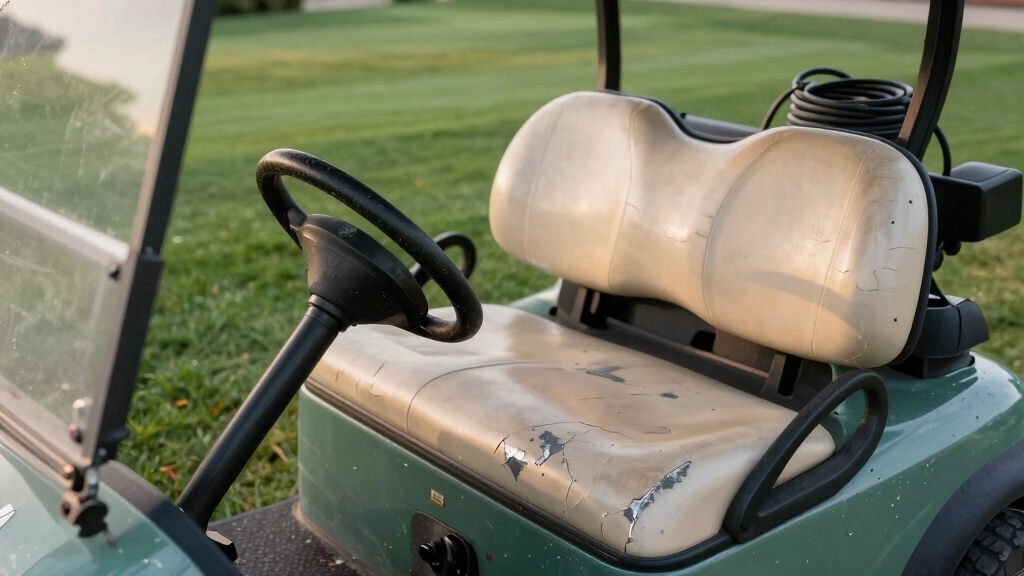
When buying a used golf cart, check for dents, rust, and paint quality, plus seat and dashboard condition. Review maintenance records for regular service and battery history.
Inspect tires for tread wear and suspension for proper bounce. Test the battery’s age, terminals, and electrical functions like lights and horn. Take it for a drive to assess throttle, brakes, and steering responsiveness.
If you want to make certain you make the best choice, there’s more to weigh beyond these essentials.
Key Takeaways
- Inspect the body for dents, rust, paint quality, and seat condition to ensure good exterior and interior state.
- Review maintenance records for regular service, battery health, and any past repairs or recurring issues.
- Check tire tread, pressure, and suspension responsiveness to confirm safe and smooth handling.
- Test battery age, terminal condition, charge capacity, and compatibility with the charger provided.
- Conduct a test drive to evaluate throttle control, brake responsiveness, steering accuracy, and listen for unusual noises.
Look Over the Golf Cart’s Exterior and Interior Condition
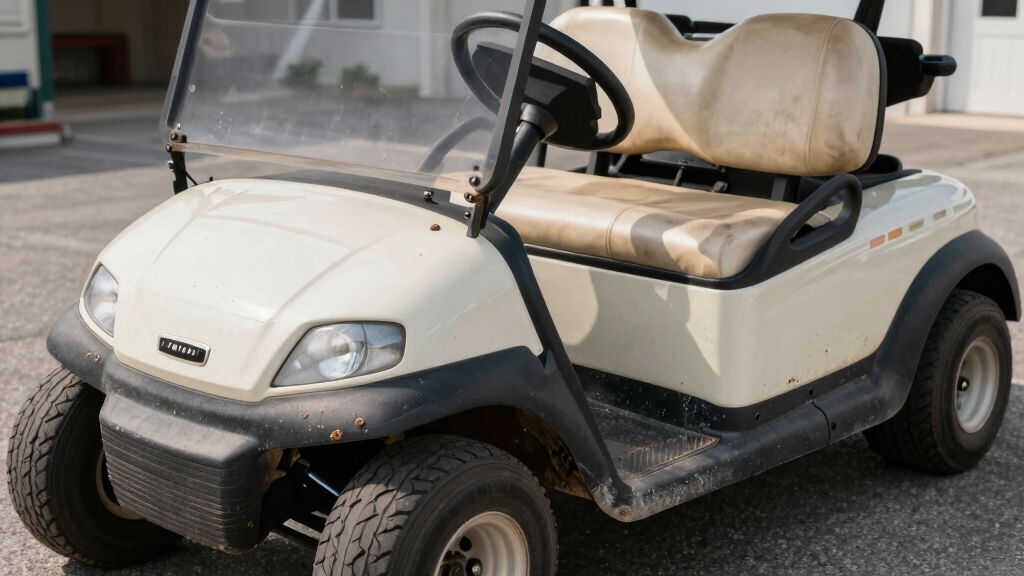
When you inspect a used golf cart, start by carefully examining its exterior and interior condition to get a clear sense of its overall maintenance.
Check for dents, rust spots, or cracked bodywork that might indicate previous damage or neglect.
Pay close attention to the paint quality; uneven surfaces or mismatched colors often hint at repairs.
Inside, assess the seats for tears, stains, and comfort.
Worn or damaged upholstery suggests heavy use or poor upkeep.
Don’t overlook smaller details like dashboard condition and controls, which reveal how well the cart was cared for.
By thoroughly scrutinizing these elements, you’ll better judge the cart’s value and avoid costly surprises later.
A well-maintained exterior and interior often reflect a responsible owner and fewer hidden issues.
Also, check for functional safety features such as four-wheel hydraulic disc brakes that indicate proper upkeep and enhance your confidence in the cart’s reliability.
Review Golf Cart Maintenance History and Service Records
Although a golf cart might look great on the outside, its true condition often lies in its maintenance history and service records. You should carefully review these documents to verify regular upkeep like oil changes, battery checks, and brake inspections.
Consistent service records indicate responsible ownership, reducing the risk of hidden problems. Look for any recurring issues or major repairs that might hint at underlying faults.
Don’t hesitate to ask the seller for transparency about past problems and how they were resolved. Detailed maintenance logs help you assess whether the cart has been properly cared for and predict potential future expenses.
Additionally, understanding the cart’s battery life and charging history is crucial, as long-lasting batteries are key to reliable performance on the course.
Evaluate Golf Cart Tires and Suspension for Safety and Comfort
Don’t overlook the importance of thoroughly checking the tires and suspension, as they directly impact your golf cart’s safety and ride comfort.
Worn or uneven tires can lead to poor handling and increased risk of accidents.
A faulty suspension affects how smoothly you glide over various terrains.
When evaluating, focus on these key points:
Inspect tire tread depth and look for uneven wear patterns that suggest misalignment or suspension issues.
Verify tire pressure to guarantee peak performance and safety.
Check the suspension system for responsiveness.
Bounce the cart gently to detect stiffness or looseness.
Look for debris buildup or damage around tires and suspension components that might indicate neglect.
Also consider the compatibility of your tires with adjustable universal wheel locks to enhance security without interfering with your golf cart’s operation.
Inspect the Golf Cart Battery and Electrical System
Start your inspection of the golf cart’s battery and electrical system by determining the battery’s age and condition. Replacing batteries can be a significant expense.
Check for corrosion or leakage on terminals and test the battery’s charge holding capacity. Confirm all lights, indicators, and electronic accessories work properly to avoid unexpected costs.
| Aspect | What to Check | Why It Matters |
|---|---|---|
| Battery Age | Manufacturing date or usage | Older batteries lose efficiency |
| Terminal Condition | Corrosion, leakage | Affects performance, safety |
| Charge Capacity | Voltage and hold test | Ensures reliable power |
| Electrical Features | Lights, horn, accessories | Confirms functional wiring |
| Replacement Timeline | Seller’s info on battery lifespan | Anticipate future expenses |
Batteries and chargers must function in harmony, so it’s important to verify the charger compatibility and condition alongside the battery to ensure reliable charging.
Thoroughly inspecting these elements guarantees you invest in a dependable golf cart.
Test Drive for Golf Cart Performance and Handling
When you take the golf cart for a test drive, focus on how it responds to acceleration, braking, and steering to assess its overall performance and handling.
Pay attention to smooth throttle response and consistent braking power without any lag or sponginess. Notice how easily it maneuvers around turns and if the steering feels tight and precise.
Be alert for any unusual noises or vibrations that might indicate mechanical issues.
During your test drive, make sure to:
- Test brake responsiveness and stopping distance
- Evaluate throttle smoothness and acceleration control
- Check steering accuracy and ease of handling
- Listen for abnormal sounds or signs of leaks
This hands-on check is essential to guarantee the golf cart is reliable and safe for your needs. Properly securing the golf cart with ratchet straps during transport is also crucial to prevent damage if you plan to haul it.
Frequently Asked Questions
What Is the Typical Lifespan of a Used Golf Cart Battery?
A typical golf cart battery lasts about 4 to 6 years, depending on usage and maintenance.
If you maintain proper charging habits and avoid deep discharges, you can extend its life closer to six years.
Keep an eye on battery terminals for corrosion and test its charge-holding capacity before buying.
Are There Any Warranties Available for Used Golf Carts?
Think of buying a used golf cart like planting a tree. You want assurance it’ll grow strong.
Yes, some sellers offer limited warranties covering batteries or major components, but they’re often short-term and vary widely.
Always ask for specifics and get it in writing. Checking maintenance history and battery condition helps you avoid surprises.
Don’t hesitate to negotiate warranty terms or opt for third-party protection plans to safeguard your investment.
How Much Does It Cost to Insure a Used Golf Cart?
Insurance for a used golf cart typically costs between $150 to $300 annually, depending on factors like your location, coverage level, and cart usage.
If you plan to drive it off-road or on public roads, expect higher premiums. Liability coverage is usually affordable, but inclusive plans add to the cost.
To save money, compare quotes, ask about bundling with your home or auto policy, and keep your cart well-maintained.
Can I Customize or Upgrade Parts on a Used Golf Cart?
Yes, you can definitely customize or upgrade parts on a used golf cart. You’ll find plenty of options like better batteries, upgraded tires, enhanced suspension, or even custom paint jobs.
Adding accessories like LED lights, sound systems, or weather enclosures is also common. Just make sure the upgrades fit your cart’s model and don’t void any warranties.
Customizing can boost performance and style, making your golf cart truly your own.
What Are the Common Signs of Electrical System Failure?
You know what they say: “A chain is only as strong as its weakest link.”
You’ll spot electrical failure if your golf cart’s lights flicker or won’t turn on, and if the battery terminals show corrosion or leakage.
Pay attention to sluggish throttle response or unresponsive indicators.
Also, listen for unusual noises during operation.
These signs mean you should dig deeper before buying, ensuring you won’t face costly electrical repairs later.
Finish Strong: Your Guide to a Worry-Free Golf Cart Purchase
When buying a used golf cart, it’s wise to give it a thorough once-over, ensuring its charm isn’t just skin-deep. Don’t overlook the story behind its upkeep, as a well-told history hints at reliability.
Keep an eye on tires and suspension for a smooth ride, and make sure the battery’s vigor isn’t fading. A test drive will reveal its true spirit, helping you avoid any unexpected adventures down the road.