
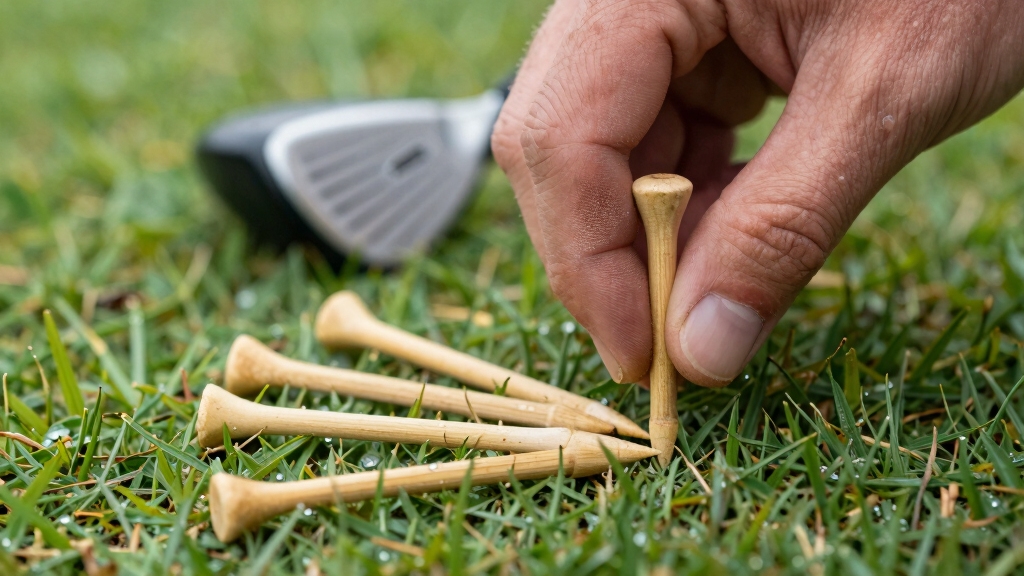
You’ll find pros typically use tees made from hardwoods like birch or maple, durable bamboo, or reinforced plastic designed to resist breakage under high swing speeds. Popular brands such as Titleist and TaylorMade offer precise lengths ranging from 1.5 to 4 inches, tailored to optimize launch angles and ball position for different clubs.
These tees comply with all regulations while balancing performance, durability, and environmental concerns. Understanding these factors can help you refine your tee selection strategy effectively.
- Key Takeaways
- Common Materials Preferred by Professional Golfers
- Popular Tee Brands on the PGA Tour
- Tee Lengths and Sizes Used by Tour Pros
- Rules and Practical Considerations for Tee Selection
- Environmental Impact and Sustainability of Golf Tees
- How Tee Choice Affects Performance and Player Experience?
- Frequently Asked Questions
- How Often Do Pros Replace Their Golf Tees During a Round?
- Do Professional Golfers Customize Their Tees With Logos or Colors?
- Are There Specific Tee Materials Recommended for Windy Conditions?
- How Do Pros Carry and Organize Their Tees on the Course?
- What Are the Most Common Tee-Breaking Causes During Professional Play?
- Smarter Tee Choices for Better Consistency and Technical Control
Key Takeaways
- Pros commonly use hardwood wooden tees like birch or maple for stability and compliance with USGA and R&A rules.
- Plastic tees with high-impact polymers are favored for durability and consistent ball positioning during high swing speeds.
- Bamboo tees offer a sustainable, biodegradable option with enhanced durability and reduced breakage compared to traditional wooden tees.
- Tour players select tee length based on clubs: 4-inch for drivers, 3.25-inch for fairway woods, and shorter tees for irons.
- Popular brands on tour include Titleist, TaylorMade, Callaway, and PGA TOUR tees featuring color-coded height markers for quick setup.
Common Materials Preferred by Professional Golfers
Three primary materials dominate the preferences of professional golfers when selecting tees: wood, plastic, and bamboo.
Wooden tees, typically 2.75 to 4 inches long, are crafted from hardwoods like birch or maple. They’re valued for their traditional feel but are prone to breakage at swing speeds above 120 mph.
Plastic tees utilize high-impact polymers and feature flexible tops along with friction-reducing designs. This maintains consistent shape and ball position across multiple uses, enhancing durability on firm, fast tee boxes.
Bamboo tees, a newer choice, offer longer fibers and increased flex, reducing the risk of snapping while remaining biodegradable and sustainable. Bamboo’s rapid growth rate minimizes environmental impact.
Each material complies with USGA and R&A rules, allowing you to select based on durability needs and playing conditions without regulatory constraints. Plastic tees also provide advanced design features that improve ball stability and shot consistency, favored by many professionals seeking performance benefits.
Popular Tee Brands on the PGA Tour
When you’re picking out golf tees, it’s pretty clear that PGA Tour pros have their go-to brands. You’ll often see them using Titleist, TaylorMade, and Callaway. Why? Well, these brands are known for their durability and performance. The materials used also contribute to grip and control during tee shots, enhancing consistency.
These manufacturers really focus on getting the height just right and using materials that can take a beating while still keeping your ball flight on point. Recently, the PGA TOUR has also partnered with innovative lifestyle brands like Stanley 1913, known for their sustainable and high-quality products, reflecting the tour’s commitment to engaging a new generation.
Leading PGA Tour Brands
Frequently chosen by PGA Tour professionals, leading golf tee brands combine precision engineering with durable materials to optimize shot consistency and performance. PGA TOUR-branded tees feature color-coded height markers for quick adjustment, ensuring uniform ball elevation.
Club Champ Sports and Martini Golf provide high-volume packs ideal for maintaining reliability throughout rounds.
Pride Manufacturing dominates wooden tee production with bulk and customizable options, favored for traditional play.
Consistent Tee focuses on uniform height control to enhance shot accuracy.
Major equipment manufacturers like TaylorMade, Titleist, Callaway, Ping, and Cobra integrate technology-driven tees that complement their club lines, prioritizing durability and stability.
Specialty brands such as Brush T and Flightpath cater to pros seeking reduced friction and ideal ball launch.
These brands collectively set the standard for tee performance on the PGA Tour.
Additionally, many pros pair their tees with durable golf ball markers to ensure precise ball placement and adherence to the rules during play.
Tee Durability and Preference
Although durability varies widely among materials, PGA Tour professionals tend to select tees that balance longevity, consistent performance, and environmental impact. Selecting equipment that matches playing conditions is crucial, much like choosing a golf ball with appropriate compression ratings for optimal performance.
Plastic tees, favored for their resistance to breaking under high swing speeds, offer repeated use over multiple rounds. However, some, like FlightPath, occasionally break.
Bamboo tees provide a compromise, delivering enhanced durability over wooden tees while maintaining biodegradability. This feature appeals to eco-conscious players.
Wooden tees, though traditional and biodegradable, break easily, especially when teed high. This limitation affects their lifespan. Durable tees can often last an entire 18 holes, reducing the need for frequent replacements.
Pros weigh course conditions, preferring plastic tees on firmer grounds for durability and bamboo or wooden tees on softer turf. Consistent tee height and shape, especially from durable plastic or bamboo, enable reliable ball positioning. This contributes to shot repeatability, which is essential in frequent competitive play.
Tee Lengths and Sizes Used by Tour Pros
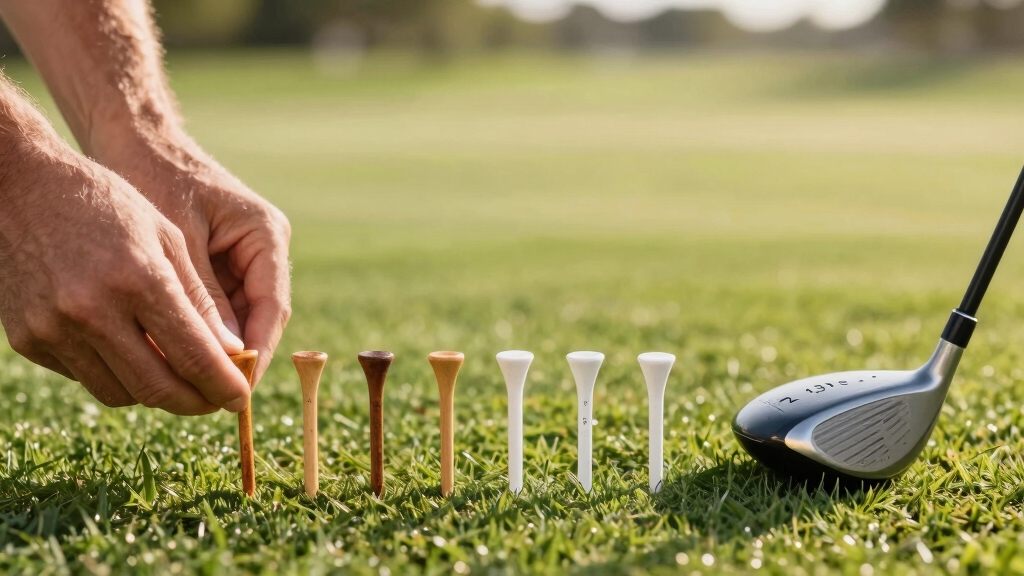
Because tee length directly impacts ball trajectory and contact, tour pros carry multiple sizes ranging from 1.5 inches to 4 inches to optimize performance for different clubs and course conditions. Walking an 18-hole round can cover over 4 miles, so maintaining consistent tee height helps pros manage energy and focus throughout the course.
Longer tees (4-inch) maximize driver launch by elevating the ball, while medium tees (2.75 to 3.25 inches) suit fairway woods and hybrids. Short tees (1.5 inches) are used for irons and tighter shots requiring minimal elevation. Consistent tee height guarantees repeatable ball striking.
Modern tees are standardized and available in different lengths, making it essential for pros to select the right size for consistent tee shots.
| Tee Length (inches) | Primary Use |
|---|---|
| 4.00 | Drivers, maximize ball height |
| 3.25 | Drivers, fairway woods |
| 2.75 | Fairway woods, hybrids, irons |
| 1.50 | Irons, tight course conditions |
You can see how pros adjust tee size precisely to control launch and shot shape.
Rules and Practical Considerations for Tee Selection
When selecting tees, you must balance official guidelines, course policies, and your own skill level to optimize both playability and enjoyment. Many courses, including River Landing, offer multiple tee boxes marked with distinct colors to help players choose the distance that best suits their ability. Arriving early and preparing your equipment can help ensure a smooth start from your chosen tee.
Choosing tees involves balancing official rules, course policies, and personal skill for the best play experience.
No strict rules mandate tee box choice, but the USGA encourages selecting tees that enable comfortable fairway and green approaches, promoting appropriate challenge and pace.
For precision, estimate ideal yardage by multiplying your average 5-iron distance by 36. This method supports maintaining a good pace of play by matching tee distance to your skill level.
Par-3 tees should allow approach shots with mid-irons, par-4s should enable a driver plus a 6-iron approach, and par-5s expect sequential shots with driver, fairway wood, then a short iron.
Handicap influences tee choice—lower handicaps favor back tees, higher handicaps forward tees. Tournament regulations may impose restrictions, but your primary focus should be matching tee yardage to your reliable club distances, ensuring consistent, enjoyable rounds.
Environmental Impact and Sustainability of Golf Tees
In addressing the environmental impact of golf tees, you should recognize that conventional plastic tees contribute substantially to microplastic pollution. These petroleum-based products fragment and persist for decades, contaminating ecosystems.
Golf courses contribute approximately 33,061 acres of green infrastructure that supports environmental sustainability and helps mitigate ecological damage, showing the industry’s commitment to preserving natural resources greenspace contribution. Choosing tees made from eco-friendly, reusable designs can promote long-term sustainability in golf practices.
Switching to eco-friendly alternatives like bamboo tees, which are rapidly renewable and biodegradable, can markedly reduce this pollution. Additionally, recycled plastic and bioplastic tees offer sustainable options by diverting waste and enabling compostability without harmful residues.
| Tee Type | Environmental Benefit |
|---|---|
| Bamboo | Biodegradable, renewable, no microplastics |
| Recycled Plastic | Waste diversion, reduces virgin plastic use |
| Bioplastics | Compostable, minimal environmental footprint |
How Tee Choice Affects Performance and Player Experience?
Although tee choice might seem minor, it markedly impacts your golf performance and experience by influencing factors such as launch angle, shot consistency, and confidence. Consistent setup and measurement techniques, like those used in accurate club length assessments, can similarly enhance performance reliability.
Selecting wooden or bamboo tees provides a stable base, enhancing ball contact accuracy and reducing breakage distractions.
Wooden and bamboo tees offer stability, improving accuracy and minimizing interruptions from breakage.
Tee length aligns with your club choice; longer tees for drivers optimize launch angle and sweet spot contact, while shorter tees suit fairway woods or hybrids.
Adjusting tee height tailors ball trajectory and spin, vital for distance and control. Tee height directly affects the desired launch angle and spin control to optimize shot performance.
High-quality tees support consistent setup, enabling repeatable pre-shot routines that bolster your mental focus. By matching tee type and size to your swing style and club, you maximize smash factor and shot reliability.
Frequently Asked Questions
How Often Do Pros Replace Their Golf Tees During a Round?
You’ll find that pros replace their golf tees only when they’re visibly broken or damaged, not after every shot.
Typically, they reuse tees multiple times per round, often replacing them every few holes depending on wear.
Factors like shot mishits, ground hardness, and tee material influence breakage.
To maintain consistency and pace, pros carry durable tees and let caddies manage replacements efficiently, minimizing interruptions during play.
Do Professional Golfers Customize Their Tees With Logos or Colors?
Yes, you can customize your golf tees with logos or colors like professionals do.
Pros often use precision-printed tees featuring sponsor logos on the shaft or cup for visibility.
You’ll find tees in various colors—natural wood, white, red, blue, or custom patterns—to match branding or personal style.
These customized tees come in different sizes and materials, such as birch wood or plastic, tailored for performance and marketing impact during tournaments.
Are There Specific Tee Materials Recommended for Windy Conditions?
Yes, you should choose bamboo or hybrid tees for windy conditions due to their durability and stability.
Bamboo resists splintering and weather effects better than wood, while hybrids reduce friction and improve control, aiding straighter ball flights.
Lowering tee height and using tees with wider bases or pronged heads further stabilizes the ball against wind.
This combination helps maintain consistent ball placement and shot accuracy when wind intensity varies.
How Do Pros Carry and Organize Their Tees on the Course?
Think of your tee setup as a precision toolkit.
Pros carry tees in designated pockets, clear tubes, or magnetic holders for quick, organized access.
They separate tees by length and material to match course conditions and shot requirements.
You’ll find them replenishing and sorting regularly, often pre-selecting tees per hole strategy.
Color-coding and frequent inspections guarantee reliability, while secure storage prevents loss or damage during transport and play.
This maintains consistent performance.
What Are the Most Common Tee-Breaking Causes During Professional Play?
You’ll find tee breakage during professional play mostly caused by steep angles of attack, especially with irons and wedges striking down hard on the ball.
Firm ground conditions increase resistance, making the tee absorb more force and snap more easily.
Additionally, wooden tees break more often under these powerful impacts.
Managing these factors is essential, as broken tees can damage equipment and turf, affecting course maintenance and play quality.
Smarter Tee Choices for Better Consistency and Technical Control
Choosing the right golf tee is like selecting the perfect tool for precision engineering. It directly influences your shot’s accuracy and consistency. Pros prefer tees made from durable materials, optimized lengths, and trusted brands to meet strict regulations and performance needs.
Understanding these details helps you make informed decisions. By balancing environmental impact with functionality, you can enhance your game’s technical precision and overall player experience.