
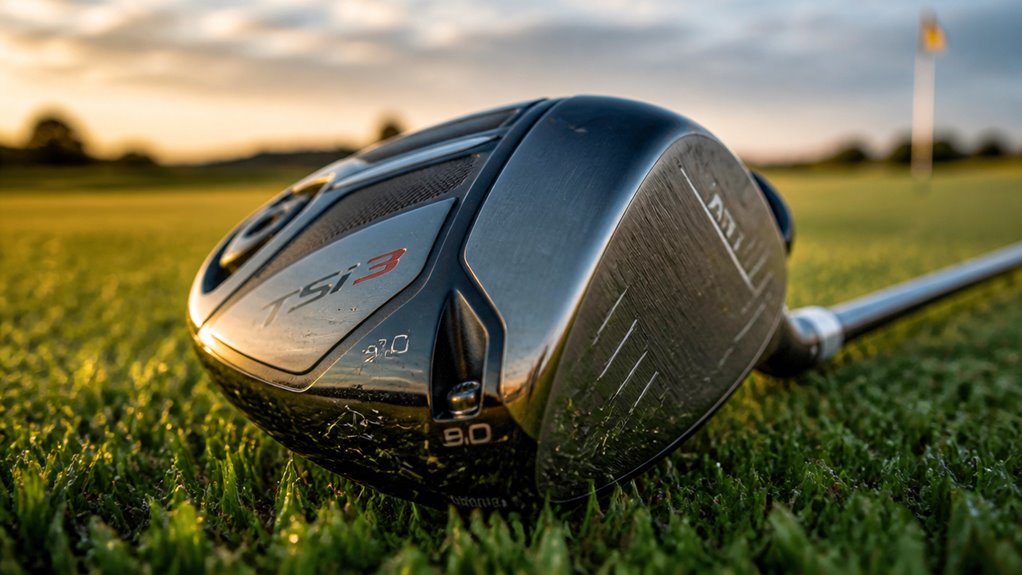
A driver golf club, or 1-wood, helps you launch the ball the farthest. It maximizes distance off the tee on long holes like par 4s and 5s.
Its large, forgiving clubhead and long shaft boost swing speed and power. Adjustable lofts let you tailor trajectory.
Using a smooth, controlled swing with your driver sets up easier next shots and builds confidence. Understanding its design and when to use it can really improve your game.
Key Takeaways
- A driver is a golf club with the largest head and longest shaft, designed for maximum distance off the tee.
- It is primarily used for teeing off on par 4 and par 5 holes to achieve the farthest drive.
- Drivers feature large, forgiving clubheads (up to 460cc) made from lightweight titanium for stability and power.
- Loft angles typically range from 8.5° to 14°, affecting ball trajectory and distance.
- Shaft length and flex influence swing speed, control, and overall driving performance.
What Is a Driver and Why It Matters

When you step up to the tee, the driver is your go-to club for launching the ball the farthest distance possible.
It’s specially designed for maximum distance off the tee, featuring the largest club head and the longest shaft in your bag.
This club, often called the “1-wood,” is engineered to help you hit powerful drives that set you up for success on long holes.
Understanding the driver’s purpose lets you appreciate its role in improving your game.
Using it confidently on par 4s and 5s can give you a significant advantage.
Drivers with features like high Moment of Inertia (MOI) expand the sweet spot and reduce mishits, making them easier to use effectively.
How Driver Design, Shaft Length, and Clubhead Size Affect Performance?
You know, the length of the shaft really has a big impact on your swing speed and control. Longer shafts can definitely help you hit the ball farther, but they also ask for a bit more precision. It’s like a balancing act—you want that distance, but you need to be on point with your swing.
And let’s talk about the clubhead size. With a maximum of 460cc, you get a larger sweet spot, which is a game changer! It really helps in maximizing forgiveness and power with every shot you take. When you understand how these pieces fit together, it can seriously boost your confidence and give your driving performance a nice little lift.
Choosing the right shaft length based on your height and wrist-to-floor measurement can make a big difference in consistency and control.
Shaft Length Impact
In understanding how shaft length impacts your driver’s performance, it’s important to recognize that a longer shaft generally allows for higher swing speeds, which can translate to greater distance.
However, longer shafts may reduce control and accuracy. Balancing length with your comfort and swing mechanics is key to optimizing your performance.
| Shaft Length (inches) | Swing Speed Impact | Control & Accuracy |
|---|---|---|
| 44 – 44.5 | Moderate increase | High control |
| 45 – 45.5 (standard) | best balance | Balanced accuracy |
| 46 – 48 | Maximum speed | Lower control, less accuracy |
Many drivers come with shaft length options tailored to different swing speeds and player preferences, helping golfers find the best fit for their style.
Experiment with shaft length to find a driver that matches your swing style and maximizes both distance and precision.
Clubhead Size Benefits
A driver’s clubhead size plays a crucial role in enhancing your performance by increasing the sweet spot and forgiveness on off-center hits.
Larger clubheads, typically capped at 460cc, offer a bigger hitting surface, which helps you make solid contact more consistently. This design reduces mishits and keeps your drives straighter, even when your swing isn’t perfect.
Combined with a longer shaft, the oversized clubhead lets you generate more swing speed and power, translating into greater distance off the tee.
Plus, the lightweight titanium construction maintains maneuverability despite the size. When you choose a driver with an optimized clubhead size, you gain confidence and improved control.
This helps you maximize distance and accuracy every time you step up to the tee. Advanced designs like the Jailbreak Speed Frame further enhance forgiveness and stability in modern drivers.
Understanding Loft Angles and Their Impact on Your Drives
Your driver’s loft angle is super important when it comes to shaping the trajectory and control of your drives.
You see, lower lofts tend to launch the ball on a flatter path, which means you get more roll. On the other hand, higher lofts can really help you gain that extra height and precision you might be looking for.
So, understanding these differences is key! It allows you to choose the right loft angle that matches your swing style and the specific conditions of the course you’re playing.
Whether you’re aiming for distance or accuracy, knowing how loft impacts your shots can make a big difference in your game.
Additionally, selecting the correct driver length can further optimize your swing mechanics and control, complementing the effects of loft on your drives.
Loft Angle Variations
Understanding loft angle variations can markedly improve how you control and optimize your drives.
Drivers typically feature lofts ranging from 8.5° to 14°. Choosing the right loft can make a significant difference in your performance.
Lower lofts, around 8.5° to 10.5°, help you achieve a lower, more penetrating ball flight. This is ideal for maximizing roll and distance on firm fairways.
If you struggle with getting the ball airborne or want more lift, a higher loft, between 11° and 14°, can provide better launch and more forgiveness.
Adjusting your driver’s loft allows you to tailor your shot to course conditions and personal swing characteristics.
Experimenting with loft variations encourages you to find the perfect balance between distance and consistency in your drives.
For golfers over 40 with slower swing speeds, choosing a driver with a loft of around 10.5° and features like draw bias can significantly enhance launch and forgiveness.
Trajectory and Control
When you adjust the loft angle on your driver, you directly influence the ball’s trajectory and overall control. Lower lofts (around 8.5°) produce a flatter, more penetrating flight, ideal for maximizing distance but requiring precise contact. Higher lofts (up to 14°) launch the ball higher, granting better control and stopping power on the fairway.
Understanding this balance helps you choose the right loft for your swing speed and course conditions. Matching your loft angle to your swing speed ensures optimal launch angle and distance.
| Loft Angle (°) | Effect on Ball Flight |
|---|---|
| 8.5 – 9.5 | Low trajectory, more roll |
| 10 – 11 | Moderate trajectory, balance |
| 12 – 13 | Higher trajectory, improved control |
| 14 | High trajectory, maximum lift |
| Adjustable | Customize based on conditions |
Master your loft to drive with confidence and precision.
When and How to Use Your Driver on the Course?
Although the driver is designed primarily for distance, knowing the right moments to use it can drastically improve your score.
You’ll want to rely on your driver mainly when teeing off on par 4s and par 5s, where gaining maximum yardage sets you up for easier approach shots.
Use your driver primarily on par 4s and par 5s to maximize distance and simplify your next shot.
It’s also useful on long par 3s when distance matters.
When preparing your shot, tee the ball so about half sits above the clubhead’s top edge, ensuring ideal contact with the sweet spot.
Focus on a smooth, controlled swing to maximize distance without sacrificing accuracy.
Avoid using the driver in tight or tricky spots where control is more important than power.
Mastering when and how to use your driver helps you capitalize on its design for long, effective drives.
Remember to adjust your stance and ball position based on lie conditions to optimize your shot execution.
Different Types of Drivers: Which One Is Right for You?
Choosing the right driver can make a big difference in your game, so it’s important to know what options are out there. Drivers mainly vary by head size, loft angle, and adjustability. Each factor affects your ball flight and control. You want a driver that matches your swing speed and playing style to optimize your tee shots.
| Driver Type | Best For |
|---|---|
| Standard 460cc | Maximum distance and forgiveness |
| Adjustable Loft | Customizing launch and spin |
| Low Loft (8.5°–10°) | Players seeking a penetrating ball flight |
| Higher Loft (11°–14°) | Beginners or those needing more height and control |
Selecting the right driver helps you maximize distance while maintaining accuracy. Try different types to find the perfect fit for your game. Additionally, choosing a driver shaft with the proper flex and weight is essential to optimize your swing speed and shot consistency.
How Driver Design Influences Distance and Accuracy?
Because your driver’s design directly affects how far and accurately you can hit the ball, understanding its key features is essential to improving your tee shots.
The large clubhead, usually up to 460cc, gives you a bigger sweet spot, making it easier to hit consistently.
A longer shaft allows higher swing speeds, boosting distance, but it can challenge your control.
Loft angles influence trajectory; lower lofts create a penetrating flight with more roll, while higher lofts help you achieve better accuracy and control.
Lightweight materials like titanium reduce club weight, letting you swing faster without sacrificing stability.
Additionally, using a driver with full-length dividers can help protect your clubs during transport, maintaining their condition and performance.
Frequently Asked Questions
How Do Weather Conditions Affect Driver Performance?
Weather conditions impact your driver performance markedly. Wind can alter your ball’s flight path, so you’ll need to adjust your aim or club selection.
In cold weather, the ball won’t travel as far because it’s less responsive. Heat helps the ball fly farther due to lower air density. Humidity also affects distance slightly.
Knowing these factors encourages smart adjustments. This helps you maximize distance and accuracy off the tee no matter the conditions.
What Maintenance Does a Driver Require?
Imagine you’ve just finished a round and notice dirt on your driver’s clubface.
You should clean it with warm, soapy water and a soft brush to maintain peak performance.
Regularly check for loose screws or grip wear.
Store your driver in a dry, padded bag to prevent damage.
Can Beginners Benefit From Using a Driver?
Yes, beginners can definitely benefit from using a driver. It helps you achieve maximum distance off the tee, which can boost your confidence early on.
While it might feel challenging at first due to its length and size, practicing with it improves your swing mechanics and power.
Start with a higher lofted driver for easier control. As you gain experience, you’ll hit longer, straighter drives that improve your overall game.
How Does Driver Customization Impact Play?
Driver customization impacts your play by allowing you to tailor loft, shaft length, and clubhead weight to your swing style and course conditions.
Adjusting loft can improve trajectory and control, while shaft flexibility influences swing speed and accuracy.
Custom fittings help you find the perfect balance for maximum distance and consistency.
When you fine-tune your driver, you gain confidence and can optimize performance, making your long game more effective and enjoyable.
What Are Common Driver Fitting Mistakes to Avoid?
You might think choosing any driver will boost your game, but common fitting mistakes can hold you back.
Avoid picking a shaft that’s too stiff or too flexible, as it messes with your swing speed and accuracy.
Don’t ignore loft adjustments; too low or too high loft affects trajectory and control.
Also, skipping a professional fitting wastes your potential.
Get properly fitted to maximize distance and consistency effortlessly.
Final Answer: What Is a Driver Golf Club?
So, now you know a driver isn’t just a fancy club to show off at the tee.
It’s your secret weapon for distance and control.
Don’t just swing wildly hoping for a miracle; pay attention to design, loft, and shaft length.
Pick the right driver, and you might actually impress your buddies instead of making them duck for cover.
Remember, mastering your driver means more fairways hit and fewer lost balls.
Game on!