
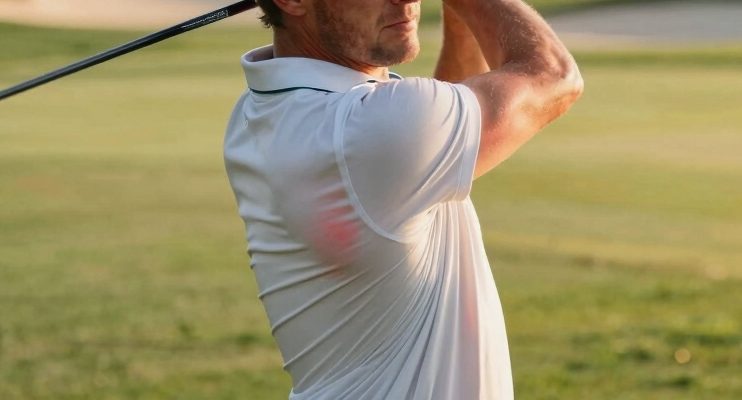
You can play golf with a partial rotator cuff tear if you manage symptoms and adjust your swing to reduce shoulder strain. Using controlled shorter swings and targeted rehab is important.
However, a full-thickness tear severely compromises shoulder stability and function, making play generally unsafe due to pain, weakness, and risk of worsening injury. Ignoring symptoms risks tendon degeneration and surgery.
Understanding injury signs, treatment options, and safe return strategies is essential to protect your shoulder and maintain your game.
- Key Takeaways
- What a Torn Rotator Cuff Means for Your Golf Game?
- How to Recognize a Rotator Cuff Tear in Golfers?
- When Should You Stop Playing and See a Doctor?
- Can You Play Golf With a Partial or Full Rotator Cuff Tear?
- Managing a Torn Rotator Cuff: Rest, Rehab, and Treatment Options
- Swing Modifications to Protect Your Rotator Cuff While Playing Golf
- How to Safely Return to Golf After a Rotator Cuff Injury?
- Frequently Asked Questions
- What Are the Best Exercises to Strengthen the Rotator Cuff for Golf?
- How Does Limited Thoracic Rotation Increase Rotator Cuff Injury Risk?
- Can Cortisone Injections Affect Golf Performance Long-Term?
- What Role Do Scapular Stabilizers Play in Preventing Shoulder Injuries?
- Are There Specific Warm-Up Routines to Prevent Rotator Cuff Tears?
- Back on the Course: Playing Golf Safely with a Torn Rotator Cuff
Key Takeaways
- Playing golf with a partial rotator cuff tear is possible if symptoms are managed and swing mechanics are modified.
- Full-thickness rotator cuff tears generally contraindicate playing due to severe shoulder instability and risk of worsening injury.
- Persistent pain, weakness, or limited motion during play signals the need to stop and seek medical evaluation promptly.
- On-course modifications like limiting backswing and using controlled three-quarter swings help protect the shoulder during play.
- Early diagnosis and targeted rehab improve outcomes and reduce the risk of progression to more severe tears.
What a Torn Rotator Cuff Means for Your Golf Game?
While you might be keen to keep playing, a torn rotator cuff markedly compromises your golf game by reducing shoulder strength, stability, and range of motion essential for an effective swing.
The rotator cuff’s four muscles stabilize the shoulder joint, enabling controlled arm elevation and rotation, critical for generating swing power. A tear disrupts this mechanism, leading to weakness and impaired joint control.
You’ll experience diminished force transfer through the shoulder, reducing shot accuracy and distance. Additionally, instability may cause compensatory movements, increasing injury risk.
Partial-thickness tears limit function less than full-thickness disruptions, but both degrade performance. Continuing play without addressing these deficits risks exacerbating the tear, prolonging recovery, and undermining long-term shoulder health.
You must acknowledge the biomechanical consequences to manage your game safely. Similar to meniscus injuries in the knee, ignoring the need for proper recovery and treatment can lead to chronic problems and reduced joint stability, emphasizing the importance of postoperative rehabilitation and appropriate care.
How to Recognize a Rotator Cuff Tear in Golfers?
Understanding how a torn rotator cuff affects your golf game sets the stage for identifying its presence early.
Recognizing how a torn rotator cuff impacts your golf swing is key to early detection and treatment.
You’ll notice persistent shoulder pain, especially during the backswing or follow-through phases, and weakness when raising or rotating your arm.
Limited range of motion, accompanied by a grinding or clicking sensation, often signals tendon irritation or disruption.
Pay attention to difficulty maintaining club control or decreased swing power, as muscle weakness compromises shoulder stability.
Symptoms commonly worsen with repetitive overhead motions or after errant shots.
Early recognition relies on detecting these functional impairments combined with localized tenderness at the shoulder joint.
Incorporating regular external rotation stretches can help maintain shoulder mobility and potentially reduce the risk of exacerbating a rotator cuff tear.
When Should You Stop Playing and See a Doctor?
Know when to call it quits on the course if you experience persistent weakness or sharp pain in your shoulder during or after your golf swing.
Continuing to play with these symptoms risks worsening a possible rotator cuff tear. You should stop and seek medical evaluation promptly if you notice:
- Loss of strength or inability to lift your arm without discomfort.
- Sharp or stabbing pain localized to the shoulder joint during swing phases.
- Persistent swelling, stiffness, or night pain that disrupts rest.
Ignoring these signs can lead to tendon degeneration or full-thickness tears requiring surgical intervention.
Early diagnosis facilitates conservative management and prevents progression.
Prioritize shoulder stability and function by halting play and consulting an orthopedic specialist for a thorough assessment and tailored treatment plan.
Proper warm-up routines can help reduce the risk of exacerbating shoulder injuries during play.
Can You Play Golf With a Partial or Full Rotator Cuff Tear?
You know, if you have a partial rotator cuff tear, you might still be able to hit the links, but it’s super important to manage your symptoms. Just be mindful of the movements that could aggravate your shoulder.
On the flip side, if you’re dealing with a full tear, it’s a whole different ballgame. Playing golf in that situation could really risk making things worse and could slow down your recovery. Incorporating mobility and strength exercises into your routine can help support safe play and improve your shoulder function.
Playing With Partial Tears
Frequently, golfers with partial rotator cuff tears wonder if continuing to play is feasible without worsening the injury. You can often play with a partial tear if you carefully manage the condition and avoid aggravating movements.
To do so effectively, consider these three key strategies:
- Modify your swing mechanics to reduce shoulder stress, emphasizing controlled, shorter swings.
- Engage in targeted rehabilitation exercises focusing on scapular stabilization and rotator cuff strengthening to support healing.
- Monitor pain and weakness closely, stopping play immediately if symptoms intensify to prevent further tendon damage.
While playing is possible, you must prioritize medical evaluation and adhere strictly to treatment protocols. Ignoring symptoms or continuing full-intensity play risks escalating the tear, delaying recovery, and potentially necessitating surgery. Incorporating strength and cardio training can also aid in increasing swing power and overall stamina while protecting the shoulder during recovery.
Risks of Full Tears
Although some golfers manage partial rotator cuff tears with careful adjustments, playing with a full-thickness tear carries markedly higher risks. A full tear disrupts tendon integrity, severely compromising shoulder stability and strength essential for your golf swing.
Continuing to play can exacerbate tendon retraction, increase muscle atrophy, and escalate pain, potentially leading to irreversible functional loss. You risk worsening the injury, which may necessitate more complex surgical repair and prolong rehabilitation.
Additionally, compensatory movements often develop, placing abnormal stress on adjacent joints and tissues, increasing secondary injury risk. Ignoring these dangers undermines long-term shoulder health and performance.
Consequently, if you suspect or confirm a full tear, you should halt play and seek prompt orthopedic evaluation and tailored treatment to prevent permanent damage and optimize recovery.
Managing Symptoms On-Course
When managing a partial rotator cuff tear during play, modifying your approach on the course becomes necessary to prevent aggravating the injury. You need to control pain and avoid movements that increase strain on the shoulder. Consider these critical strategies:
- Limit full swings: Use restricted or three-quarter swings to reduce tensile load on the damaged tendons. This minimizes the risk of tear progression.
- Optimize warm-up: Engage in targeted scapular stabilization and gentle range of motion exercises to enhance shoulder mechanics before play.
- Monitor symptoms: Stop playing immediately if you experience sharp pain, weakness, or instability. These symptoms signal potential worsening of the tear.
For full tears, playing golf without surgical intervention is generally contraindicated due to compromised shoulder integrity. This poses a risk of further damage.
Prioritize medical evaluation and rehabilitation to guarantee a safe return. Incorporating rotator cuff activation exercises into your warm-up can help maintain muscle function and reduce injury risk during play.
Managing a Torn Rotator Cuff: Rest, Rehab, and Treatment Options
Managing a torn rotator cuff demands a structured approach combining rest, targeted rehabilitation, and appropriate medical interventions. Initially, you must prioritize rest to minimize inflammation and prevent further damage.
Employ the RICE protocol: rest, ice, compression, and elevation to control swelling. Once acute symptoms subside, focus on rehabilitation emphasizing scapular strengthening, range of motion exercises, and posture correction to restore shoulder mechanics.
If inflammation persists, corticosteroid injections can reduce pain and facilitate rehab progression. For full-thickness tears or failed conservative treatment, surgical repair, often arthroscopic, is indicated to reattach the tendon and restore function.
Throughout, avoid activities that exacerbate symptoms. Close monitoring by a healthcare professional guarantees appropriate progression. This integrated strategy optimizes healing, preserves shoulder stability, and lays the foundation for a safe return to golf.
Swing Modifications to Protect Your Rotator Cuff While Playing Golf
To safeguard your rotator cuff while playing golf, you need to adjust your swing mechanics to minimize excessive shoulder stress. Modifying your technique reduces tendon overload and prevents further injury.
Focus on these three key swing adjustments:
- Limit backswing range. Avoid excessive shoulder elevation and rotation to reduce strain on the cuff muscles and tendons.
- Engage core and hips. Shift power generation to your torso, decreasing reliance on your shoulder for swing force.
- Use controlled follow-through. Avoid abrupt deceleration or overextension post-impact to protect the repaired or weakened tissue.
Implementing these precise modifications helps maintain shoulder integrity during play. This allows you to continue golfing with a torn rotator cuff while minimizing exacerbation risks. Maintaining a smooth rhythm throughout the swing is essential to avoid unnecessary tension and stress on the shoulder.
How to Safely Return to Golf After a Rotator Cuff Injury?
Resuming golf after a rotator cuff injury demands a carefully structured rehabilitation plan tailored to restore shoulder function while minimizing re-injury risk.
Begin with passive range of motion exercises to enhance joint mobility without stressing the tendon. Gradually progress to active motion and scapular stabilization to rebuild muscular control and prevent humeral head displacement.
Start with gentle passive movements, then advance to active motion and scapular control to protect shoulder stability.
Incorporate strength training focusing on the rotator cuff and scapular muscles, emphasizing endurance and neuromuscular coordination. Modify your swing mechanics to reduce excessive shoulder rotation and load during impact.
Prioritize incremental exposure to golf-specific activities, monitoring pain and weakness closely. Collaborate with a physical therapist to ensure correct technique and exercise progression.
Avoid premature return to full swings and maintain consistent warm-ups and rest periods to support tendon healing and long-term shoulder integrity. Lessons that include warm-up and conditioning routines can further promote joint health and reduce injury risk.
Frequently Asked Questions
What Are the Best Exercises to Strengthen the Rotator Cuff for Golf?
To strengthen your rotator cuff for golf, focus on external and internal rotation exercises using resistance bands or light dumbbells.
Incorporate scapular stabilization drills like scapular retractions and wall slides.
Perform prone T, Y, and I raises to enhance shoulder blade control.
Prioritize controlled, pain-free motions with progressive resistance.
Consistently include these exercises in your routine to improve shoulder stability, reduce injury risk, and optimize your swing mechanics.
How Does Limited Thoracic Rotation Increase Rotator Cuff Injury Risk?
Imagine your body’s power source gets blocked.
Limited thoracic rotation forces your shoulder to overcompensate during your golf swing.
This over-rotation strains your rotator cuff muscles and tendons, increasing injury risk.
When your upper spine can’t rotate properly, your shoulder endures excessive stress, leading to irritation and microtears.
You need proper thoracic mobility to protect your rotator cuff and maintain efficient, injury-resistant swing mechanics.
Can Cortisone Injections Affect Golf Performance Long-Term?
Cortisone injections can provide short-term relief but may negatively affect your golf performance long-term if overused.
Repeated injections risk tendon weakening and potential rupture, reducing shoulder stability essential for a powerful swing.
You’ll want to use them judiciously, combining treatment with rehab exercises to maintain muscle strength and joint function.
Relying solely on cortisone without addressing underlying issues can impair your shoulder’s durability and overall golf performance over time.
What Role Do Scapular Stabilizers Play in Preventing Shoulder Injuries?
Oh sure, just ignore your scapular stabilizers and let your shoulder do all the heavy lifting alone!
In reality, these muscles are vital. They keep your shoulder blade stable, preventing your humeral head from shifting and irritating tendons.
Are There Specific Warm-Up Routines to Prevent Rotator Cuff Tears?
Yes, you should follow specific warm-up routines to prevent rotator cuff tears. Focus on dynamic stretches targeting the shoulder girdle, including arm circles and cross-body swings, to increase blood flow.
Incorporate scapular stabilizer activation exercises like scapular squeezes and resistance band external rotations. Gradually progress to golf-specific movements to prepare your shoulder for the swing’s demands.
This approach reduces injury risk by enhancing muscle activation and joint stability.
Back on the Course: Playing Golf Safely with a Torn Rotator Cuff
Playing golf with a torn rotator cuff demands deliberate decisions and disciplined dedication. Don’t disregard discomfort; instead, detect and diagnose early to dodge deeper damage.
Whether partial or full, prioritize professional treatment and tailored therapy. Modify your swing mindfully to minimize strain while maintaining motion.
With measured management and mindful movements, you can master a safe, successful swing and smoothly step back into your sport with strength and stability.