
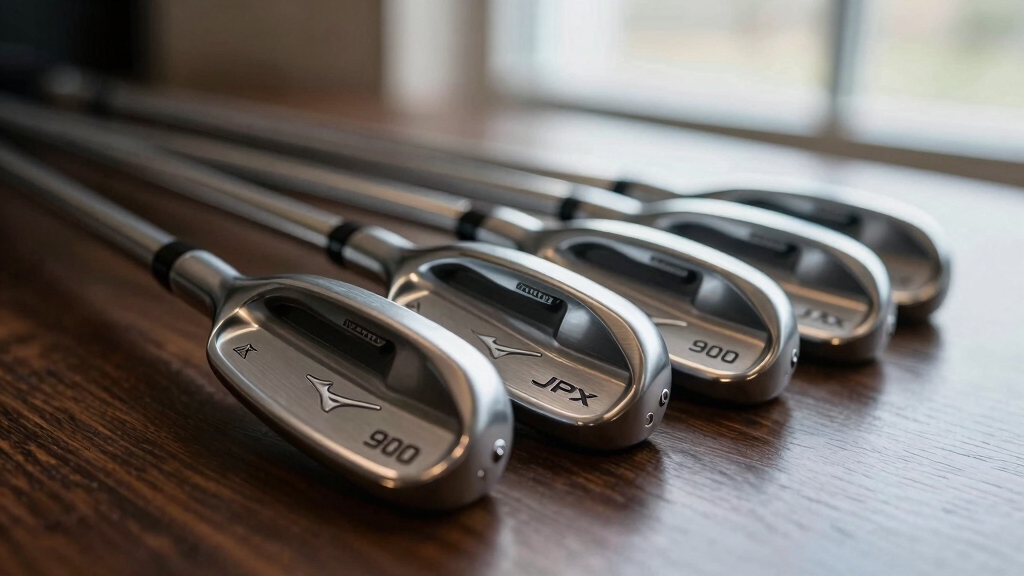
If you want forgiveness and distance, the Mizuno JPX 900 Hot Metal irons use Chromoly 4140M with a seamless cup face and CORTECH variable thickness for explosive ball speed and higher launch.
For precision and shot-shaping, the Forged irons feature 1025 Boron steel and Grain Flow Forging, offering better feel and control but less forgiveness.
Both maintain consistent yardage gaps and offer quality shaft options. Understanding their distinct technologies and playability nuances helps you pick the right fit.
- Key Takeaways
- Comparing Mizuno JPX 900 Hot Metal and Forged Irons
- Key Features That Make JPX 900 Irons Unique
- Distance, Ball Speed, Launch, and Spin Performance of JPX 900 Irons
- Forgiveness and Consistency: Picking Your JPX 900 Iron
- Choosing Between JPX 900 Hot Metal and Forged Irons
- Design Features That Enhance Feel and Playability
- JPX 900 Pricing, Availability, and Shaft Options
- Mixing JPX 900 Sets While Maintaining Yardage Gaps
- Who Should Buy JPX 900 Hot Metal vs. Forged Irons?
- Frequently Asked Questions
- Finding Your Perfect Balance Between Speed and Control
Key Takeaways
- Mizuno JPX 900 Hot Metal irons deliver high ball speed and forgiveness with Chromoly 4140M construction and CORTECH variable thickness face technology.
- The Hot Metal model offers higher launch and longer carry, ideal for mid- to high-handicap golfers seeking distance and consistency.
- JPX 900 Forged irons feature 1025 Boron steel with Grain Flow Forging for enhanced feel, precision, and shot-shaping favored by better players.
- Forged irons prioritize control and feedback, offering tighter dispersion but less forgiveness compared to Hot Metal, suitable for low to mid handicappers.
- The Hot Metal set retails around $899 for budget-conscious players, while the Forged set costs about $1,199, targeting golfers valuing refined feel and control.
Comparing Mizuno JPX 900 Hot Metal and Forged Irons
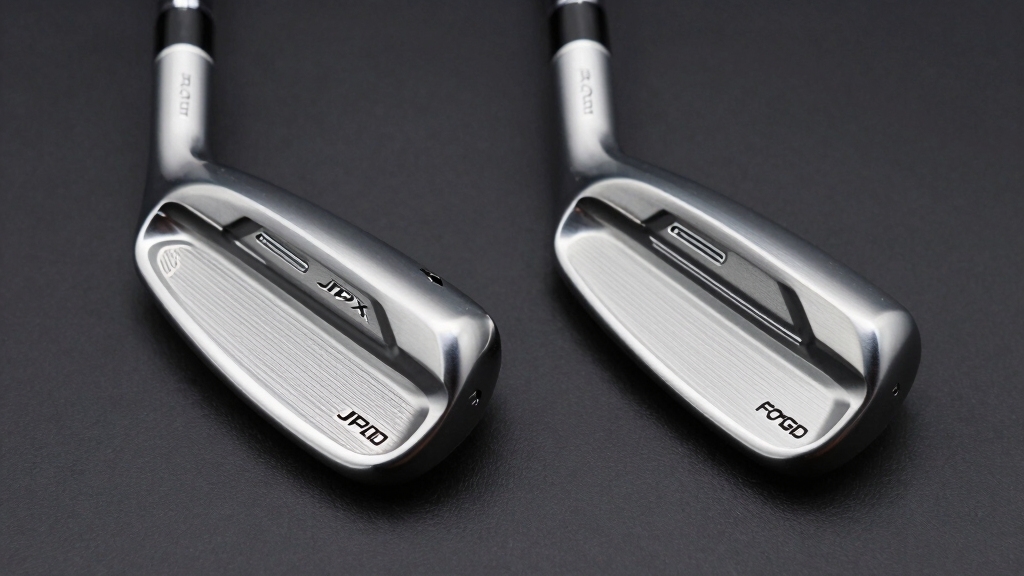
While both Mizuno JPX 900 Hot Metal and Forged irons deliver impressive performance, they cater to different player needs through distinct materials and design features.
Mizuno JPX 900 Hot Metal and Forged irons excel by addressing unique player preferences with specialized materials and design.
The Hot Metal uses Chromoly 4140M, allowing an ultra-thin face that maximizes ball speed and forgiveness. It features a seamless cup face and CORTECH variable thickness. Its Power Frame enhances stability and perimeter weighting, ideal if you want higher launch and carry.
Conversely, the Forged employs 1025 Boron carbon steel, 30% stronger, offering a compact, playable design. It has variable face thickness for increased MOI and workability. It launches slightly lower with less spin, balancing feel and distance.
You’ll notice the Hot Metal’s emphasis on forgiveness and distance, whereas the Forged prioritizes precision and shot-shaping potential.
Mizuno’s use of Grain Flow Forging technology in its forged irons enhances feel and consistent performance.
Key Features That Make JPX 900 Irons Unique
Understanding the distinct materials and engineering behind the JPX 900 Hot Metal and Forged irons helps clarify what sets these clubs apart in performance and design.
The Hot Metal uses Chromoly 4140M, enabling an ultra-thin, seamless cup face that maximizes energy transfer and forgiveness through the re-engineered CORTECH system.
Its Power Frame boosts stability and perimeter weighting, enhancing consistency.
The Forged model employs 1025 Boron carbon steel, 30% stronger than traditional forging steel, allowing variable face thickness for higher MOI and perimeter weighting.
Its compact, playable design balances forgiveness with feel and workability, featuring a matte finish and minimal offset.
Both incorporate Harmonic Impact Technology to optimize sound and feel at impact, delivering distinct advantages tailored to different player preferences.
These design elements provide improved moment of inertia to reduce clubhead twisting on mishits and increase stability during impact.
Distance, Ball Speed, Launch, and Spin Performance of JPX 900 Irons
Explore the performance metrics of the JPX 900 irons to see how their engineering translates into measurable ball speed, launch angle, spin rates, and distance.
The JPX 900 Hot Metal, crafted from Chromoly 4140M, generates explosive ball speeds with its ultra-thin face and seamless cup design.
It produces a 6-iron launch of 18.6° and spin around 4043 rpm, resulting in a 167-yard carry.
It also achieves the highest average ball speed and carry distance in testing, with the 5-iron delivering 5 mph more ball speed than competitors.
In contrast, the JPX 900 Forged uses 1025 Boron carbon steel, providing a slightly lower launch (19.1° with 7-iron) and increased spin (4559 rpm).
These precise launch and spin characteristics offer tailored performance for varied player preferences.
Optimizing spin rates is crucial, as lower spin can lead to longer, more penetrating ball flights, similar to the benefits seen with low spin shafts in driver technology.
Forgiveness and Consistency: Picking Your JPX 900 Iron
When you’re picking out your JPX 900 iron, it’s important to think about the forgiveness technologies at play. For instance, the Hot Metal’s CORTECH face and Power Frame really make a difference when it comes to shot consistency. If you’re after a model that gives you the highest average carry distance and tighter dispersion, the Hot Metal is definitely the way to go.
On the flip side, if you’re looking for something that strikes a balance between forgiveness and playability, the Forged model might be better suited for you. It offers great control, which can be super helpful for those precise shots.
So, taking the time to understand these differences really helps you find an iron that aligns with your needs—whether you’re focused on distance stability or aiming for precision across various shots.
Additionally, pairing your irons with the right shaft flex options can significantly enhance your control and consistency on the course.
Forgiveness Technology Comparison
Consistently, the JPX 900 Hot Metal irons deliver superior forgiveness thanks to their ultra-thin Chromoly 4140M face and CORTECH variable thickness design, which maximizes energy transfer even on off-center hits.
The seamless cup face and Power Frame structure enhance stability and perimeter weighting, reducing distance loss on mishits.
In contrast, the JPX 900 Forged irons use 1025 Boron carbon steel with variable face thickness to balance forgiveness and workability.
However, heel-toe strikes can lose over 10 yards.
Forged irons provide a tighter dispersion but less overall forgiveness than Hot Metal.
The Tour model sacrifices forgiveness for precision, showing higher carry deviations.
If you prioritize maximum forgiveness and distance, Hot Metal’s technology outperforms.
Forged suits better players seeking moderate forgiveness with improved feel.
Japanese irons often incorporate advanced materials like Maraging steel to enhance ball speed and durability, offering a useful comparison for players considering forgiveness technologies.
Consistency Across Shots
Although every golfer endeavors for perfect contact, you’ll inevitably face off-center hits during play. This makes consistency across shots a critical factor when choosing your JPX 900 irons.
The Hot Metal’s Chromoly 4140M face with CORTECH technology guarantees stable ball speeds even on mis-hits. Its Power Frame boosts perimeter weighting, reducing shot dispersion.
The Forged model balances playability and forgiveness with variable face thickness and a higher moment of inertia (MOI). However, off-center hits can still cost you up to 10+ yards.
Understanding these technical differences helps you pick an iron that maintains shot-to-shot reliability.
- Hot Metal’s seamless cup face maximizes energy transfer.
- Power Frame enhances stability across the set.
- Forged offers tighter dispersion with slightly reduced forgiveness.
- Off-center hits impact Forged irons more substantially than Hot Metal.
Similar to Takomo’s use of hollow-body construction and ultra-thin faces to maximize ball speed and forgiveness, these design choices contribute significantly to consistent performance.
Distance and Dispersion
Understanding how each JPX 900 iron performs regarding distance and dispersion will help you match your game to the right club.
The Hot Metal model excels with its Chromoly 4140M ultra-thin face and CORTECH design, delivering explosive ball speeds and higher launch angles. Its 6-iron carries around 167 yards with peak height near 29 yards.
This results in greater carry distance but slightly wider shot dispersion, offering forgiveness without sacrificing length.
Conversely, the Forged iron, crafted from 1025 Boron steel, launches lower with less spin, producing tighter shot groups and more controlled dispersion.
This model has somewhat reduced carry distance around 156 yards. If you prioritize forgiveness and distance, Hot Metal is ideal.
For better players seeking precision and consistent dispersion, Forged strikes a balanced compromise between distance and shot control.
Additionally, selecting the appropriate shaft flex and loft progression can significantly enhance control and consistency in your shots.
Choosing Between JPX 900 Hot Metal and Forged Irons
When it comes to choosing between the JPX 900 Hot Metal and Forged irons, there are some key differences to consider.
The JPX 900 Hot Metal irons really shine when it comes to higher launch and forgiveness. Thanks to their Chromoly 4140M construction and unique Power Frame design, they maximize distance and consistency in your shots.
On the other hand, the Forged irons are made from 1025 Boron steel. This gives them a compact profile that balances forgiveness, feel, and workability, which is great for better players looking for more control.
Now, let’s talk about pricing. The Hot Metal sets are generally more affordable compared to the premium Forged models.
For golfers seeking game-improvement features like optimized launch and enhanced forgiveness, irons with precision tungsten weighting can significantly boost performance.
Performance Differences
When deciding between the JPX 900 Hot Metal and Forged irons, you should focus on their distinct performance characteristics tailored to different player needs.
The Hot Metal irons leverage Chromoly 4140M material and a seamless cup face to deliver explosive ball speeds, higher launch, and greater carry distance. In contrast, the Forged irons use 1025 Boron carbon steel, providing a slightly lower launch with less spin, which benefits workability and control.
Key performance differences include:
Hot Metal’s 7-iron launches at 18.6° with 4043 rpm spin, maximizing carry and shot area.
Forged’s 7-iron launches at 19.1° with 4559 rpm spin, balancing distance and precision.
Hot Metal produces higher ball speeds, especially in long irons.
Forged offers tighter dispersion and better shot-shaping ability for skilled players.
The use of forged 1025 carbon steel in the Forged irons contributes to a soft feel and reliable feedback on delicate shots.
Design And Forgiveness
Beyond performance metrics, the design and forgiveness of the JPX 900 Hot Metal and Forged irons play a significant role in determining which model suits your game.
The Hot Metal’s Chromoly 4140M face uses CORTECH variable thickness and a Power Frame to maximize energy transfer and perimeter weighting. This delivers exceptional forgiveness with a slightly thicker topline but without excessive offset.
This design helps maintain ball speed and distance on off-center hits. On the other hand, the Forged iron, crafted from 1025 Boron steel, balances a compact, clean look with moderate forgiveness.
It incorporates variable face thickness and higher MOI, but it’s less forgiving on heel-toe mishits. If you prioritize maximum forgiveness and consistent distance, Hot Metal fits. If you want a blend of workability and forgiveness, Forged suits better.
Similarly, just as the Vice Pro Plus golf ball’s energy transfer is maximized through its complex construction for high-speed performance, the Hot Metal’s design aims for optimal energy efficiency and forgiveness.
Pricing And Value
Selecting between the JPX 900 Hot Metal and Forged irons involves weighing their distinct pricing structures and performance values.
The Hot Metal set retails at $899, offering advanced forgiveness and higher ball speeds ideal for mid- to high-handicappers. In contrast, the Forged irons cost $1199, targeting better players with a compact design and balanced playability.
You’ll want to contemplate how each set’s materials and technology align with your game and budget.
Hot Metal features Chromoly 4140M for explosive distance and forgiveness. Forged uses 1025 Boron steel for strength, feel, and workability.
Both sets maintain consistent yardage gaps, allowing mix-and-match flexibility. Hot Metal includes graphite shaft options, enhancing lightweight performance.
This pricing and value comparison guarantees you make an informed purchase tailored to your skill level and preferences.
Design Features That Enhance Feel and Playability
How do Mizuno’s JPX 900 irons deliver a refined feel without sacrificing playability?
The Forged model uses 1025 Boron steel, 30% stronger than traditional forging steel. This enables a compact design with variable face thickness that improves perimeter weighting and MOI.
This balance enhances feel and shot control while maintaining forgiveness. The Hot Metal variant employs Chromoly 4140M material and a seamless cup face, maximizing energy transfer for explosive ball speeds and stability through the Power Frame structure.
Both feature Harmonic Impact Technology, tuning sound and feel precisely at impact. The Forged irons boast a lean topline and minimal offset for workability.
Hot Metal irons maintain forgiveness without bulky profiles. Together, these design elements provide you with responsive feedback and consistent performance across various shot conditions.
JPX 900 Pricing, Availability, and Shaft Options
While both JPX 900 Hot Metal and Forged irons offer advanced performance features, they differ markedly in pricing and availability to suit various player needs.
JPX 900 Hot Metal and Forged irons both deliver advanced performance with distinct pricing and player focus.
The Hot Metal set retails around $899, making it more accessible. The Forged irons are priced at approximately $1,199, targeting better players seeking a compact design and refined feel.
Both sets are available with quality shaft options that influence performance and playability. For example, the Hot Metal irons come with graphite shafts like the Mitsubishi Rayon True Spec 60, optimizing launch and forgiveness.
You can expect:
- Hot Metal priced at $899, Forged at $1,199
- Hot Metal suits mid to high handicappers
- Forged targets better players with workability needs
- Shaft options include premium graphite for Hot Metal sets
This pricing and shaft flexibility help you select the right combination for your game.
Mixing JPX 900 Sets While Maintaining Yardage Gaps
Choosing to mix JPX 900 Hot Metal and Forged irons can offer you a tailored combination that balances forgiveness, feel, and workability across your set.
Since both models maintain consistent yardage gaps, you can seamlessly integrate Hot Metal’s explosive distance and forgiveness in long irons with Forged’s precision and playability in mid to short irons.
The Hot Metal’s 7-iron produces higher launch and spin, carrying farther than the Forged’s 7-iron. Their incremental loft and shaft options help maintain smooth distance progression.
This mix allows you to optimize your set for versatile performance without compromising consistency. Additionally, Mizuno’s engineering guarantees that face technologies and weighting complement each other.
This preserves shot dispersion and control when combining these two distinct JPX 900 irons in your bag.
Who Should Buy JPX 900 Hot Metal vs. Forged Irons?
Because your playing style and skill level directly influence club performance, selecting between the JPX 900 Hot Metal and Forged irons requires understanding their distinct technical attributes.
Choosing the right iron depends on your playing style and skill level for optimal performance.
The Hot Metal suits players seeking maximum distance and forgiveness, thanks to its Chromoly 4140M ultra-thin face and Power Frame stability.
The Forged targets better players valuing workability, feel, and a compact design, using 1025 Boron steel for enhanced strength and control.
Choose Hot Metal if you want higher launch, more ball speed, and greater forgiveness.
Opt for Forged if you prioritize shot-shaping, feedback, and a clean, traditional look.
Hot Metal fits mid to high handicappers; Forged suits low to mid handicappers.
Budget considerations: Hot Metal retails lower than Forged, affecting value decisions.
Frequently Asked Questions
How Durable Are JPX 900 Irons Under Regular Play Conditions?
You’ll find JPX 900 irons highly durable under regular play conditions. The Hot Metal’s Chromoly 4140M material offers exceptional strength while maintaining a thin face, resisting wear over time.
The Forged model uses 1025 Boron carbon steel, which is 30% stronger than traditional forging steel, enhancing longevity. Both feature robust construction and premium finishes that withstand repeated impacts and environmental exposure.
This ensures consistent performance and minimal degradation through regular rounds.
What Is the Recommended Maintenance Routine for JPX 900 Irons?
Think of your JPX 900 irons like a precision instrument. They need gentle care to perform at their peak.
After every round, clean the clubfaces with a soft brush and warm soapy water to remove dirt and grass.
Dry them thoroughly to prevent corrosion. Regularly check grips for wear, and store irons in a dry place to protect the Chromoly or Boron steel.
This routine preserves ball speed, feel, and forgiveness over time.
Are JPX 900 Irons Suitable for Left-Handed Golfers?
Yes, the JPX 900 irons are available for left-handed golfers. Mizuno offers both the Hot Metal and Forged models in left-handed configurations.
This ensures you get the same advanced materials, technology, and design features tailored for your swing. You can expect consistent performance, including forgiveness and distance, regardless of handedness.
Just verify availability through authorized dealers, as left-handed stock can be more limited than right-handed options.
Can JPX 900 Irons Be Custom-Fitted at Retail Stores?
Yes, you can get JPX 900 irons custom-fitted at many retail stores.
These fittings involve adjusting shaft length, lie angle, and grip size to match your swing.
Retailers often offer shaft options like Mitsubishi Rayon True Spec 60 graphite for tailored performance.
Custom fitting guarantees peak launch, spin, and feel, helping you maximize distance and forgiveness. Be sure to book a session with a certified fitter for precise adjustments.
What Type of Golf Balls Best Complement JPX 900 Irons?
Think of your JPX 900 irons like a high-performance engine that demands premium fuel. To maximize explosive ball speeds and precision, use golf balls with a softer cover and high spin control, such as urethane-covered balls.
These complement the forged model’s balanced forgiveness and the Hot Metal’s higher launch and spin, optimizing distance and feel. A ball with consistent compression around 85-95 enhances the irons’ energy transfer, letting you unleash their full potential.
Finding Your Perfect Balance Between Speed and Control
Choosing between the Mizuno JPX 900 Hot Metal and Forged irons means balancing power and precision. The Hot Metal offers impressive distance and forgiveness, ideal for those seeking consistency.
The Forged irons deliver exceptional feel and control for better players. You’ll appreciate the advanced design and shaft options either way, but your decision hinges on whether you prioritize raw ball speed or refined shot shaping.
Both sets excel technically, yet serve distinctly different player needs.